Potty training charts
Twelve free potty training sticker charts to print on A4, dinosaurs, unicorns, diggers, mermaids, sea life, woodland animals and more, with a full week of squares and the advice that goes with them.
Also known as: potty chart, toilet training chart, potty training reward chart, sticker chart for potty training.
What the chart actually does
I used to think the stickers were doing the work. They aren’t. Your child’s body decides when it’s ready, on its own timetable, and nothing you stick on a wall will move that along.
What the chart gives you is something to point at. It turns an invisible thing into a visible one, and it hands a toddler a reason to come and tell you what’s just happened. That’s worth having on its own.
It’s also why a chart stops earning its keep the second it starts to feel like pressure. If you’re getting tears, take it down. You haven’t lost a thing.
Let them choose the design
There are twelve here for one reason: a chart your child picked is a chart your child owns. It takes thirty seconds and it changes the whole exercise from your idea into theirs, which is most of the battle at this age.
Show them three or four rather than all twelve. Toddlers choose better from a short list, and every one of these does exactly the same job.
Getting the first week right
Put the sticker on together, immediately, every time. The gap between the success and the sticker should be seconds, not minutes. A toddler can’t hold “you can put your sticker on after tea” in their head; by then it has stopped being connected to anything.
Praise the trying, not just the result. Sitting on the potty and producing nothing is still the behaviour you want. Plenty of parents give a sticker for sitting in the first week, then move to successes only in the second.
Ignore the empty circles. Each row has room for eight because some days are busy, not because eight is the target. A day with two stickers is a day that went fine.
When it isn’t working
If the chart has been up for two weeks and nothing has changed, the chart isn’t the problem. Either your child isn’t ready yet, or something else is going on, a new baby, a house move, starting nursery, a bout of constipation. Regression around any of those is normal and it isn’t a discipline issue.
Pausing is allowed. Coming back to it in six weeks is very often faster than pushing through now. If you’re worried, or if there’s pain, blood or a long-standing struggle with constipation, that’s a conversation for your health visitor or GP rather than a different chart.
Wall or bathroom
The bathroom, at their height. Fridge charts get admired by visitors and forgotten by the child. The point of the chart is that they see it at the moment it’s relevant.
If you are not sure whether to start at all, or you have started and it has ground to a halt, is my child ready and when potty training stalls are the two guides that go with these sheets.
12 free potty training charts to print
Every sheet is a PDF sized for A4. Tap a design to download it. No sign-up, no watermark.
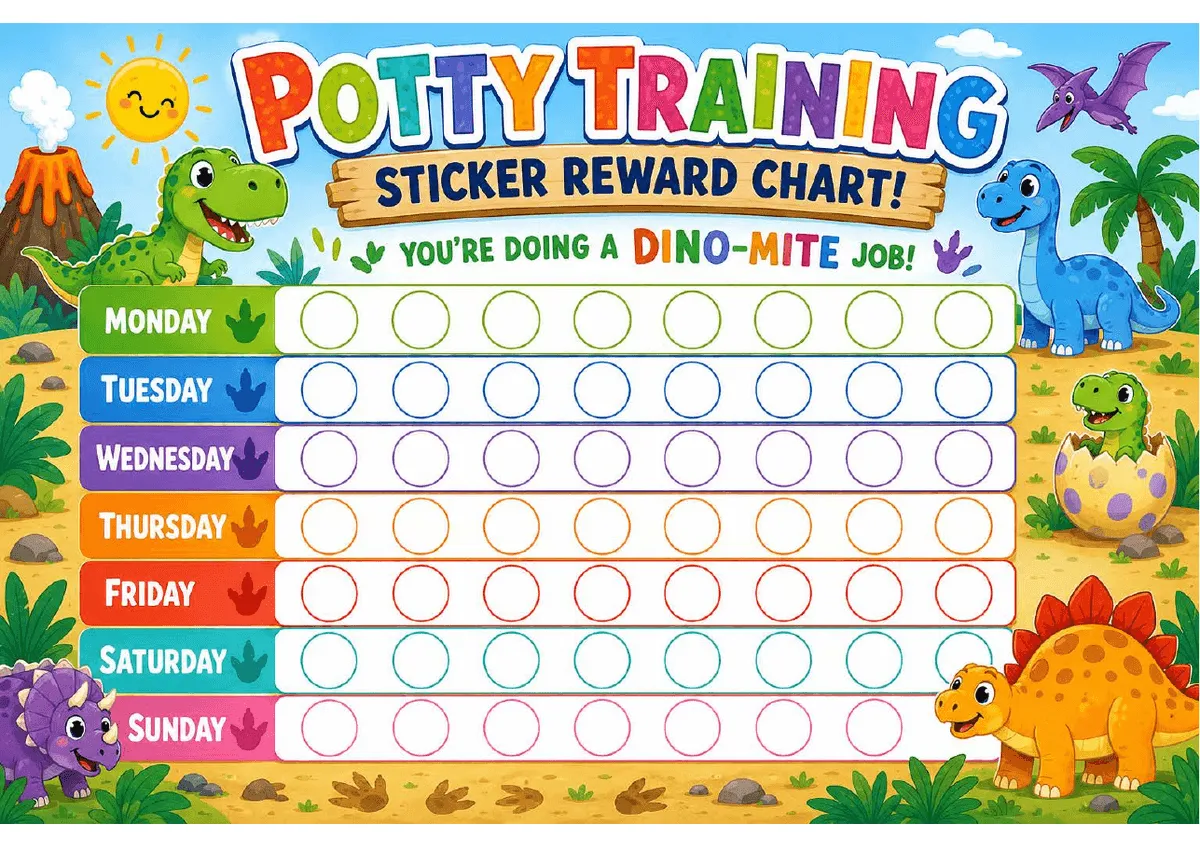
Dinosaur potty chart
T-rex, triceratops and a smoking volcano, with dinosaur footprints marking each day.
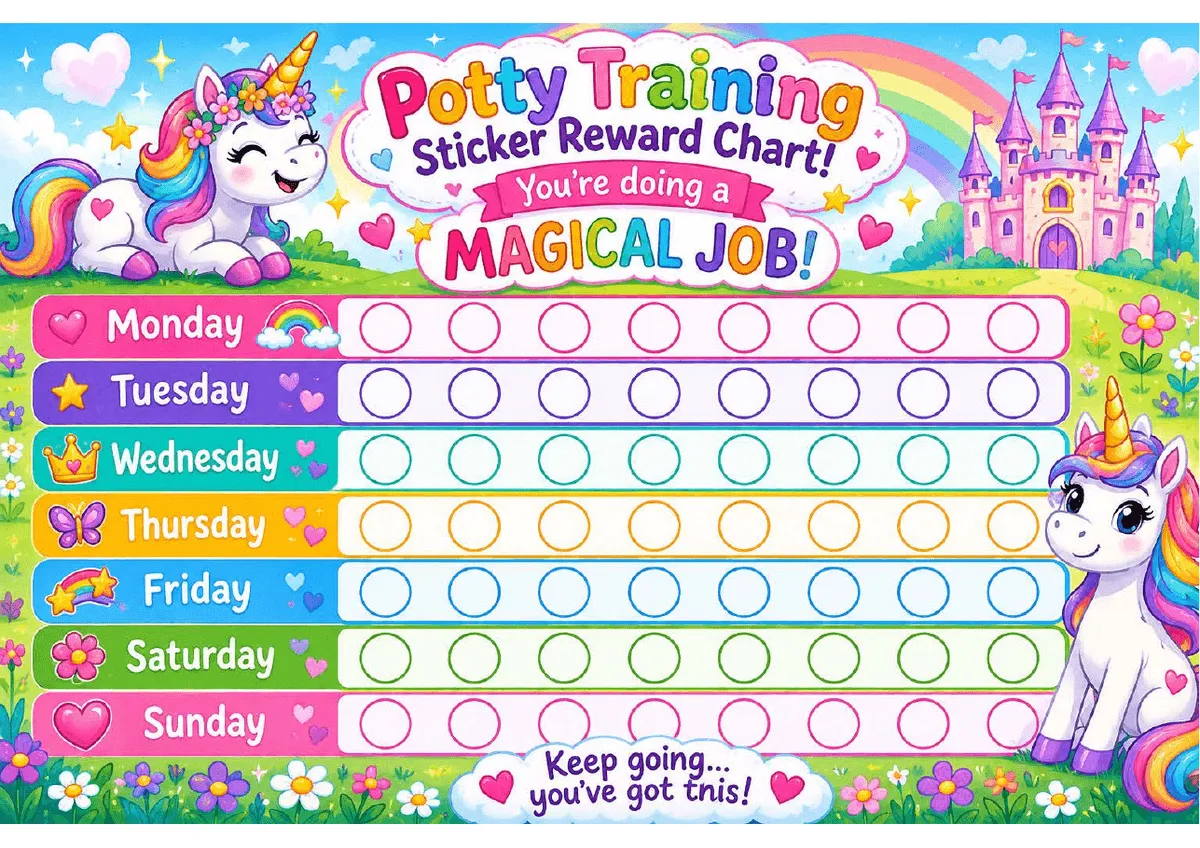
Unicorn potty chart
Rainbows, a pink castle and two unicorns, in soft pinks and purples.
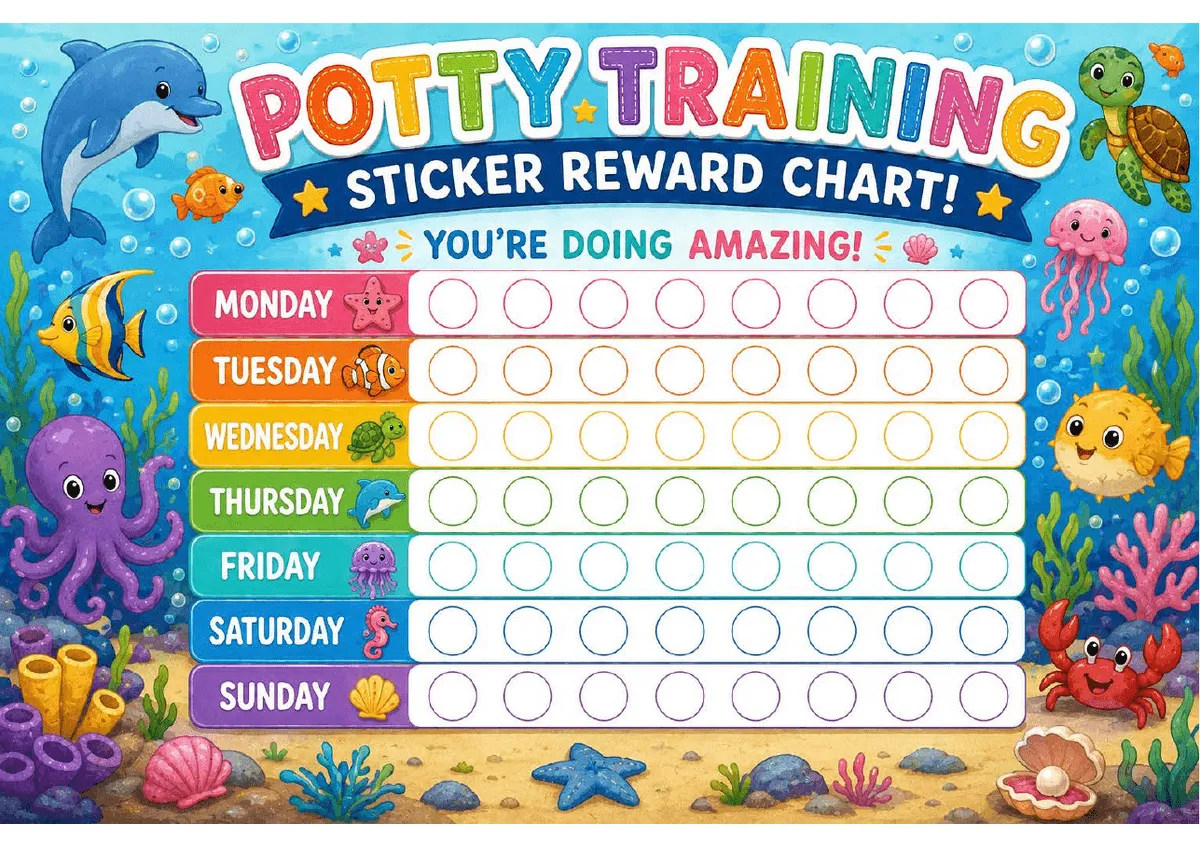
Sea life potty chart
A dolphin, turtle, octopus and crab under water, with a different creature on each day.
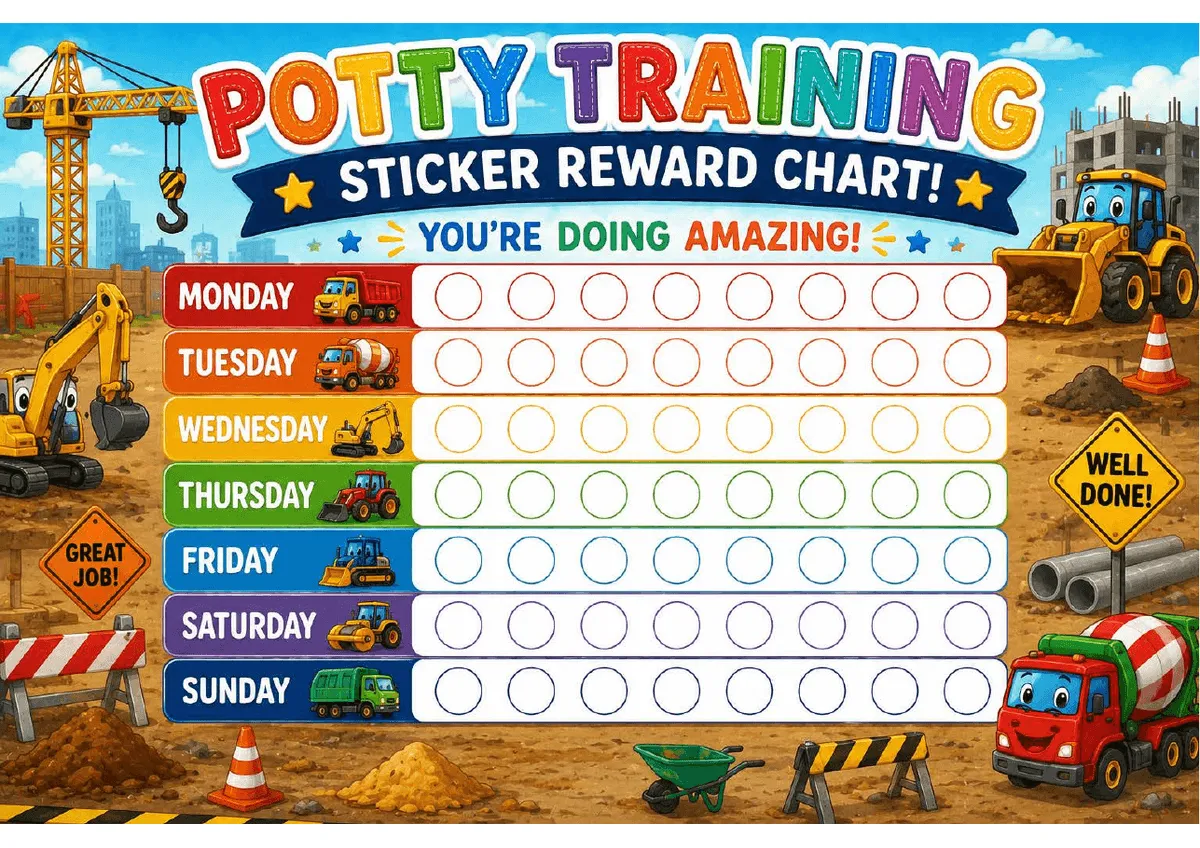
Digger potty chart
Excavators, dumper trucks and a crane on a building site, for anyone obsessed with machines.
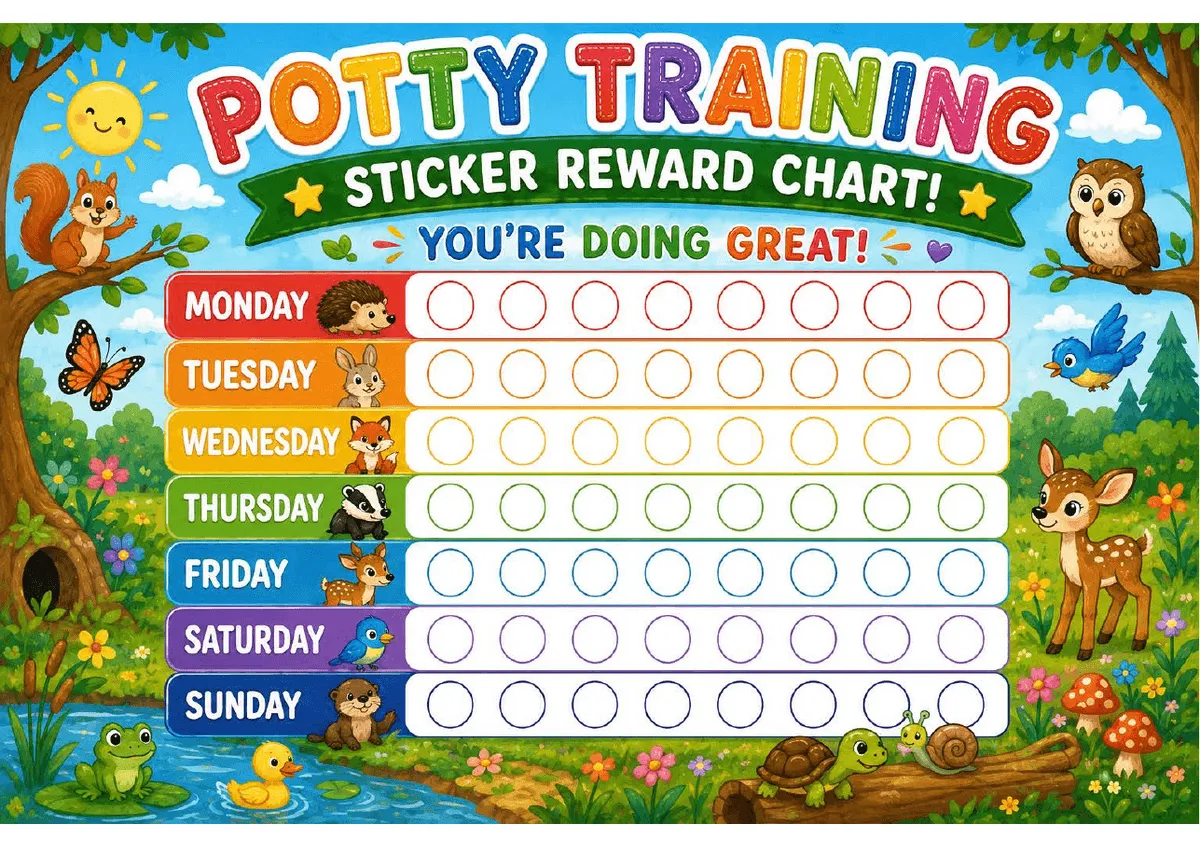
Woodland animals potty chart
A hedgehog, fox, badger, deer and owl in a wood, in gentler colours than most.
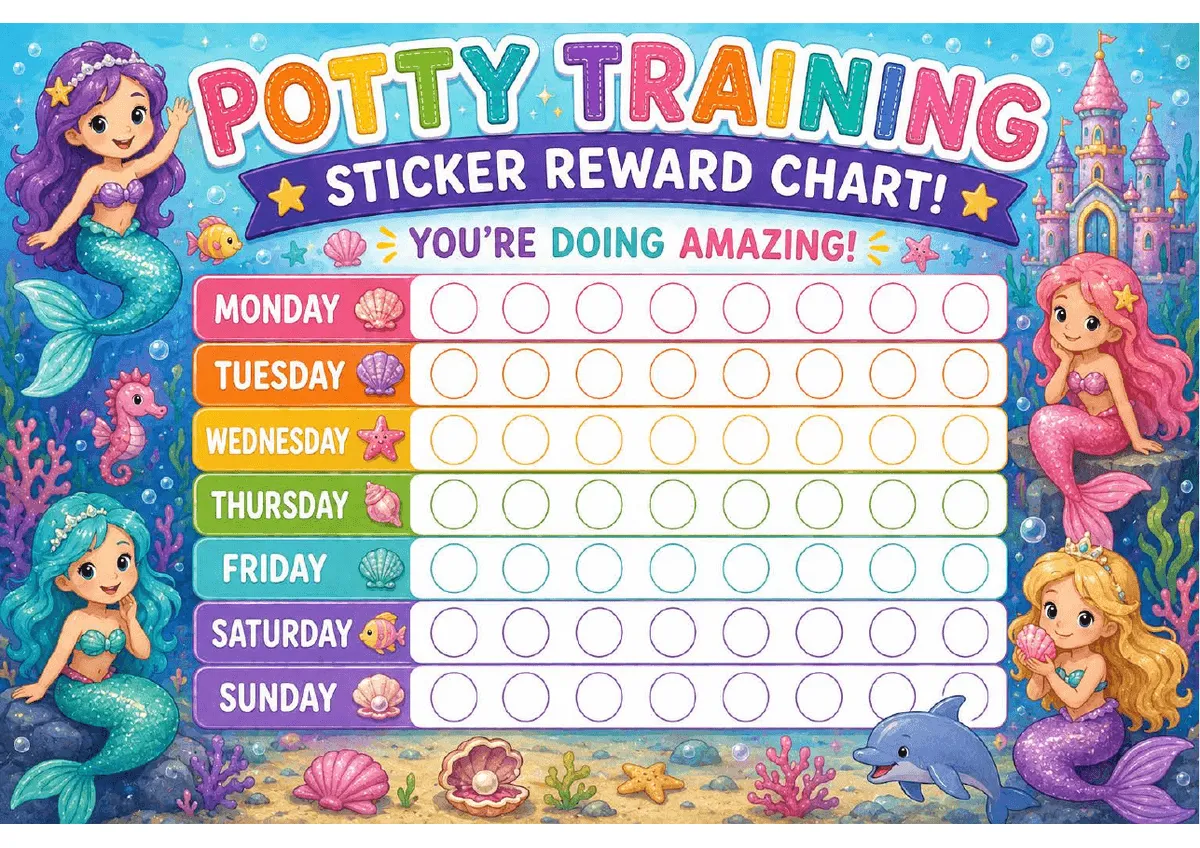
Mermaid potty chart
Three mermaids, an underwater castle and shells, with a shell on every day.
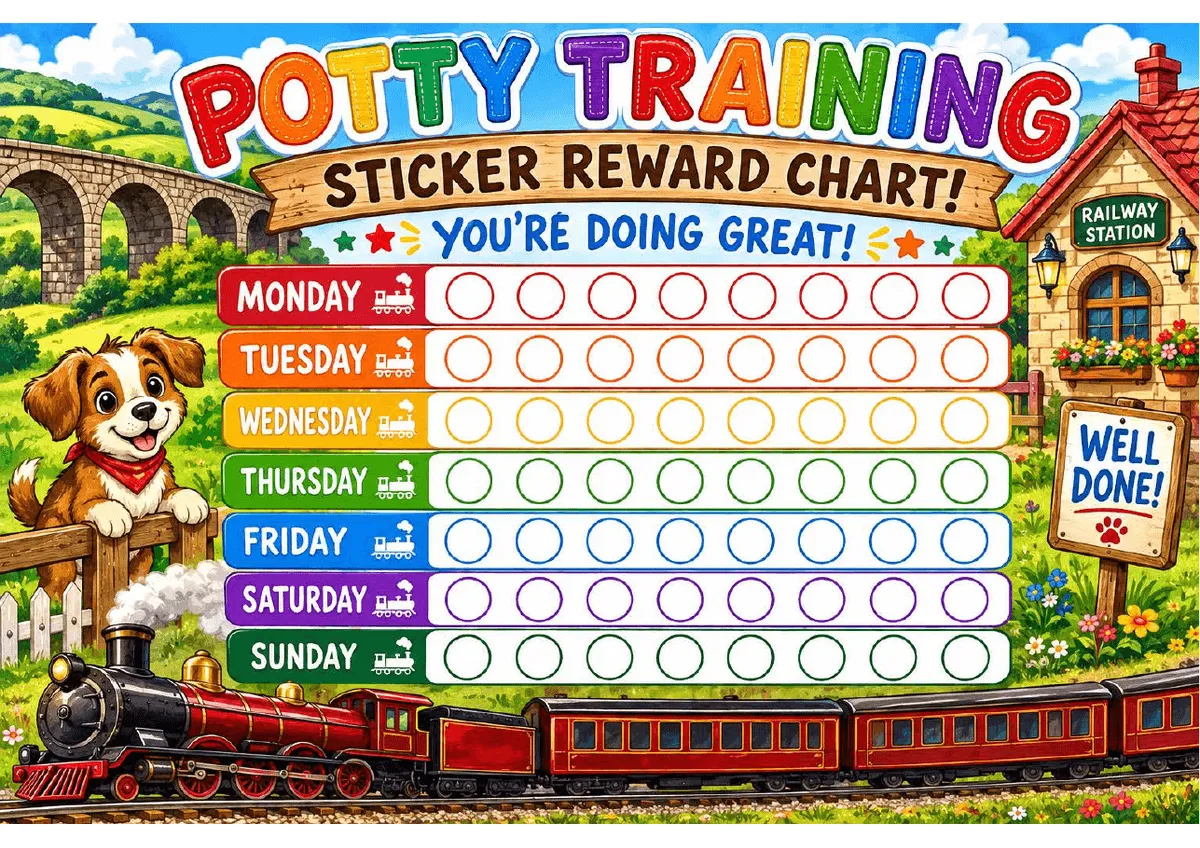
Train potty chart
A steam engine crossing a viaduct, a country station and a friendly dog.
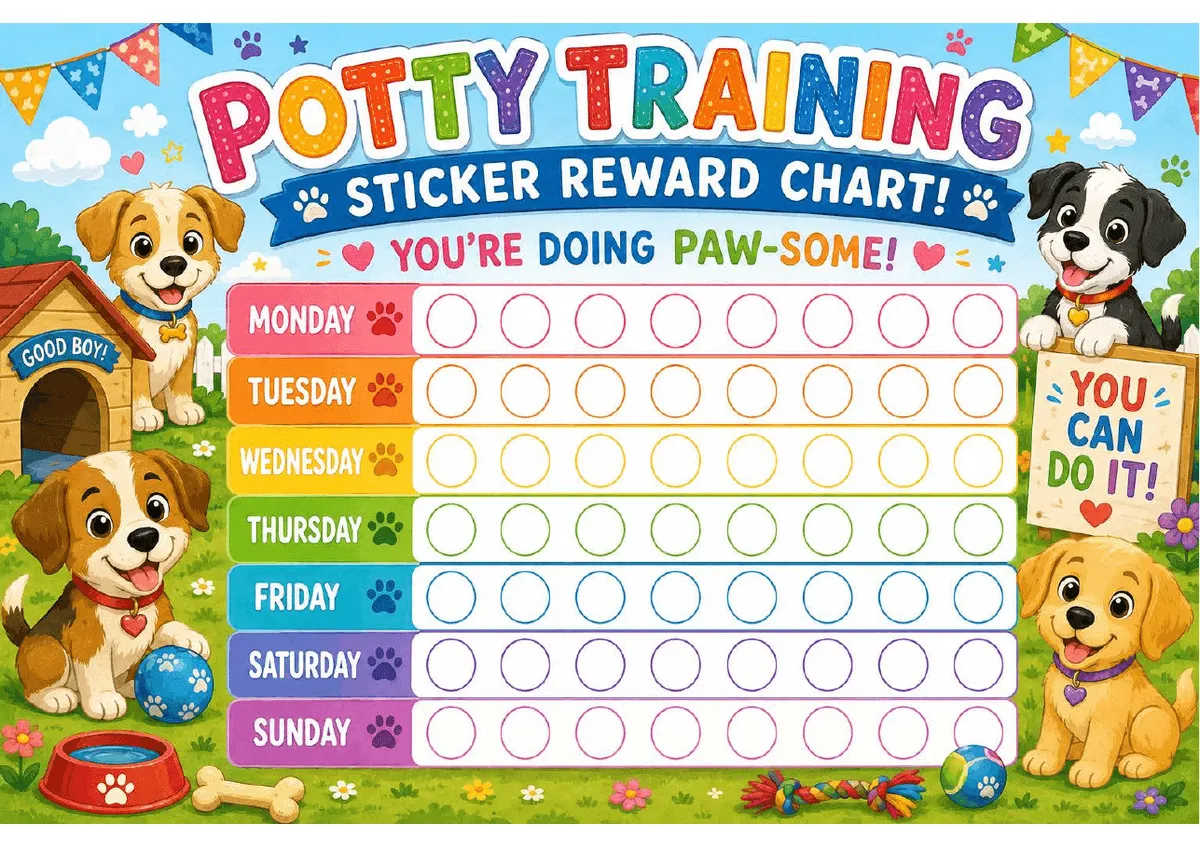
Puppy potty chart
Four puppies, a kennel and paw prints down every row.
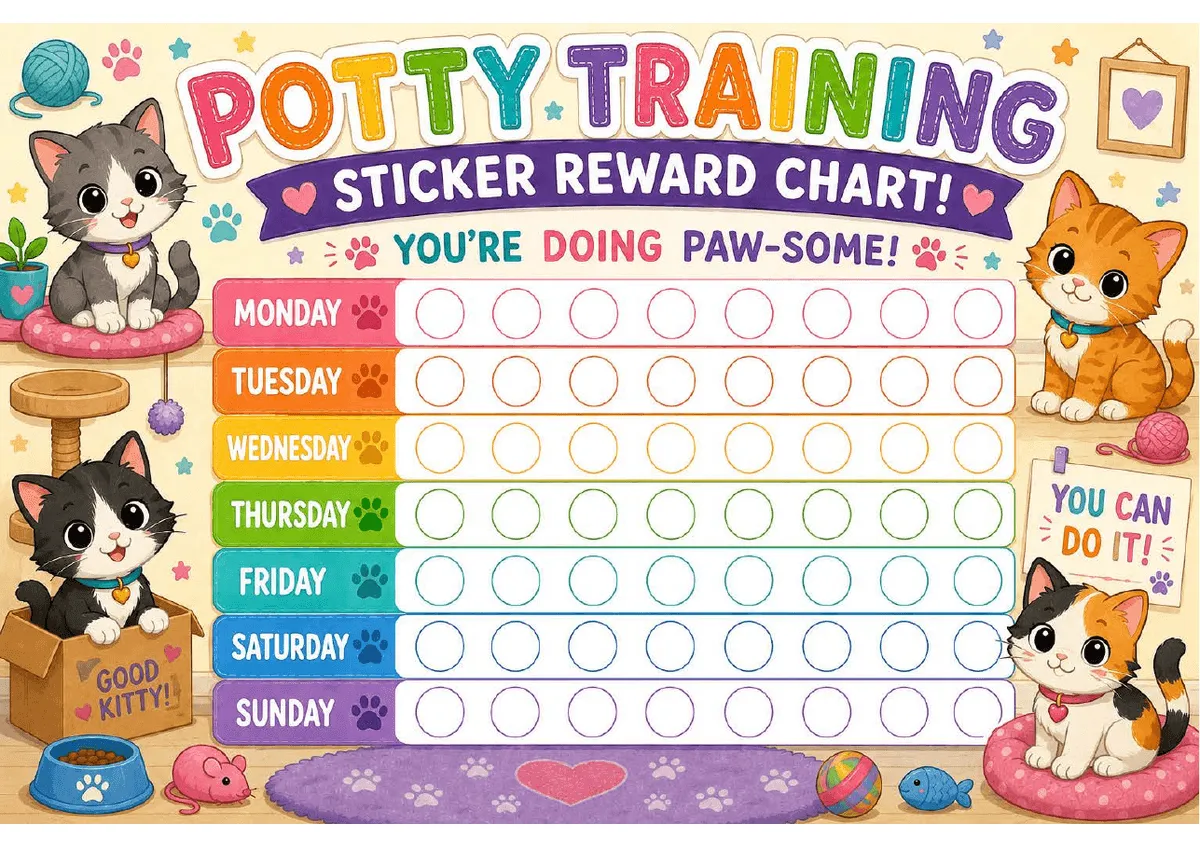
Kitten potty chart
Four kittens, a scratching post and a box, on a warm cream background.
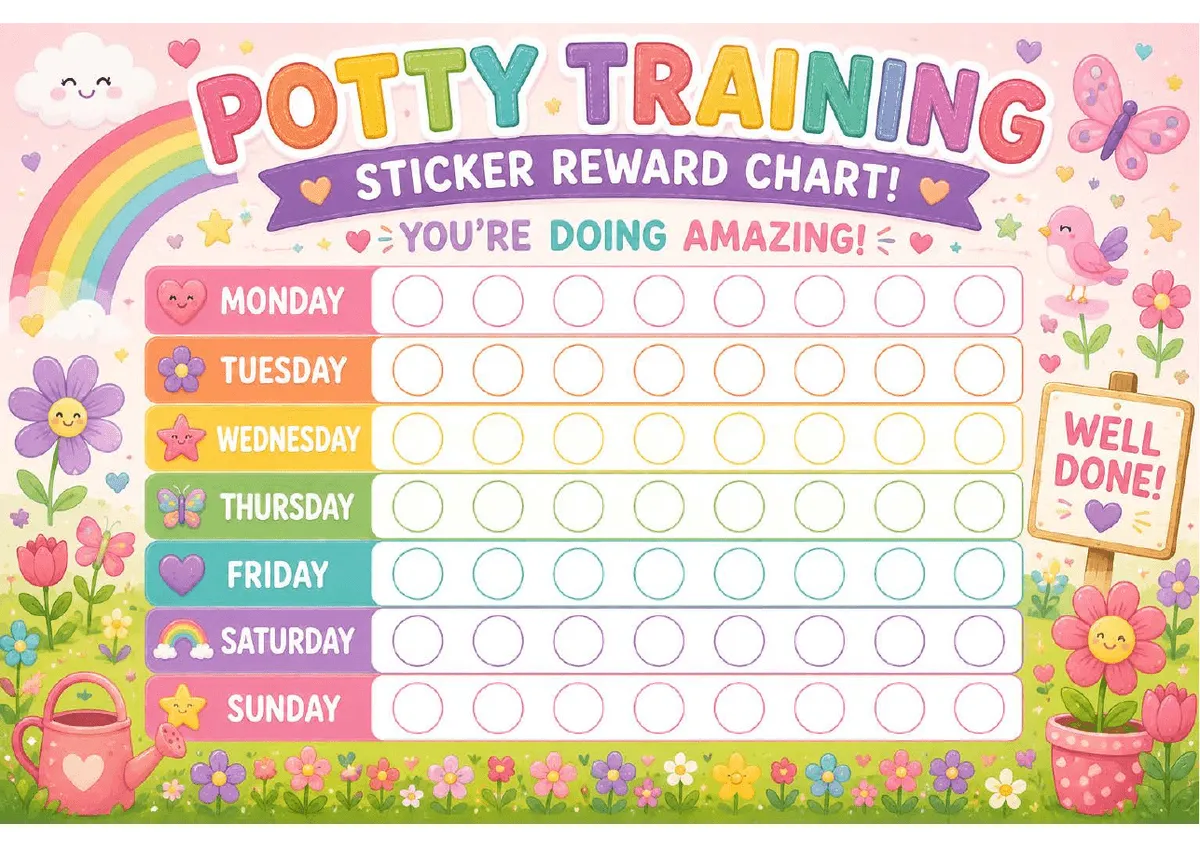
Flower garden potty chart
A pastel garden with a rainbow, butterflies and a watering can. The softest design here.
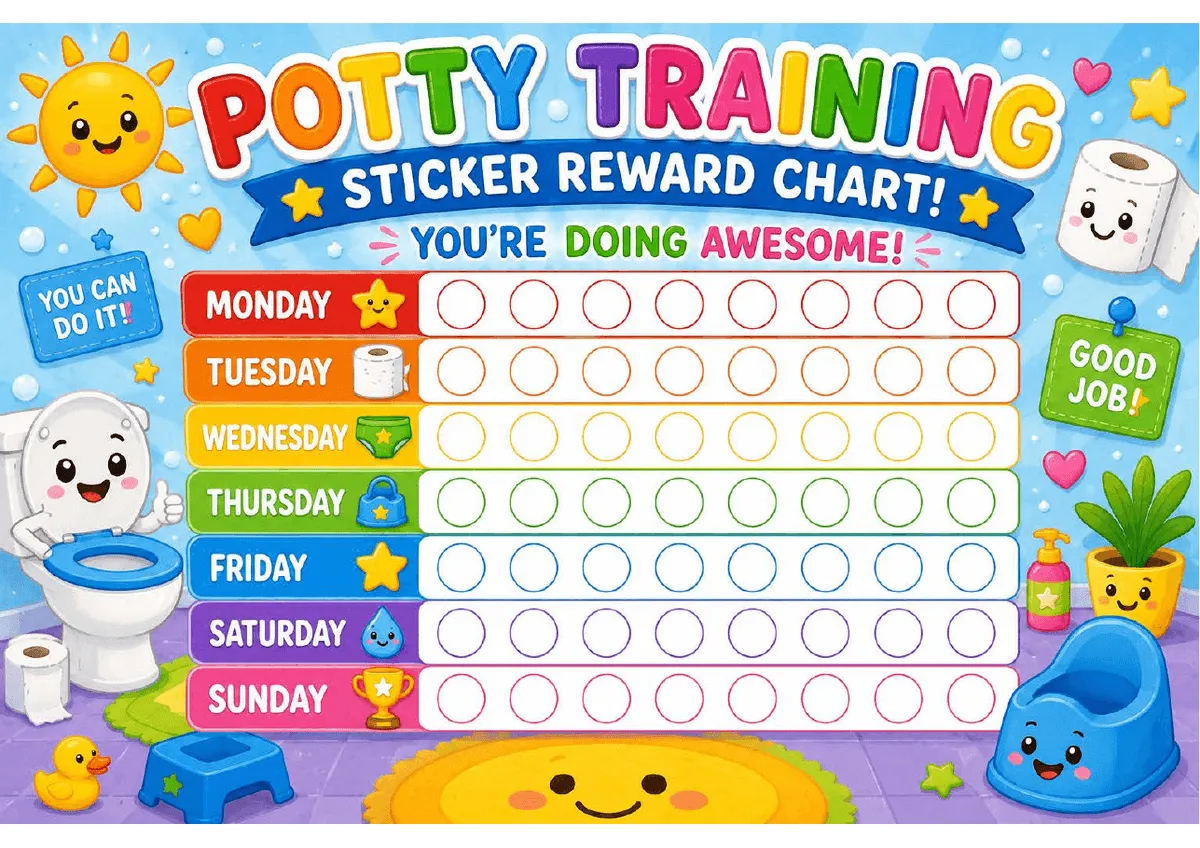
Bathroom potty chart
A cheerful bathroom scene with a smiling toilet, a potty and a rubber duck. No theme to pick, so nothing to argue about.
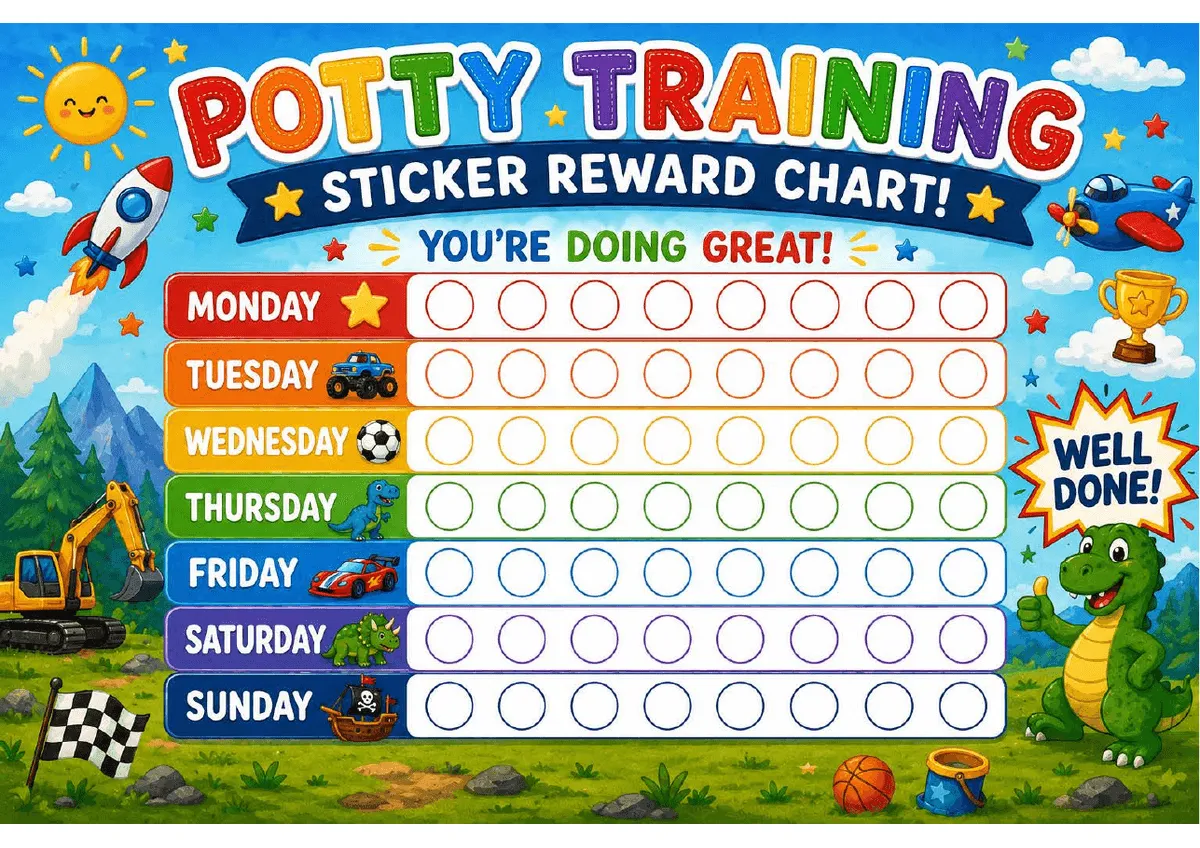
Adventure potty chart
A rocket, a monster truck, a football and a dinosaur, a bit of everything, for children who will not settle on one thing.
Getting a clean print
- These are A4 landscape sheets. Set your printer to landscape and the scale to 100%, rather than fit to page, so the sticker circles stay big enough for standard 19mm stickers.
- Each chart holds a full week: seven rows of eight circles. One week per sheet is usually the right amount to print at a time.
- Stick it at your child's eye level in the bathroom, not on the fridge. It needs to be where the thing happens.
- If you're reprinting the same design every week, slide one into a plastic wallet and use a whiteboard pen instead.
Common questions
How many stickers should one success be worth?
One. Anything more complicated and a two-year-old loses the thread. Keep the rule identical every single time so there's nothing to argue about.
There are eight circles per day. Is that a target?
No. It's simply room for a busy day, and most days won't fill up. Treat a row with three stickers as a good day rather than a row that failed to finish.
What if they have an accident after a run of good days?
Leave the chart alone. Never remove a sticker that has been earned. It turns the chart into something that can be lost, which is a much stronger feeling than something that can be won.
Do we need a prize at the end?
Not necessarily. For most toddlers the sticker is the prize. If you do promise something at the end, keep it small and make sure it arrives the day the chart is finished.
How long should we use the chart for?
Until the habit is established, then stop. Two or three weeks is typical. A chart still on the wall two months later has usually become wallpaper.
Read next
Night time dryness and wet beds
What is normal for night time dryness, what helps at home, what to avoid, and when to see a GP about a child who wets the bed.
When potty training stalls
Two weeks in, going backwards, and everyone is fed up. What causes a stall, what to do about it, when to stop entirely, and why pausing is usually faster than pushing on.
Reward charts that actually work
Most reward charts fail for the same handful of reasons. What to put on a chart, what to reward, how long to run it, and when to take it down.
Printables that go with these
 6 sheets
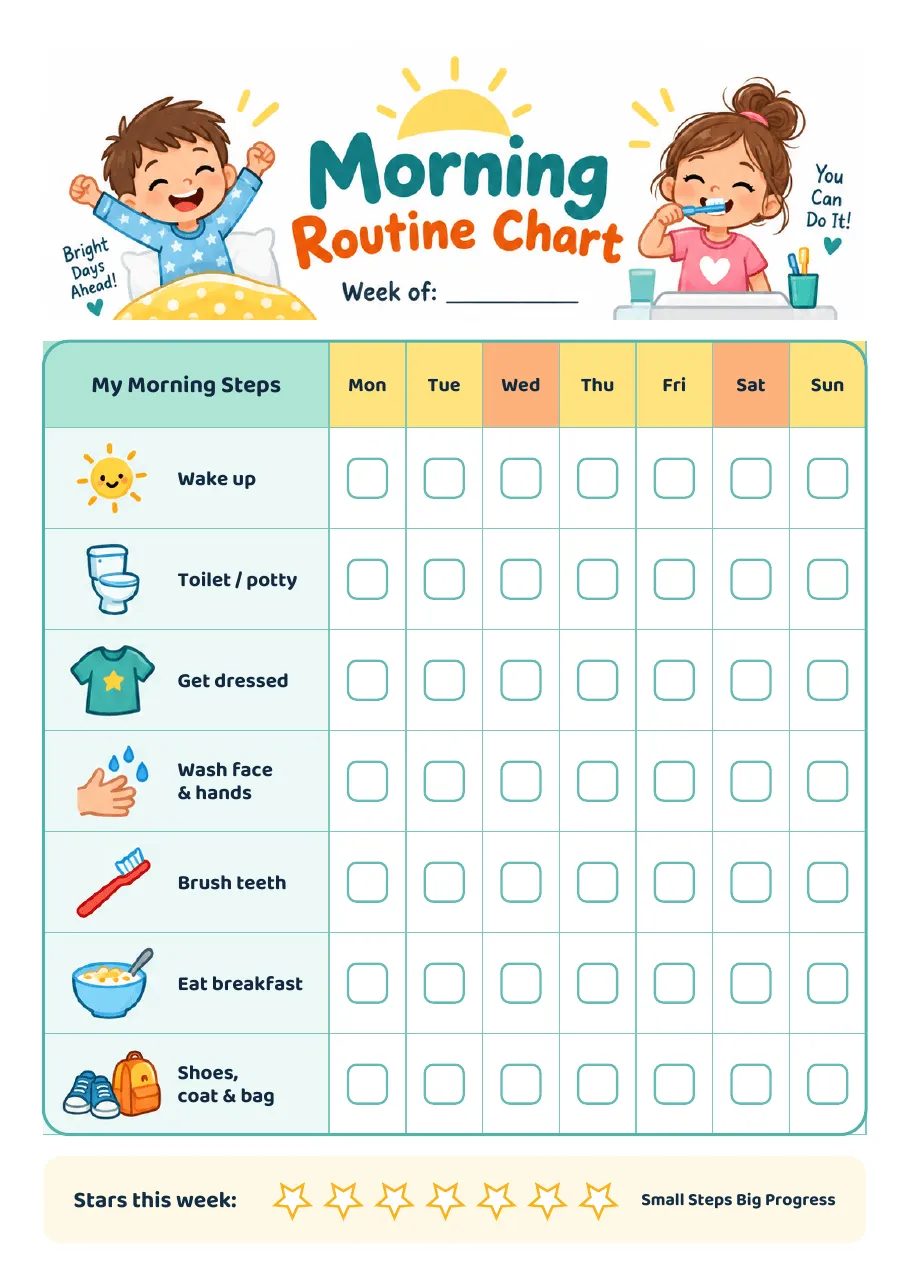
Routine charts
Six free morning and bedtime routine charts to print on A4, in a colourful design and in pink and blue, with picture steps a child can follow before they can read and a full week of boxes to tick.
 4 sheets
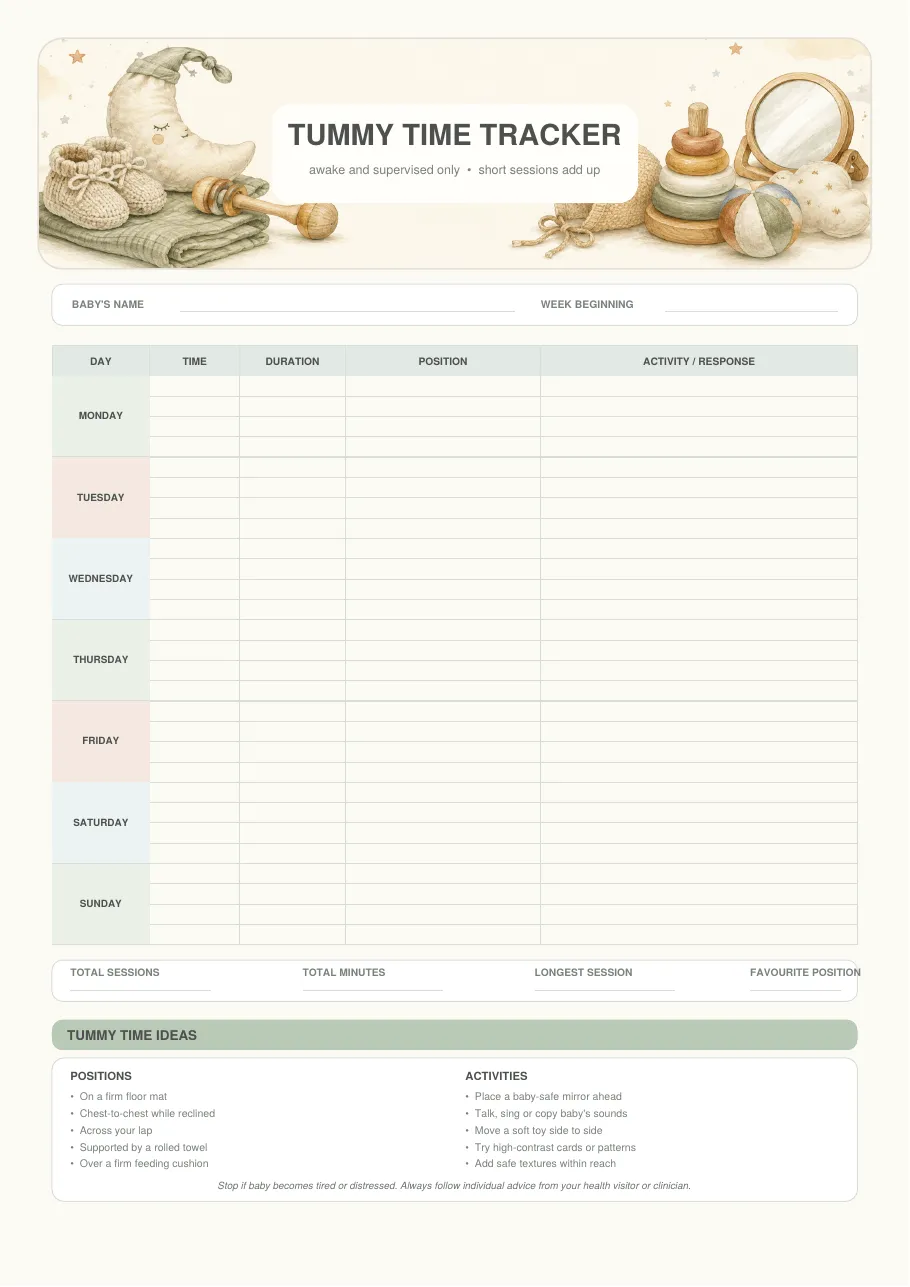
Tummy time trackers
Four free printable tummy time trackers for the first few months, with somewhere to note the position, how long you managed and whether anybody enjoyed it. Blue, pink, illustrated and a plain ink-light version.
 1 sheet
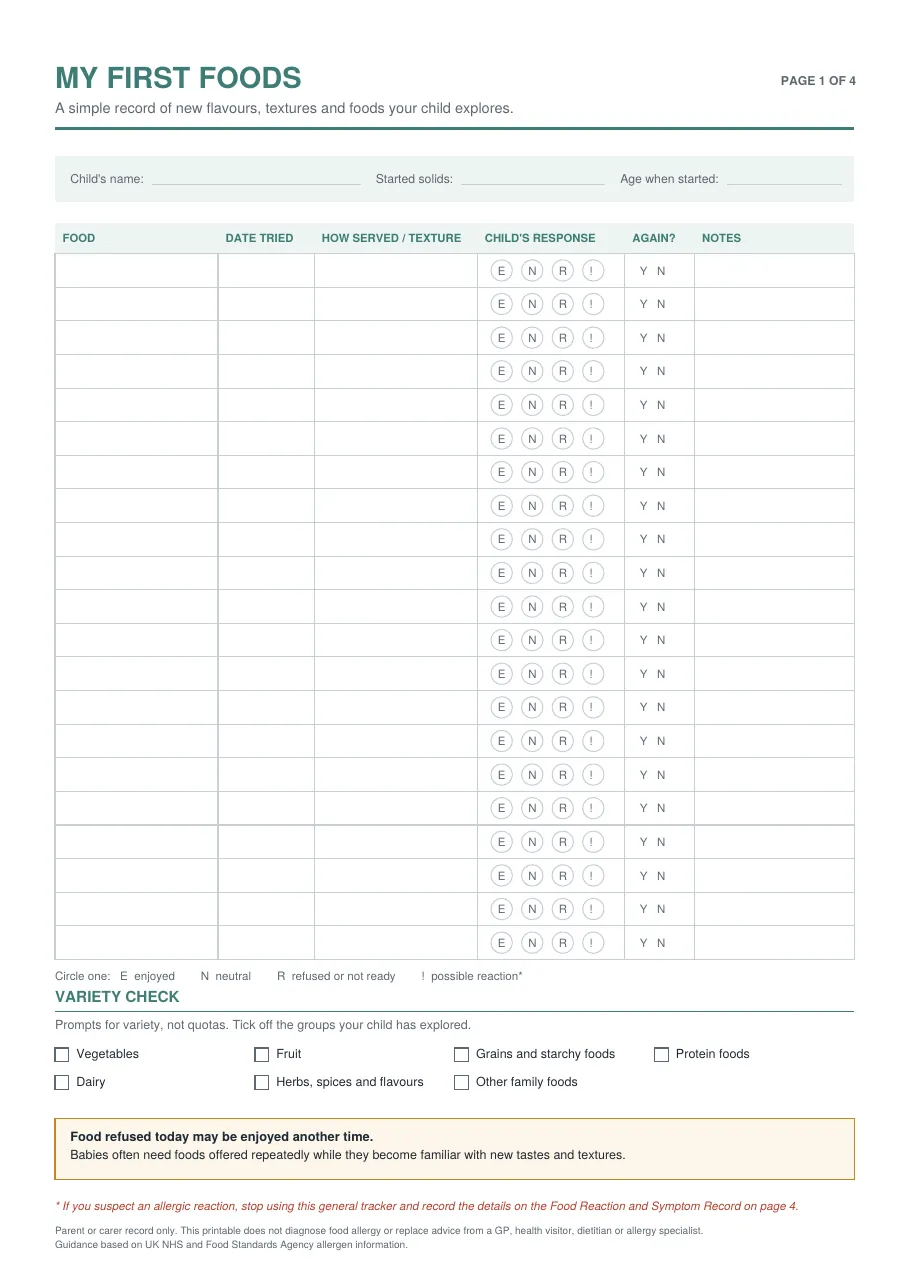
First foods and allergen tracker
A free printable four page tracker for weaning. Somewhere to record new foods, a chart for introducing the UK 14 allergens, a page for keeping them in the diet afterwards, and a detailed reaction record to take to an appointment.
 6 sheets
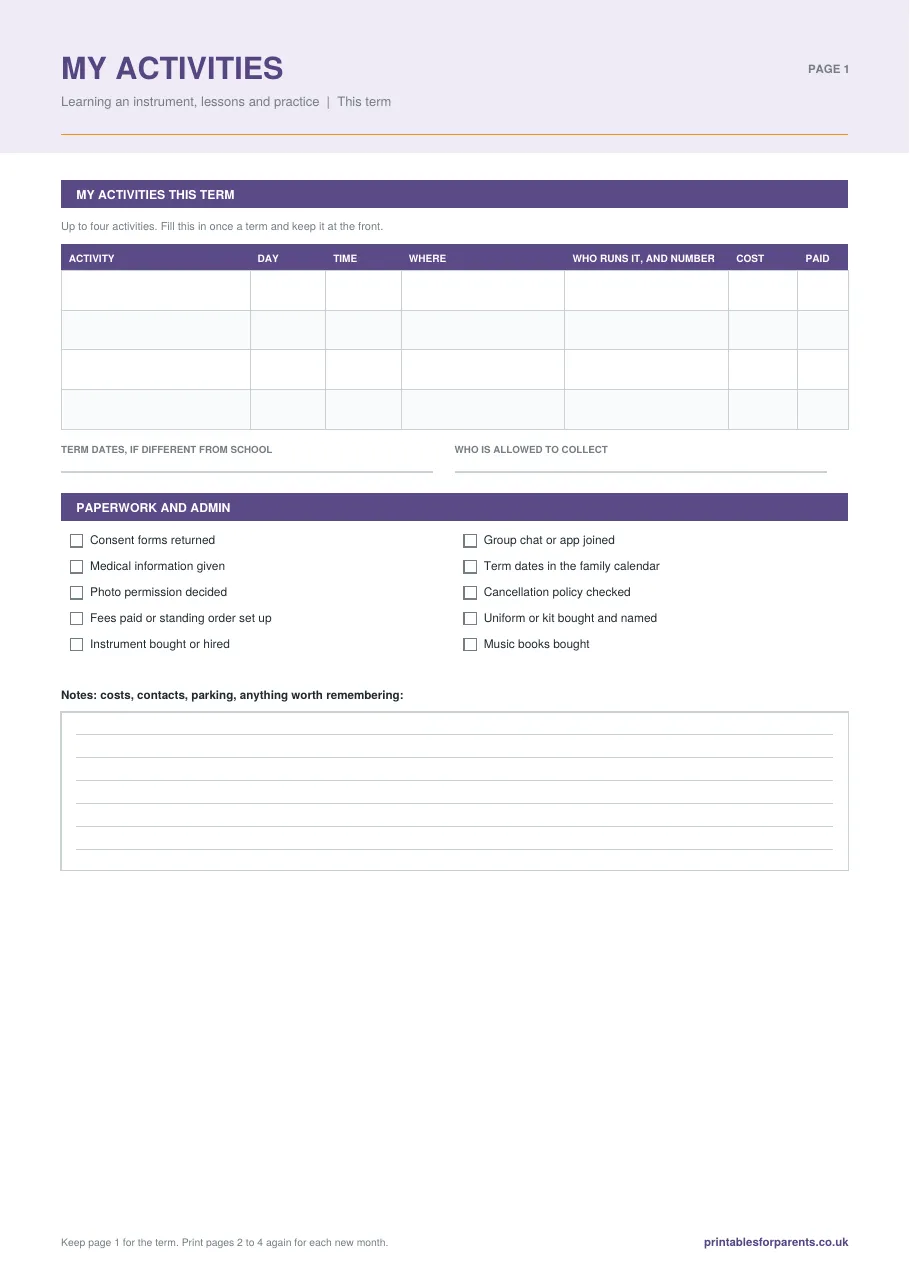
Activity and club trackers
Free printable trackers for after school clubs and activities. One page a term for the timetable, costs and admin, then three pages a month for the week, the effort and the achievements. Music, dance, drama, coding, Scouts and Guides, and a blank one.