Routine charts
Six free morning and bedtime routine charts to print on A4, in a colourful design and in pink and blue, with picture steps a child can follow before they can read and a full week of boxes to tick.
- 2 to 7 years
- Toddler
- Tracking
- 5 and under
Also known as: morning routine chart, bedtime routine chart, visual routine chart for kids, printable daily routine chart, getting ready chart.
What a routine chart is actually for
Mostly it’s there to stop you saying the same seven sentences every morning.
Ours went up because I had noticed I was asking “have you brushed your teeth” at roughly the same point every day, and because a four year old genuinely cannot hold seven steps in her head at half past seven in the morning. The chart holds them instead. She looks at it, I say nothing, and we both get to the front door in a better mood.
Worth knowing before you print one: this does a different job from a reward chart. A reward chart is about persuading. This is about remembering, which is why it can stay on the wall long after a sticker chart would have outstayed its welcome.
The pictures are doing the work
Each row has a picture next to the words, which means a child who can’t read yet can still use the whole sheet on their own. That’s the bit that makes it worth putting up. Point at the row for the first few days rather than reading it aloud, and most children start pointing at it themselves surprisingly fast.
The words are there for whoever else is in the house. A grandparent doing a Saturday morning, a babysitter at bedtime, a partner who does the school run twice a week: they can all follow the same order without asking.
Keep the two sheets apart
Morning and bedtime are separate charts on purpose. Put the morning one where mornings happen, by the front door or in the bathroom, and the bedtime one on the bedroom door. A child standing in front of a chart that shows bedtime steps at seven in the morning has to filter out half of it, and filtering is the thing they can’t do yet.
Hang it at your child’s eye level, which is lower than feels right when you are the one holding the Blu Tack.
When it stops working
Usually because the order on the sheet is not the order in your house. If your child gets dressed before breakfast and the chart says otherwise, they will point that out for about three days and then ignore the whole thing.
Cross the row out and write over it. A chart with pen on it looks like a chart somebody uses. The one that stays pristine for a month is the one nobody has looked at since the day it went up.
You don’t have to tick anything
There are boxes for all seven days and a row of stars along the bottom, and plenty of families use neither. It works perfectly well as a list on a wall, with the ticking as an optional extra for the sort of child who enjoys that kind of thing.
If yours does, hand over the pen and let them get on with it.
6 free routine charts to print
Every sheet is a PDF sized for A4. Tap a design to download it. No sign-up, no watermark.
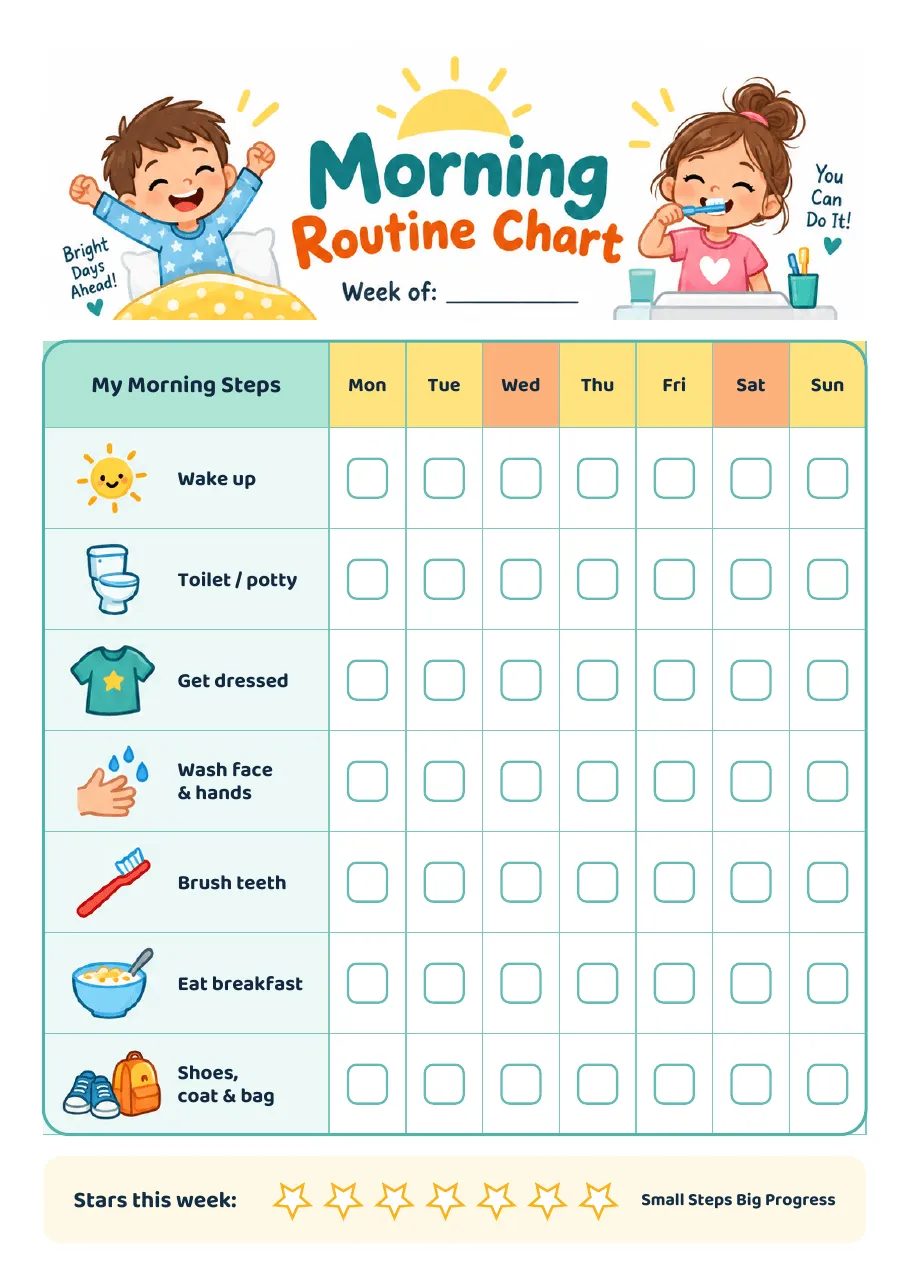
Morning routine chart, colourful
Seven picture steps from waking up to shoes and bag, in teal and orange, with a boy and a girl on the header.
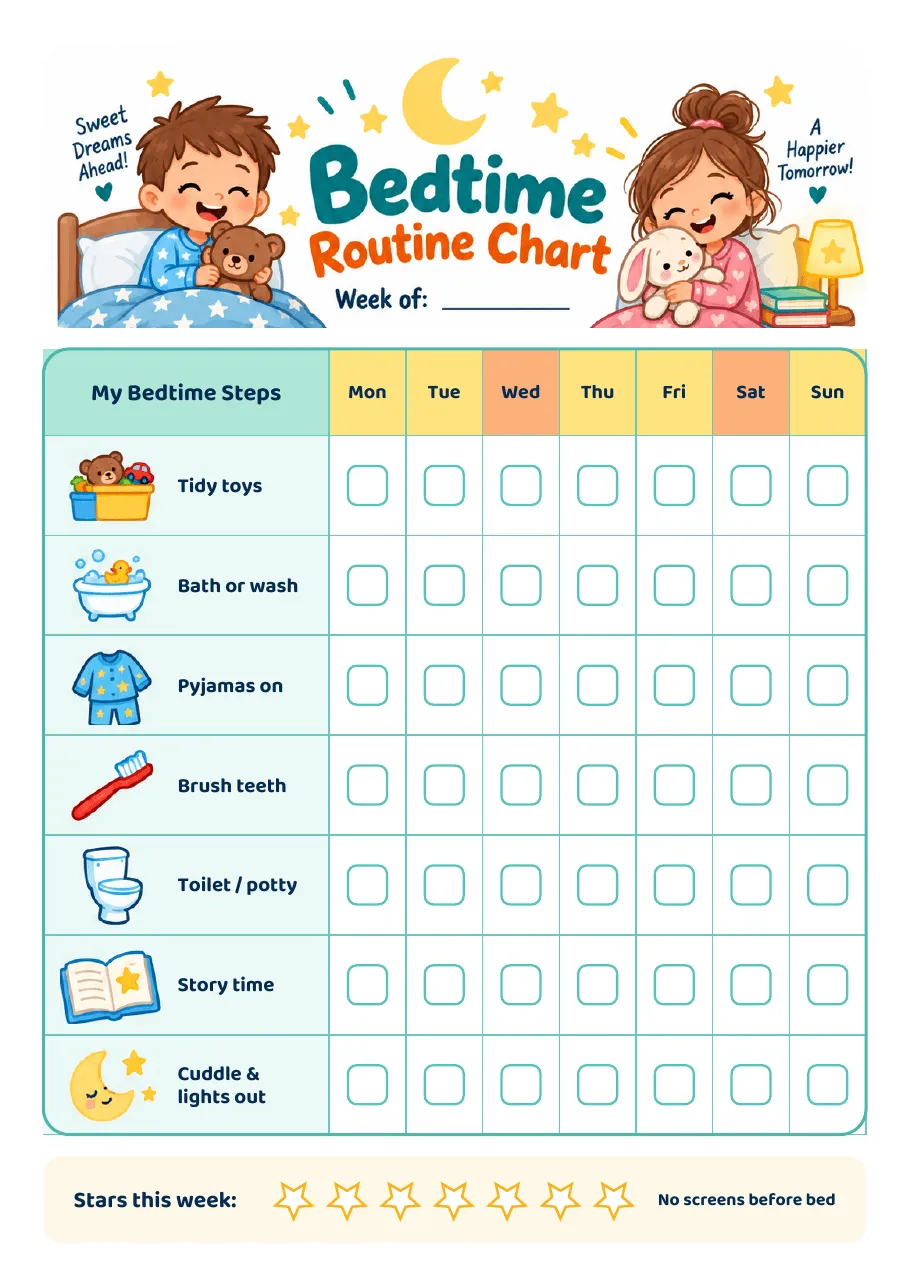
Bedtime routine chart, colourful
Seven picture steps from tidying toys to lights out, in teal and orange, with a boy and a girl on the header.
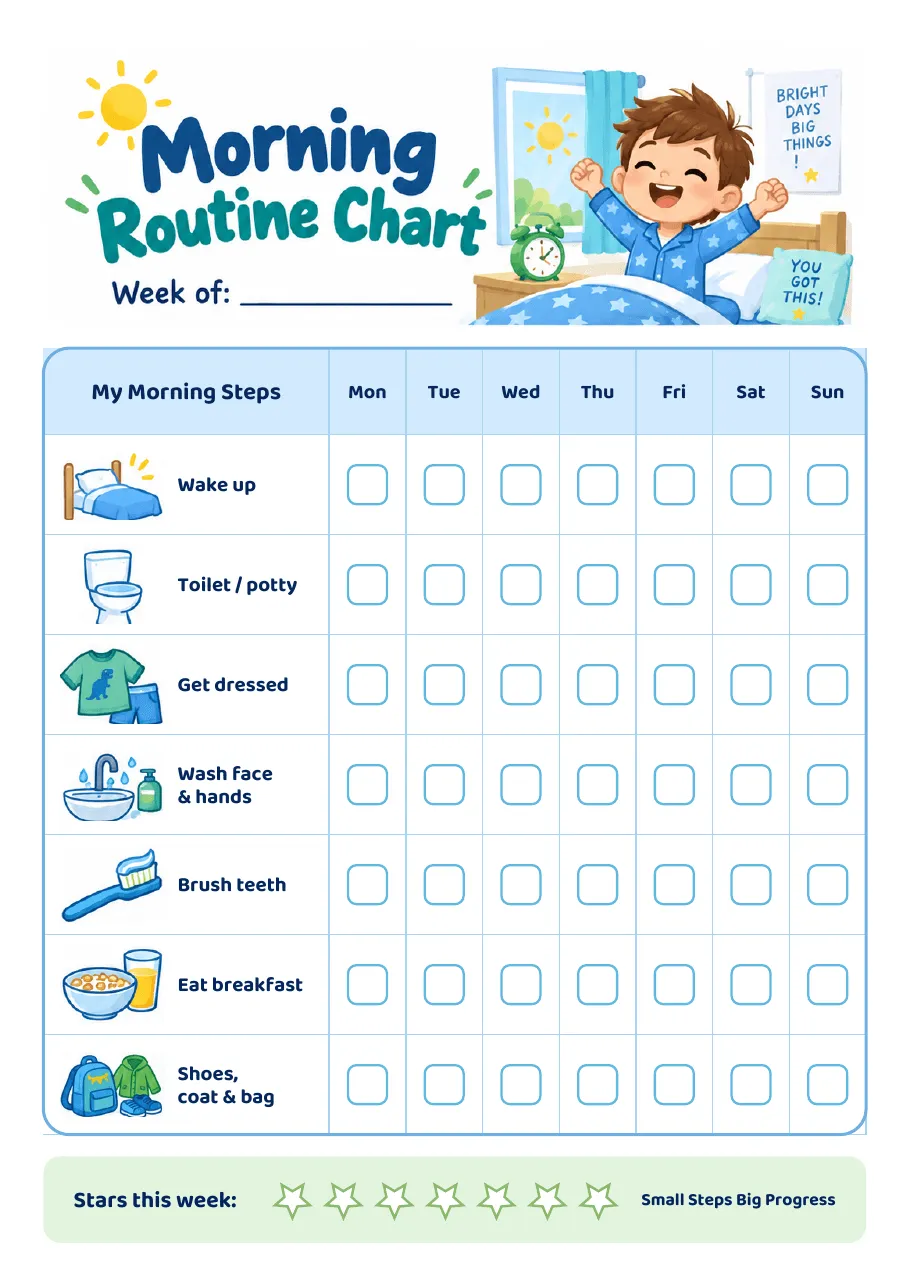
Morning routine chart, blue
The same seven morning steps in blues and greens, with a boy waking up on the header.
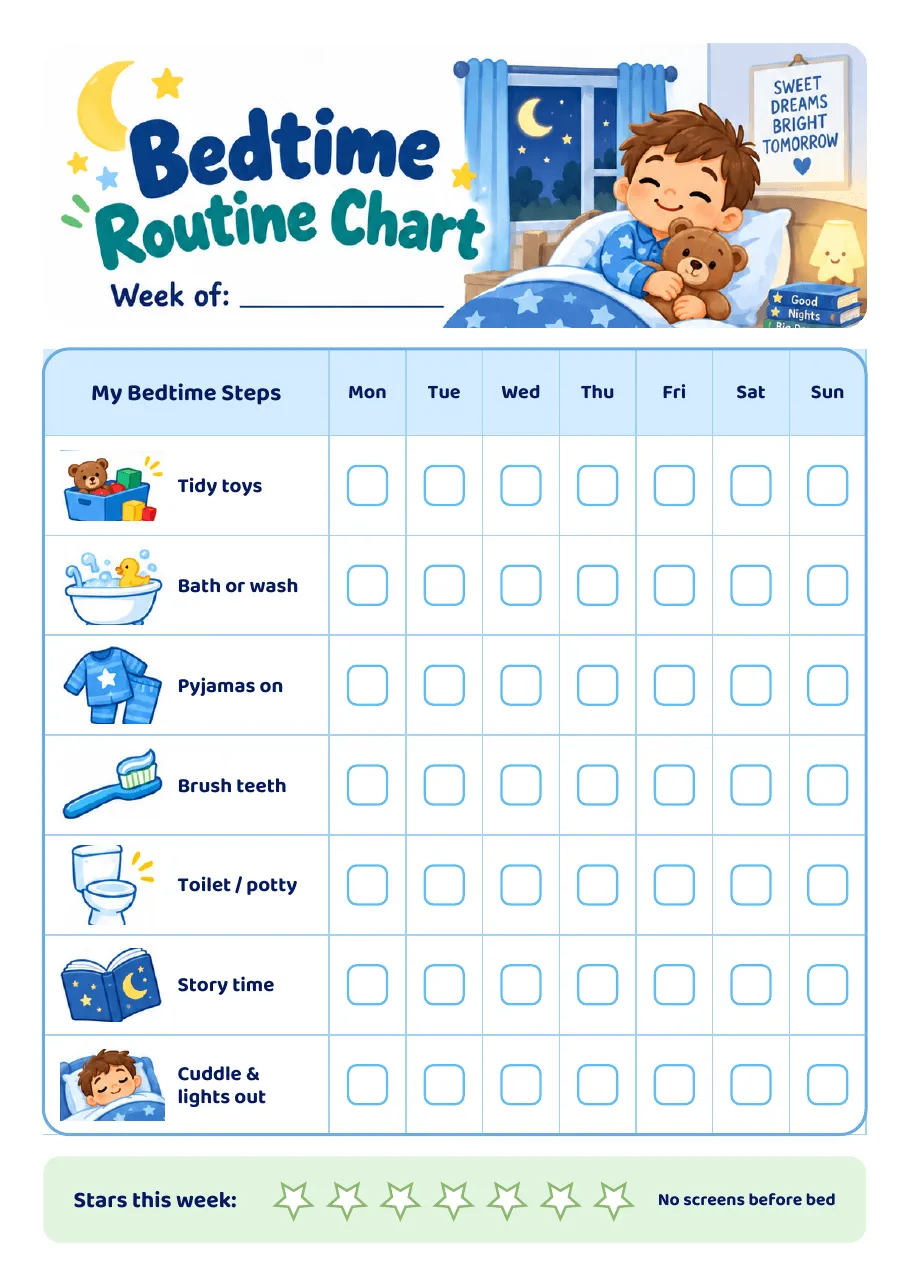
Bedtime routine chart, blue
The same seven bedtime steps in blues and greens, with a boy and a teddy on the header.
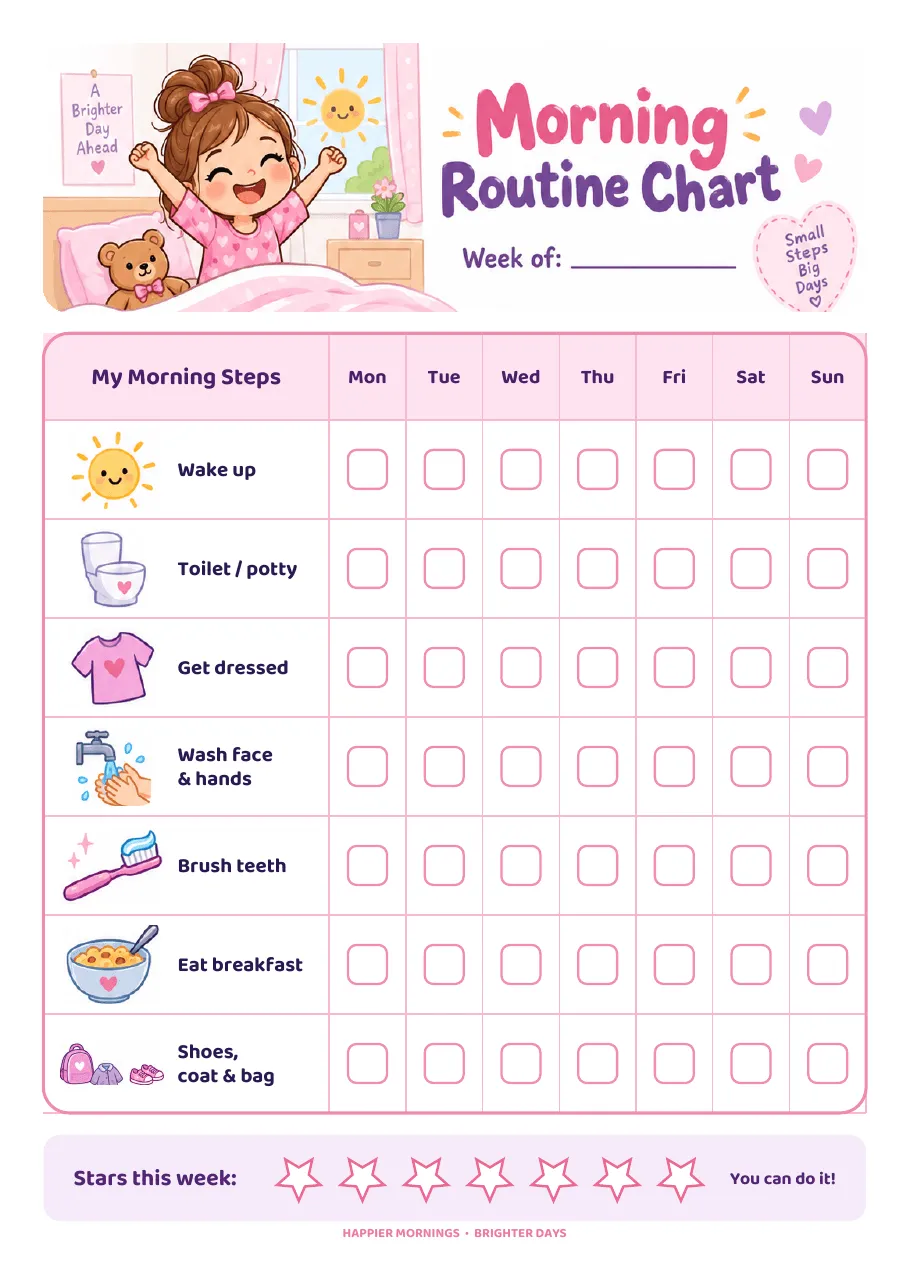
Morning routine chart, pink
The same seven morning steps in pinks and purples, with a girl stretching on the header.
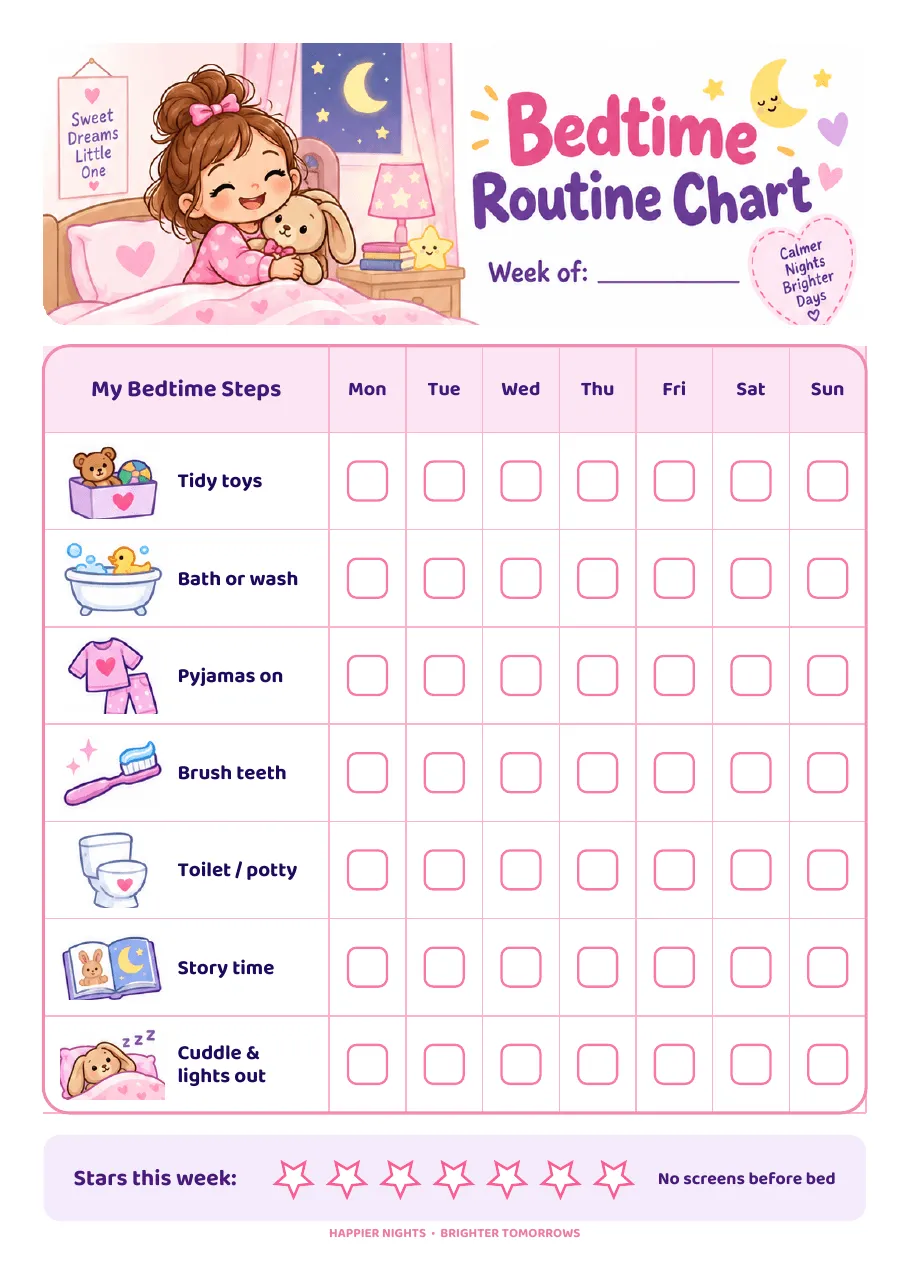
Bedtime routine chart, pink
The same seven bedtime steps in pinks and purples, with a girl and a bunny on the header.
Printing and putting these up
- These are A4 portrait sheets. Set the scale to 100% or actual size rather than fit to page, or the tick boxes come out too small to tick.
- They are full colour, which makes them the most expensive sheets on this site to print. Draft quality is fine, since nobody is inspecting the teddy.
- Put the morning chart where the morning happens and the bedtime chart where bedtime happens. Hallway and bedroom door works better than both of them on the fridge.
- A plastic wallet and a whiteboard pen turns one sheet into a whole term. Blu Tack rather than a frame, because the wall it needs to be on will change.
Common questions
My child cannot read yet. Will they be able to use it?
Yes, that is what the pictures are for. Point at the row rather than reading it out, and within a few days most children start pointing at it themselves. The words are there for whichever adult is on duty.
Can I change the steps?
Not on the sheet, since it is a fixed PDF. If your routine is very different, cross a row out with a pen and write over it. A chart with a crossing out on it still works.
Morning and bedtime on the same chart?
They are deliberately separate sheets. A single chart covering the whole day means a child looking at bedtime steps at half past seven in the morning, and the whole point is that they can see what is coming next.
Do the stars at the bottom mean anything?
Only what you decide. Some families tick one for each good day, some ignore them entirely. There is no prize built into the sheet, so nothing breaks if you never use that row.
How long before it stops being needed?
Longer than a reward chart, because this one is a reminder rather than a motivator. Plenty of families keep a morning chart up for a year or more and only take it down when nobody has looked at it for a fortnight.
Read next
What chores at what age
What children can realistically manage around the house at each age, how many jobs to put on a chart, whether to pay for them, and which jobs want an adult alongside.
Making a bedtime routine stick
Why bedtime routines fall apart after a week, what the NHS says actually helps young children settle, and how to move bedtime earlier without a fight.
Reward charts that actually work
Most reward charts fail for the same handful of reasons. What to put on a chart, what to reward, how long to run it, and when to take it down.
Printables that go with these
 12 sheets
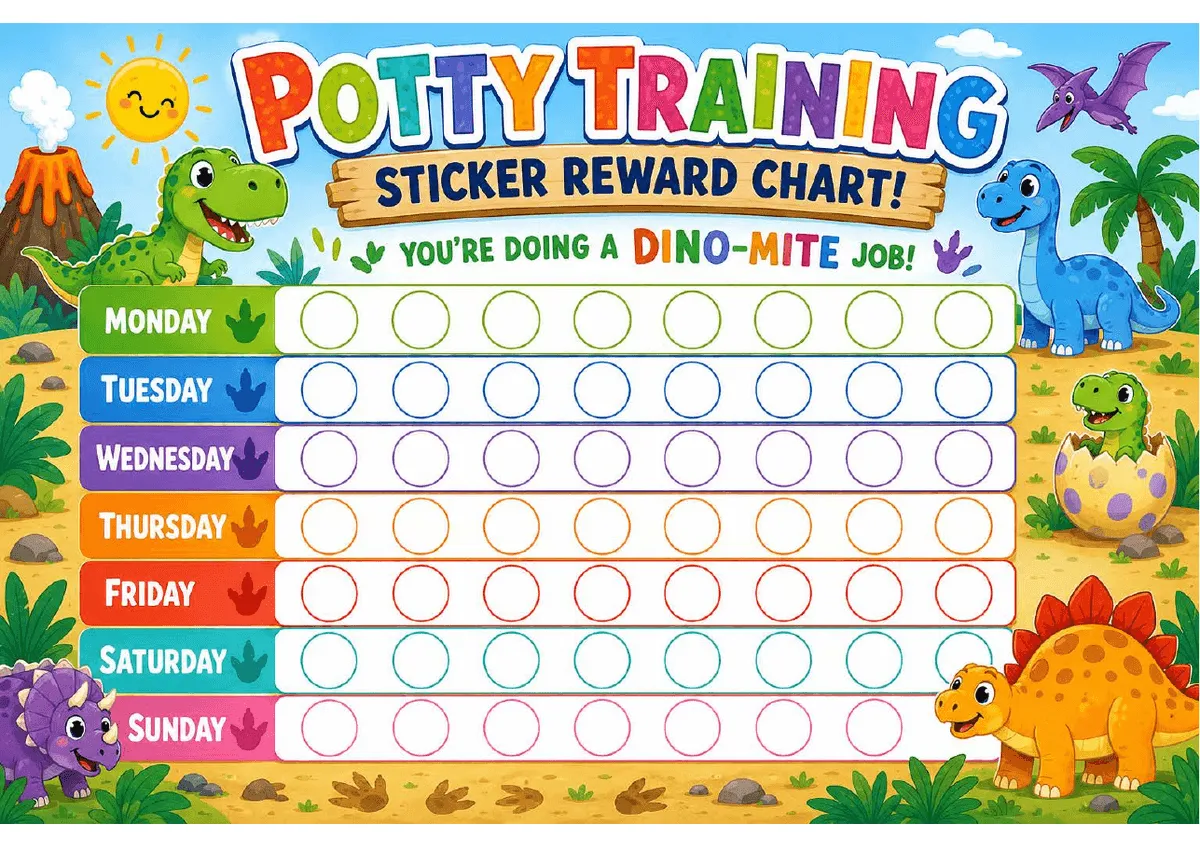
Potty training charts
Twelve free potty training sticker charts to print on A4, dinosaurs, unicorns, diggers, mermaids, sea life, woodland animals and more, with a full week of squares and the advice that goes with them.
 6 sheets
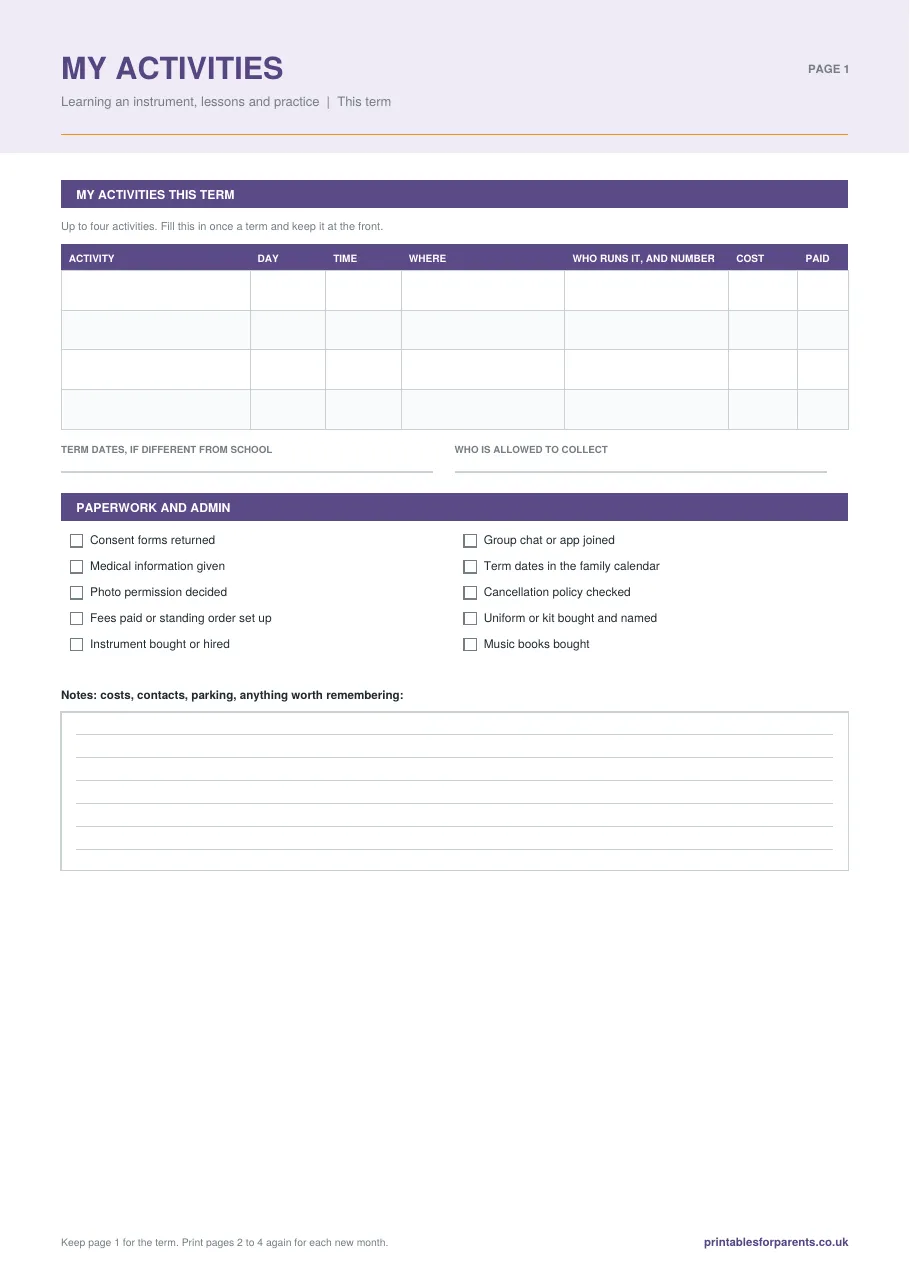
Activity and club trackers
Free printable trackers for after school clubs and activities. One page a term for the timetable, costs and admin, then three pages a month for the week, the effort and the achievements. Music, dance, drama, coding, Scouts and Guides, and a blank one.
 5 sheets
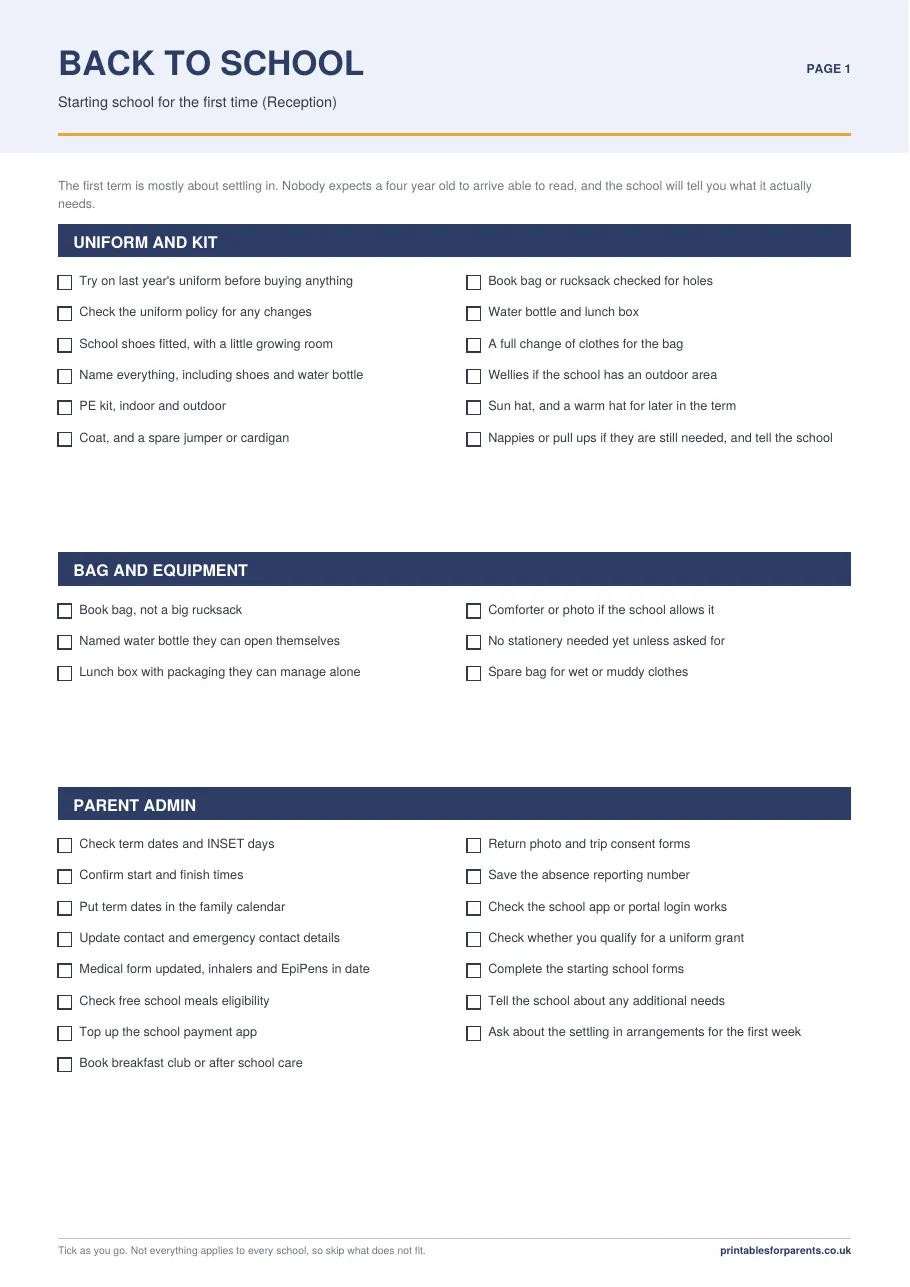
Back to school checklists
Free printable back to school checklists, one for each stage from starting Reception to the first week of secondary. Uniform, equipment, the parent admin, the routine reset and the conversations worth having first.
 3 sheets
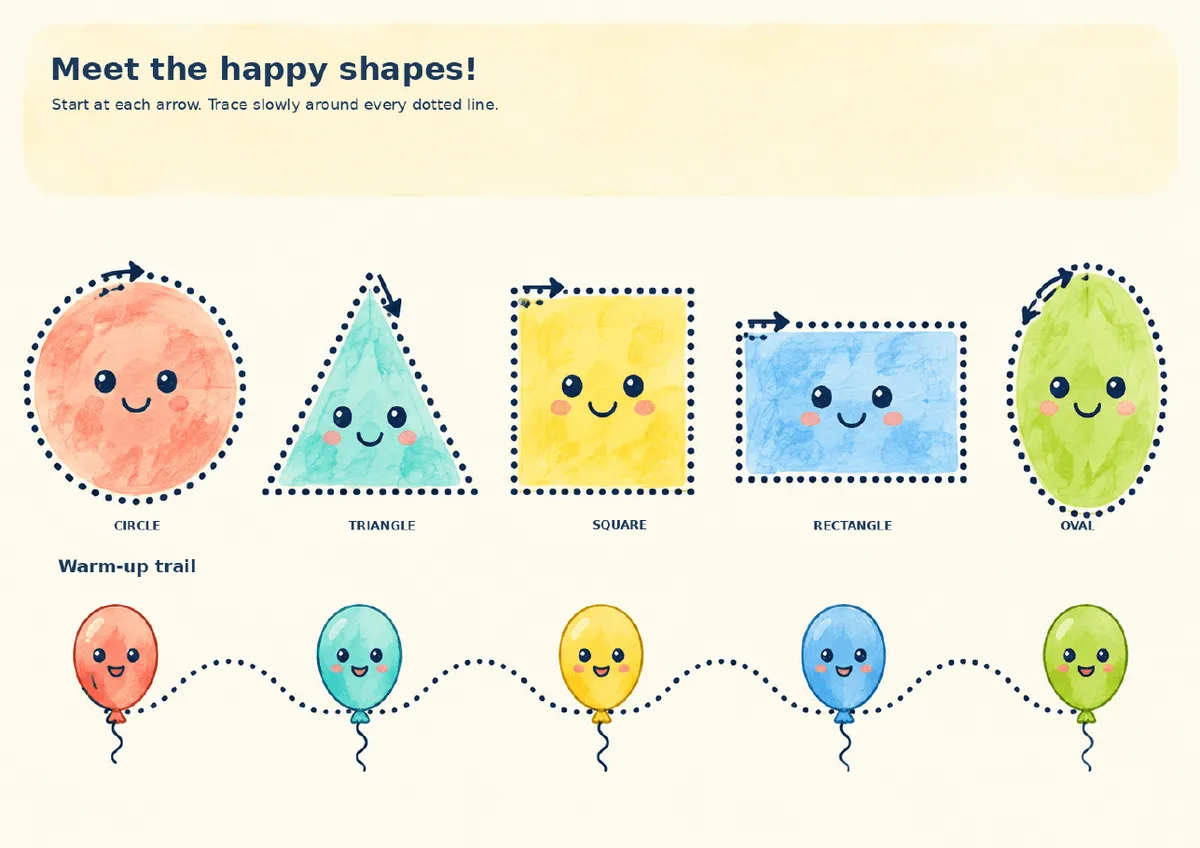
Shape tracing and pre-writing sheets
Three free printable packs for little hands: shape tracing, pre-writing line patterns and a cut out matching set. Twelve pages in total, all A4 landscape.