Guide
Making a bedtime routine stick
Why bedtime routines fall apart after a week, what the NHS says actually helps young children settle, and how to move bedtime earlier without a fight.
Most bedtime routines don’t fail on the first night. They fail somewhere around the second week, when the novelty has worn off, the child has worked out exactly how much they can get away with, and everyone is too tired to be consistent.
This guide is about the part that comes after the first enthusiastic attempt.
What the NHS says helps
The NHS sleep advice for young children is fairly simple, and it’s worth knowing before you start tinkering. The main points are these:
- Choose a set bedtime and keep the same calming routine at the same time each night.
- Start winding down about 30 minutes before your child usually falls asleep.
- Set a fixed limit on bedtime interaction, such as one story, then tuck in and say goodnight.
- Offer a favourite toy, dummy or comforter, and leave a dim light on if it helps.
- Avoid long afternoon naps, which can make it harder to settle at night.
- Avoid screens for 30 to 60 minutes before bed, and keep the lights low.
None of this is clever. The value is in doing the same boring things in the same order, which is exactly what a young child needs to recognise that bed is coming.
Moving bedtime earlier
If your child is going to bed much later than is good for them, you can’t change it in one go without a fight. The NHS suggests moving the routine earlier by 5 to 10 minutes each week, or by 15 minutes if your child goes to bed very late, until you reach the time you want.
It’s slower than most parents hope. It’s also much less likely to end in tears, and it gives your child time to adjust to each small change.
Why the chart helps, and when it doesn’t
A bedtime chart works best as a map. Bath, pyjamas, teeth, one book, lights off. Your child can see what comes next and tick it off as they go, which takes some of the negotiation out of it.
It stops working when it becomes a bargaining tool. If every step turns into a debate about whether the chart counts, put it away for a fortnight and go back to saying the steps out loud. You’re not failing. The chart is just one way of showing a routine, and the routine is the thing that matters.
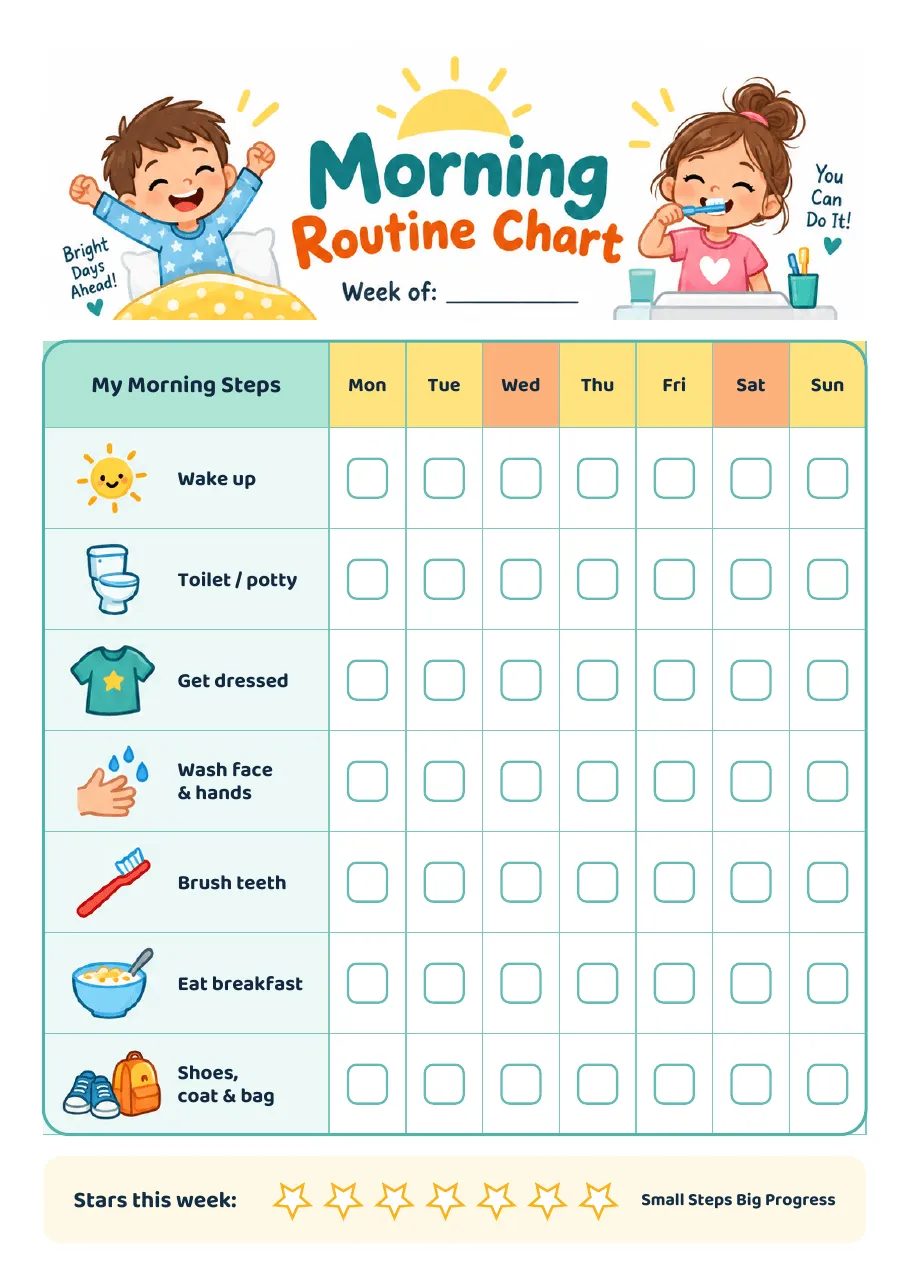
The routine charts here cover morning and bedtime, so you can use one or both.
When the routine falls apart
It will, at some point. A new sibling, a holiday, a poorly night, a house move. The useful thing is to go back to the basics rather than starting again from scratch. Same order, same time, same limit on stories. Most children settle back into a routine within a few nights if the adults are calm.
If your child is regularly waking, struggling to settle for long periods, or if you’re worried about their sleep or their behaviour during the day, speak to your health visitor or GP. The NHS suggests your health visitor is the first place to go for more support, and they may recommend a children’s sleep clinic if there’s one in your area.
Where this comes from
The advice above follows the NHS guidance on sleep and young children, which you can read at nhs.uk.
This is general information rather than advice about your child. Your health visitor or GP knows them and this website doesn’t.
Common questions
How long does a bedtime routine take to work?
Usually a couple of weeks of doing the same thing in the same order. Many children test it for the first few nights, so the early resistance tells you very little. Consistency is the part that does the work.
Should we use a bedtime chart?
It can help, especially for an older toddler who likes knowing what comes next. The chart is a reminder rather than a reward system, so it doesn't need stickers or a prize at the end. If it becomes another argument, put it away for a while.
My child wakes up in the night and wants us. What should we do?
The NHS advice is to return your child to bed calmly and with as little fuss as you can manage, and to stay consistent, because it can take several nights for a change to settle. Speak to your health visitor if you need more support.
Is screen time before bed really a problem?
The NHS suggests avoiding screens for 30 to 60 minutes before bed and keeping the lights low. A tablet in bed is the hardest version of this to change, so it's usually the first thing to move.