Browse by purpose
Trackers and charts
Reward charts, habit trackers, potty charts, reading logs and feed logs: sheets for recording something over days or weeks and seeing the pattern.
10 topics · 51 printable sheets
Printables in this section
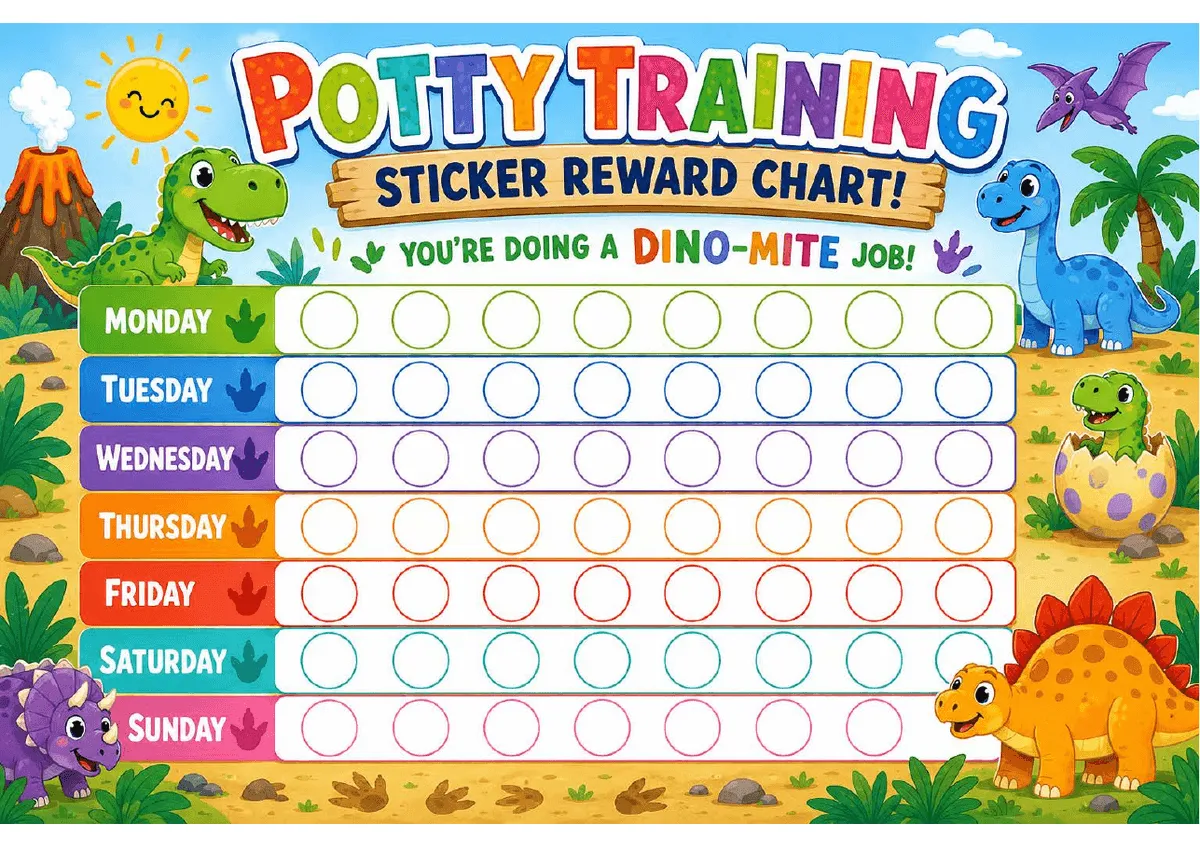 12 sheets
Potty training charts
Twelve free potty training sticker charts to print on A4, dinosaurs, unicorns, diggers, mermaids, sea life, woodland animals and more, with a full week of squares and the advice that goes with them.
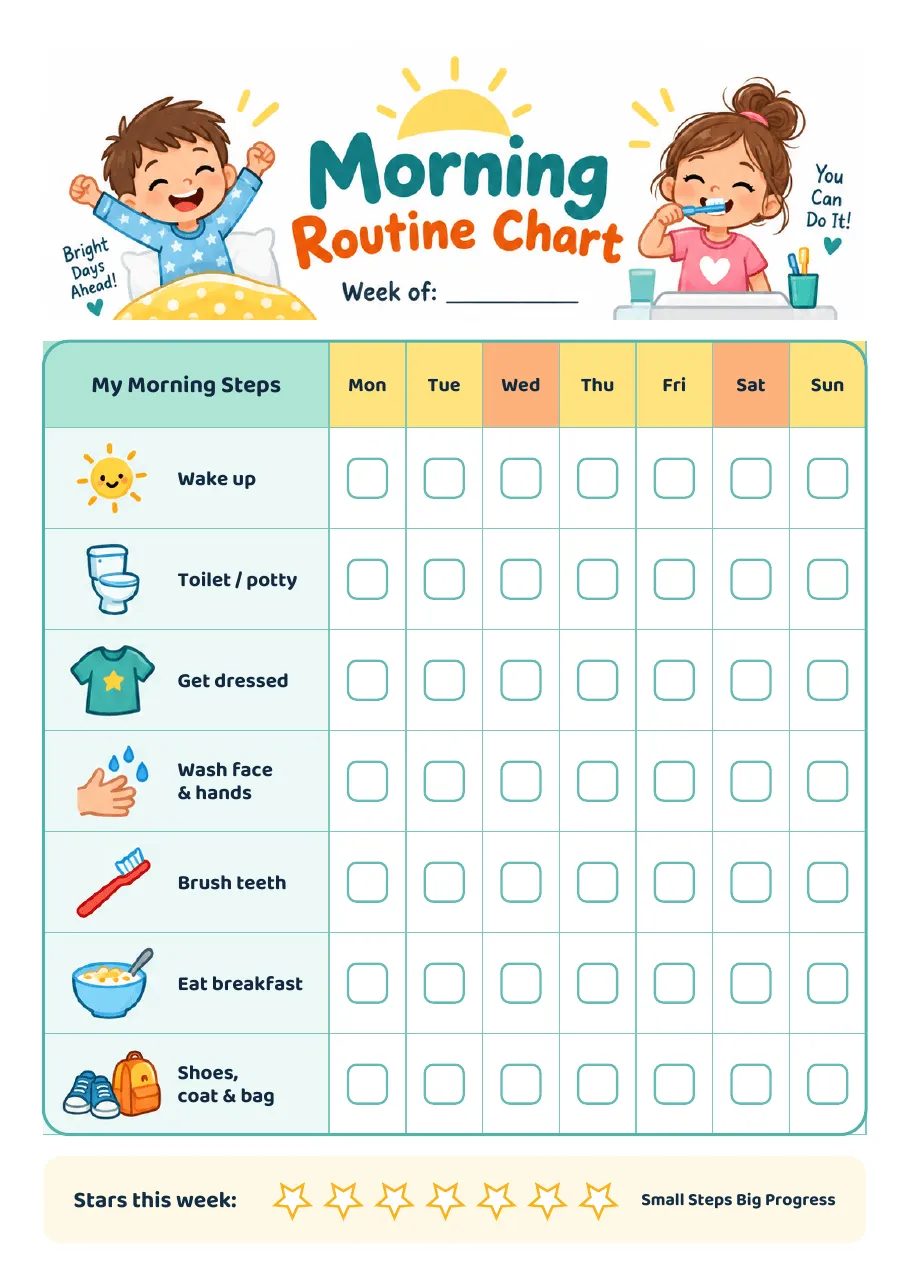 6 sheets
Routine charts
Six free morning and bedtime routine charts to print on A4, in a colourful design and in pink and blue, with picture steps a child can follow before they can read and a full week of boxes to tick.
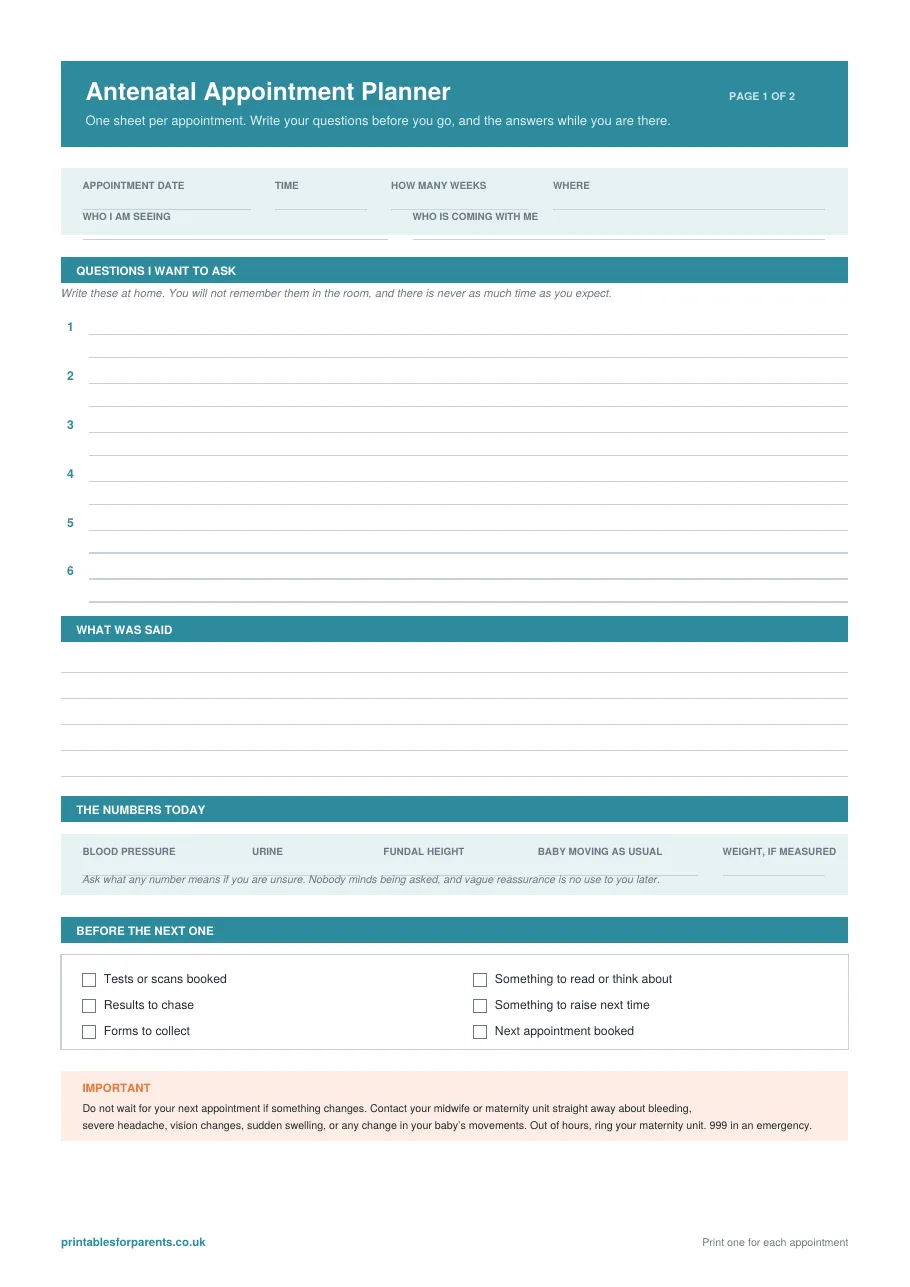 1 sheet
Antenatal appointment planner
A free printable planner for your antenatal appointments. One sheet per appointment for the questions you meant to ask, plus a page holding the whole schedule so you can see what's booked and what isn't.
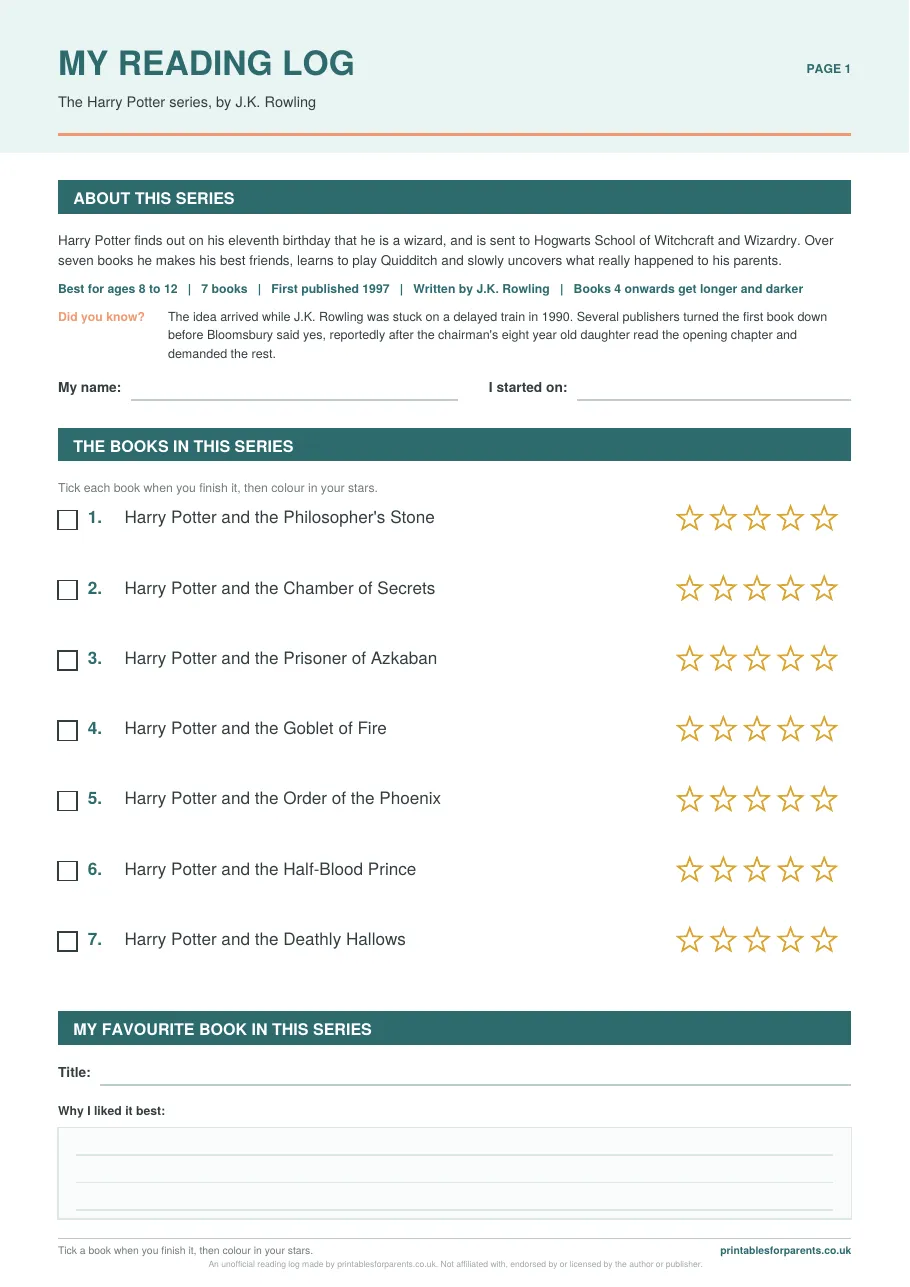 10 sheets
Reading logs
Free printable reading logs built around the series children actually read, with the books already listed so they can tick them off, rate them and write what they thought. Plus a blank one for any series at all.
 1 sheet
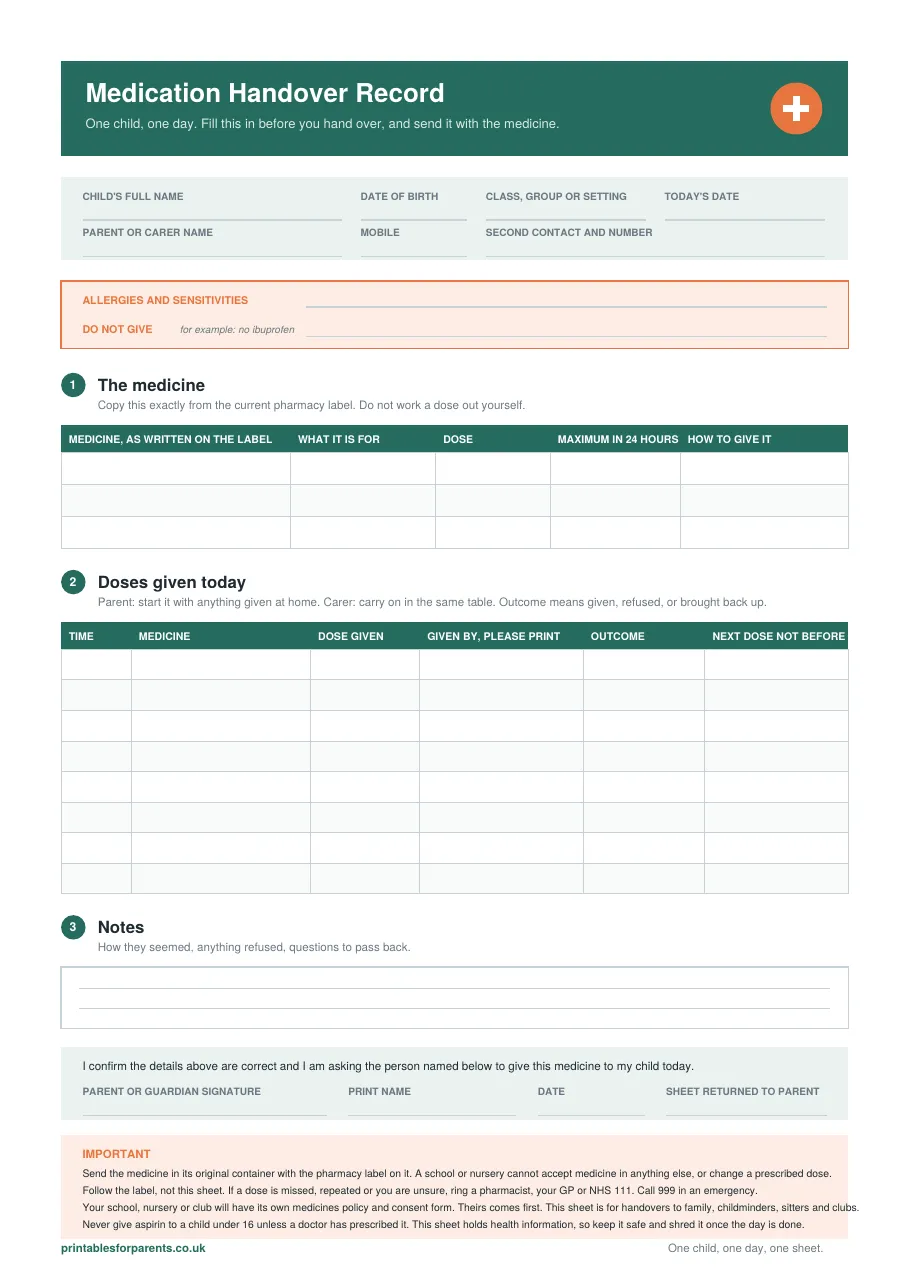
Medication handover record
A free printable one day medication record for handing your child's medicine to somebody else: a grandparent, a childminder, a sitter or a holiday club. One child, one day, one sheet.
 4 sheets
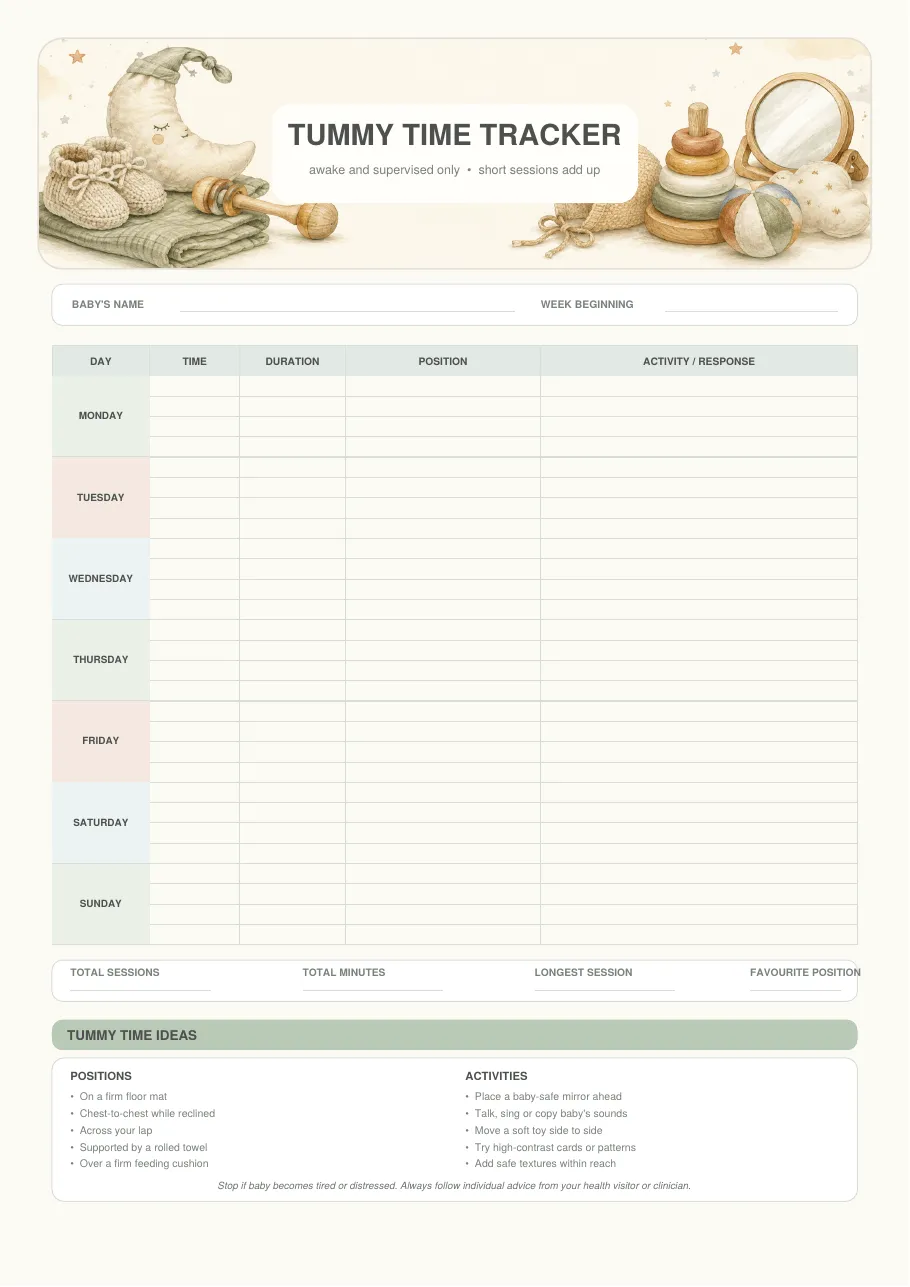
Tummy time trackers
Four free printable tummy time trackers for the first few months, with somewhere to note the position, how long you managed and whether anybody enjoyed it. Blue, pink, illustrated and a plain ink-light version.
 6 sheets
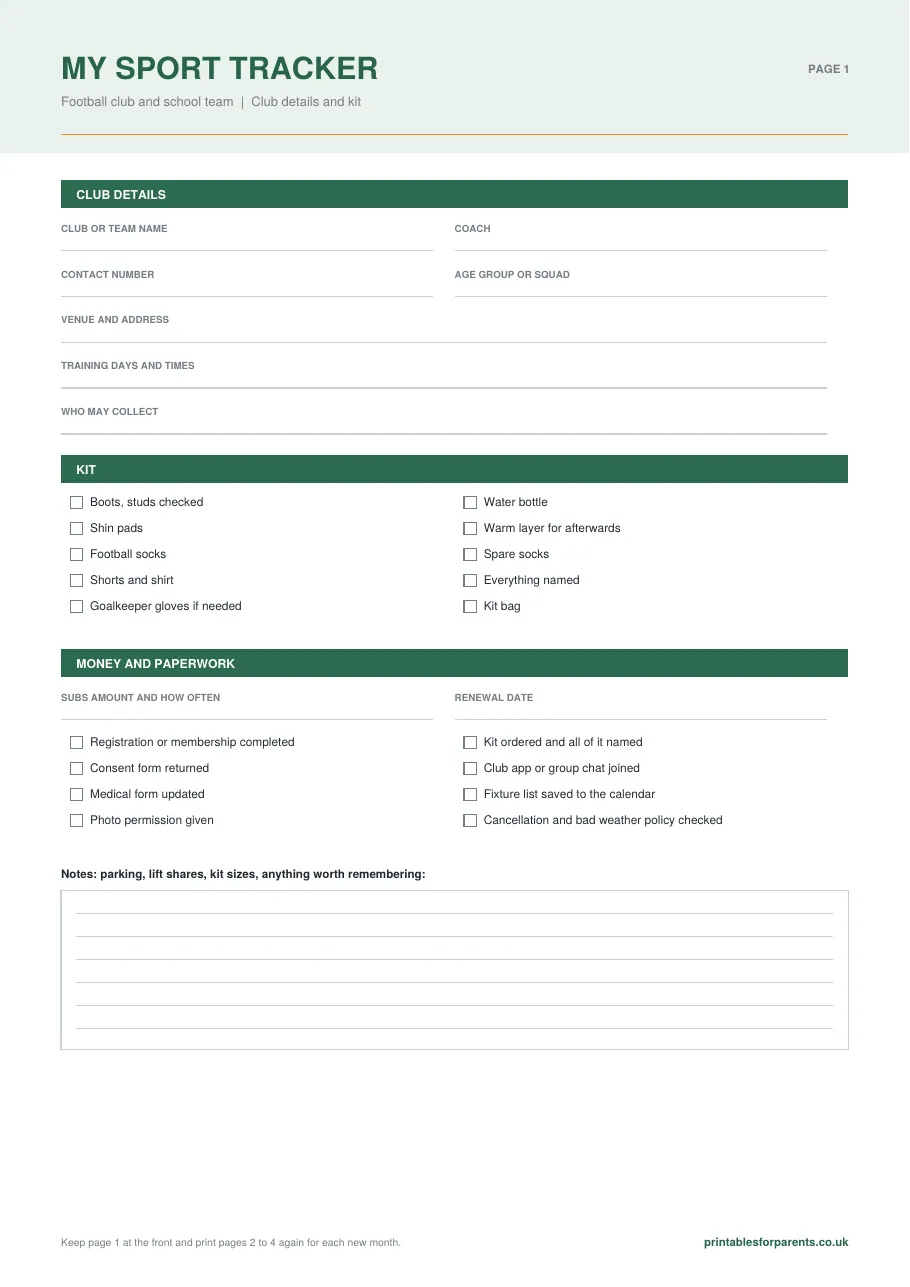
Sport trackers
Free printable trackers for children's sport. One page of club details and kit that you fill in once, then three pages a month for fixtures, effort and progress. Football, netball, rugby, gymnastics, swimming and a blank one.
 6 sheets
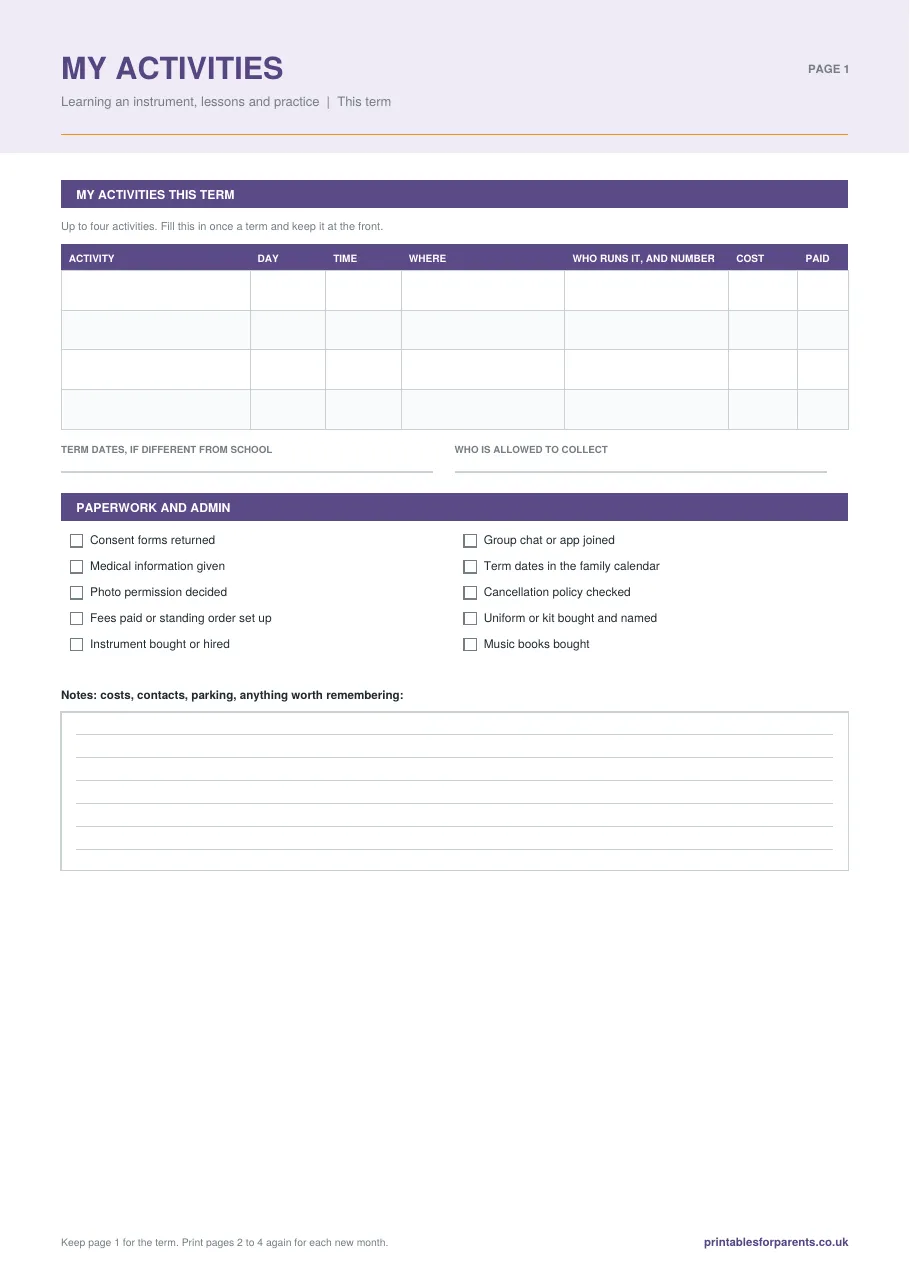
Activity and club trackers
Free printable trackers for after school clubs and activities. One page a term for the timetable, costs and admin, then three pages a month for the week, the effort and the achievements. Music, dance, drama, coding, Scouts and Guides, and a blank one.
 1 sheet
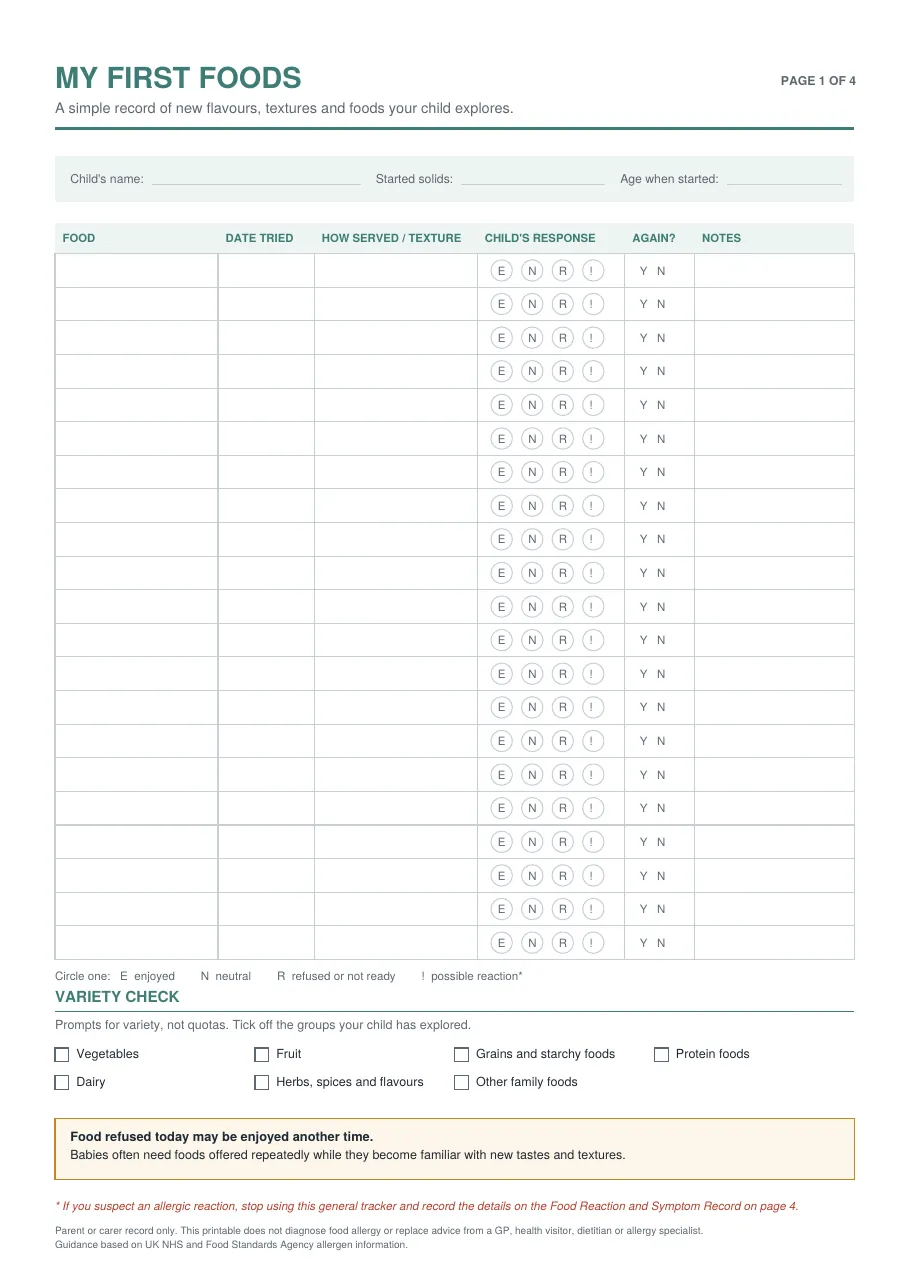
First foods and allergen tracker
A free printable four page tracker for weaning. Somewhere to record new foods, a chart for introducing the UK 14 allergens, a page for keeping them in the diet afterwards, and a detailed reaction record to take to an appointment.
 4 sheets
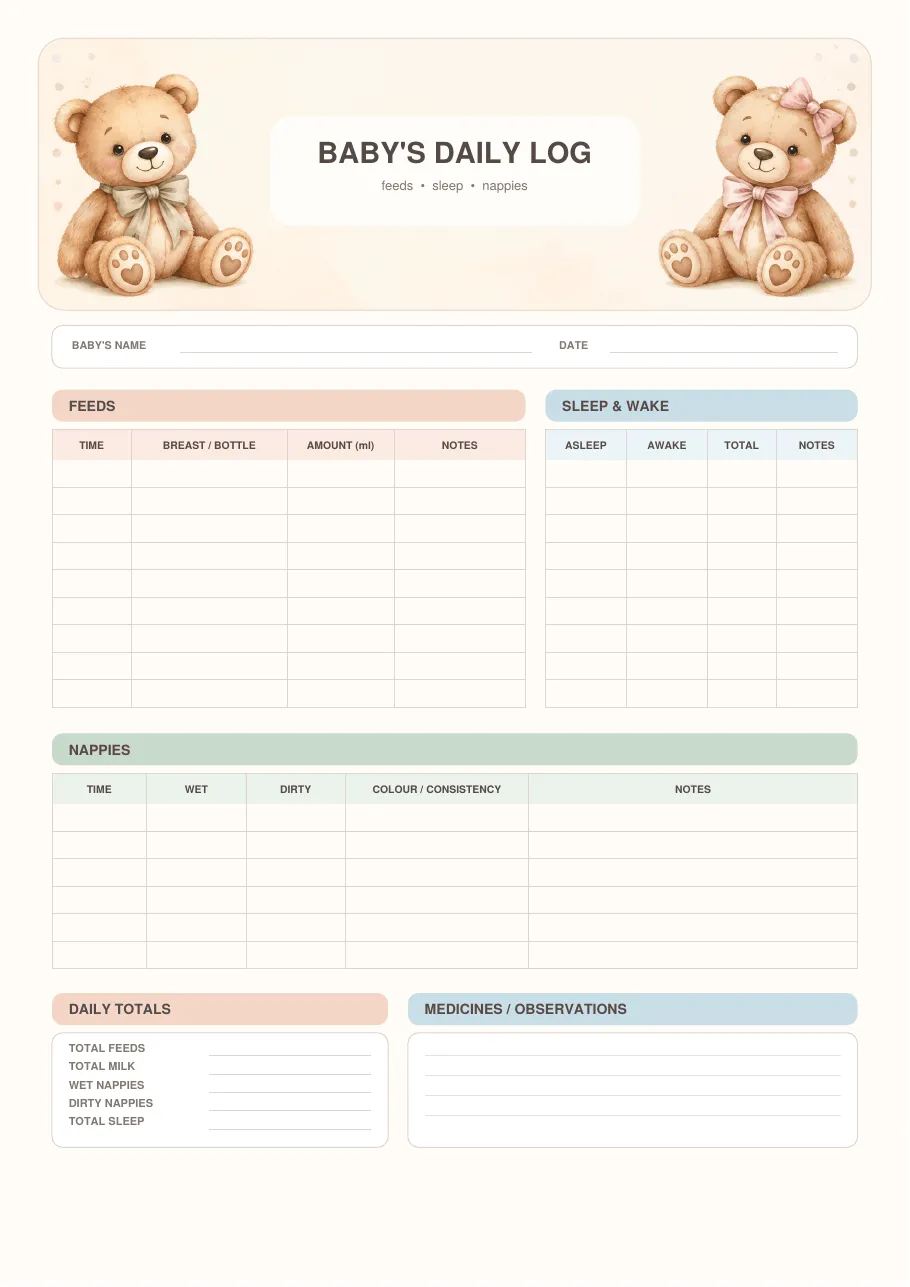
Newborn daily logs
Four free printable daily logs for feeds, sleep and nappies, all on one A4 sheet. Teddies, elephants, wooden blocks or a plain version for when the ink is running low.
Two different jobs, and it helps to know which one you’re doing
Recording. A feed log, a reading log, a tummy time sheet. The value is the record itself, usually for somebody else to look at. Accuracy matters here, motivation doesn’t.
Motivating. A reward chart, a habit tracker. The value is your child watching the row fill up. Accuracy barely matters, and the visible run of stickers is the entire point.
Trouble starts when a motivating chart gets treated like a recording one: going back to correct a sticker, or removing one after a bad day. That breaks it completely, and it’s very hard to un-break.
Keep the horizon short
Small children genuinely can’t picture next week. A chart that pays out today, or at the absolute latest tomorrow, is the one that changes anything. Everything else is a piece of paper on a wall.
Never take one back
The commonest way to break a motivating chart. Removing a sticker that was earned turns the chart into something that can be lost, and loss is a far stronger feeling than gain. After that it frightens rather than motivates.
A bad day simply doesn’t earn one, and that’s enough. The rest of the mechanics, running two sheets for two children, what to do about an end reward, and when to retire a chart altogether, are worked through properly in reward charts that actually work.
Who holds the pen
Worth settling before you print anything, because it changes which sheet you want. On a recording sheet, whoever did the thing writes it down, which usually means an adult and usually means straight away. On a motivating sheet the child does it, badly, with their own pen, and that is most of the point.
The ones that fail are the ones where nobody decided. A feed log two adults both half fill in has gaps neither of them noticed. A sticker chart an adult keeps neat stops belonging to the child inside a week.
What to do with the finished ones
A motivating chart has done its job the moment the habit holds, and it can go in the recycling with a bit of ceremony. Let them tear it up if they want to.
A recording sheet is different, because somebody may ask about it months later. Keep feed logs, medication records and allergen charts until whatever they cover is settled, then keep them a while longer. A photograph on your phone counts, it takes ten seconds, and it has got me out of trouble in a GP’s room more than once.