Activity and club trackers
Free printable trackers for after school clubs and activities. One page a term for the timetable, costs and admin, then three pages a month for the week, the effort and the achievements. Music, dance, drama, coding, Scouts and Guides, and a blank one.
Also known as: after school club planner, activity tracker for kids, music practice chart, club timetable printable, extracurricular tracker.
The page that shows you the week you have actually agreed to
Page two lays a normal week out in one grid: day, activity, when it starts, when you need to leave, who is taking them and who is collecting.
Filling it in is frequently the moment somebody realises Thursday involves two pickups in different directions. That’s the sheet doing its job. I found out this way that I had agreed to be in two places at 5pm on a Wednesday from September.
Term at the front, month behind it
Page one is termly. Four activities with their day, time, venue, who runs it, what it costs and whether it’s paid, plus the admin that always lands at once: consent forms, medical information, photo permission, the group chat nobody mentions until you have missed something in it.
Pages two to four are monthly, so print those again each month and leave page one where it is.
Written to suit whichever club you’re at
The dance sheet covers ballet, tap, modern and street, so the milestones are deliberately neutral: a first assessment, a first level passed, moving up a class, learning a full routine, performing in front of an audience. No exam board’s grade names, because they differ and half of them would be wrong for your child’s school.
The Scouts and Guides sheet is worded to work for Beavers, Cubs, Rainbows and Brownies without leaning on terminology that belongs to only one organisation. Making a promise, earning a badge, a first camp, taking on a responsibility, helping another member.
Room for the things nobody hands out a certificate for
Page four is achievements and milestones rather than badges and grades, because plenty of good clubs have neither.
The coding sheet is the clearest example. The first program that worked, the first bug fixed without help, the first thing made that nobody asked for. Those are the moments a child remembers, and none of them comes with a certificate.
The effort stars
Same as on the sport trackers, and the same rule applies. They’re for how hard they tried rather than how well it went. A child who colours five stars after a lesson that went badly has read the sheet correctly.
Setting it up in one evening
Sit down with the calendar app and the club letters on the same evening, and fill in page one first. Take the times, the venues and the costs straight from the letters rather than from memory. Then put the consent forms and the photo permissions on a separate list, with a date next to each, so nothing lands on a Thursday night when you’re already tired.
When a club ends
Keep the finished page in a folder with the others, and don’t throw it away at the end of term. Ask your child which part of the activity they remember best, and write their answer in the notes at the bottom. Years later it’s often the only record of what they were doing, and the answer is usually more interesting than the name of the club.
When plans change
Replace the row rather than crossing it out. A sheet covered in crossings out is hard to read at a glance, and a fresh row with the new time and venue is quicker to check on a busy morning. If a club changes permanently, print a new copy of the page for the new term instead of keeping a mess of changes on the old one.
One sheet per child
Keep one copy for each child, with the same layout, so that anyone looking after them for an afternoon, such as a grandparent or a childminder, can find the right information without asking. It also means you aren’t trying to remember two children’s Saturday mornings on a single sheet of paper.
6 free activity and club trackers to print
Every sheet is a PDF sized for A4. Tap a design to download it. No sign-up, no watermark.
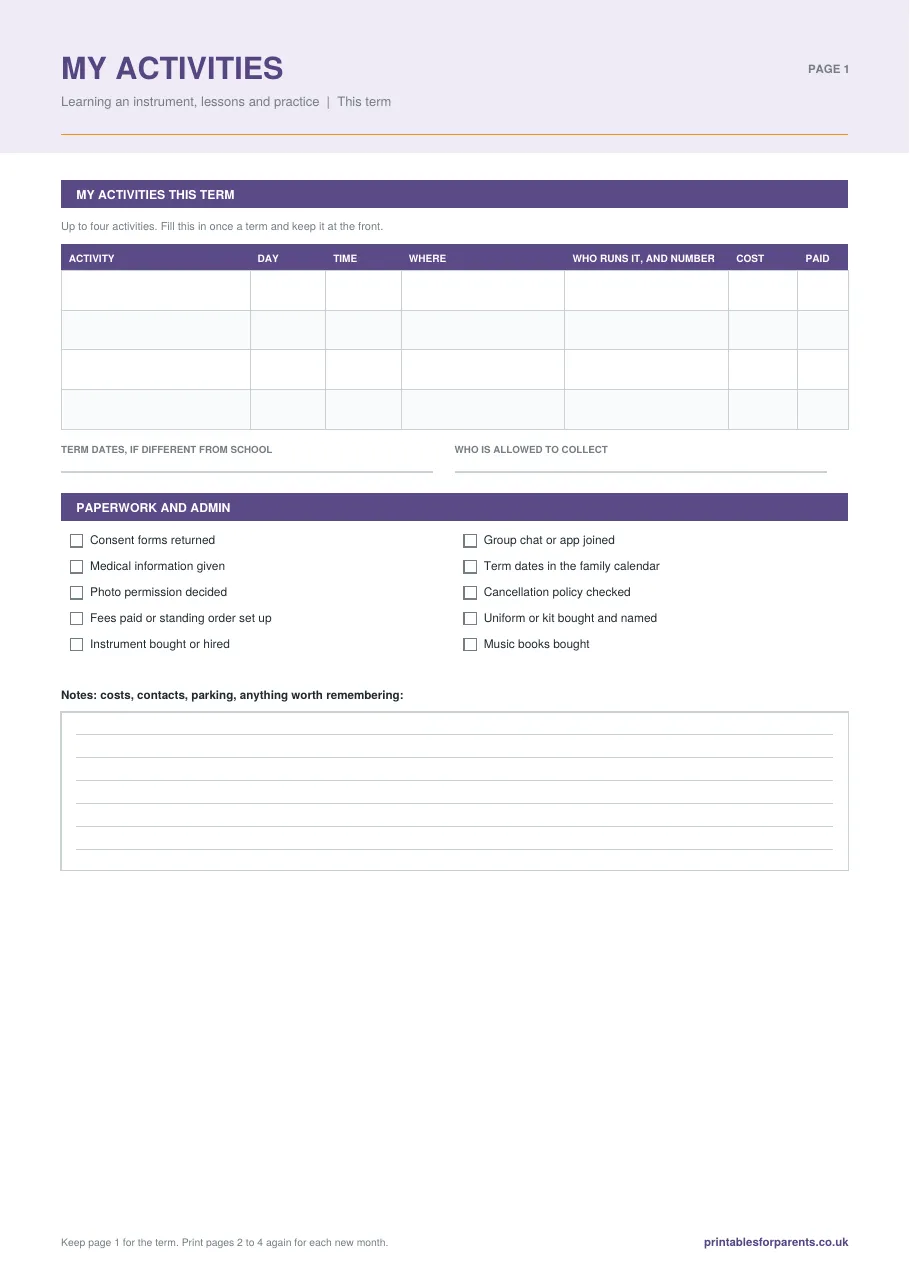
Music tracker
Lessons and practice, with graded exams, first concert and learning a whole piece by heart.
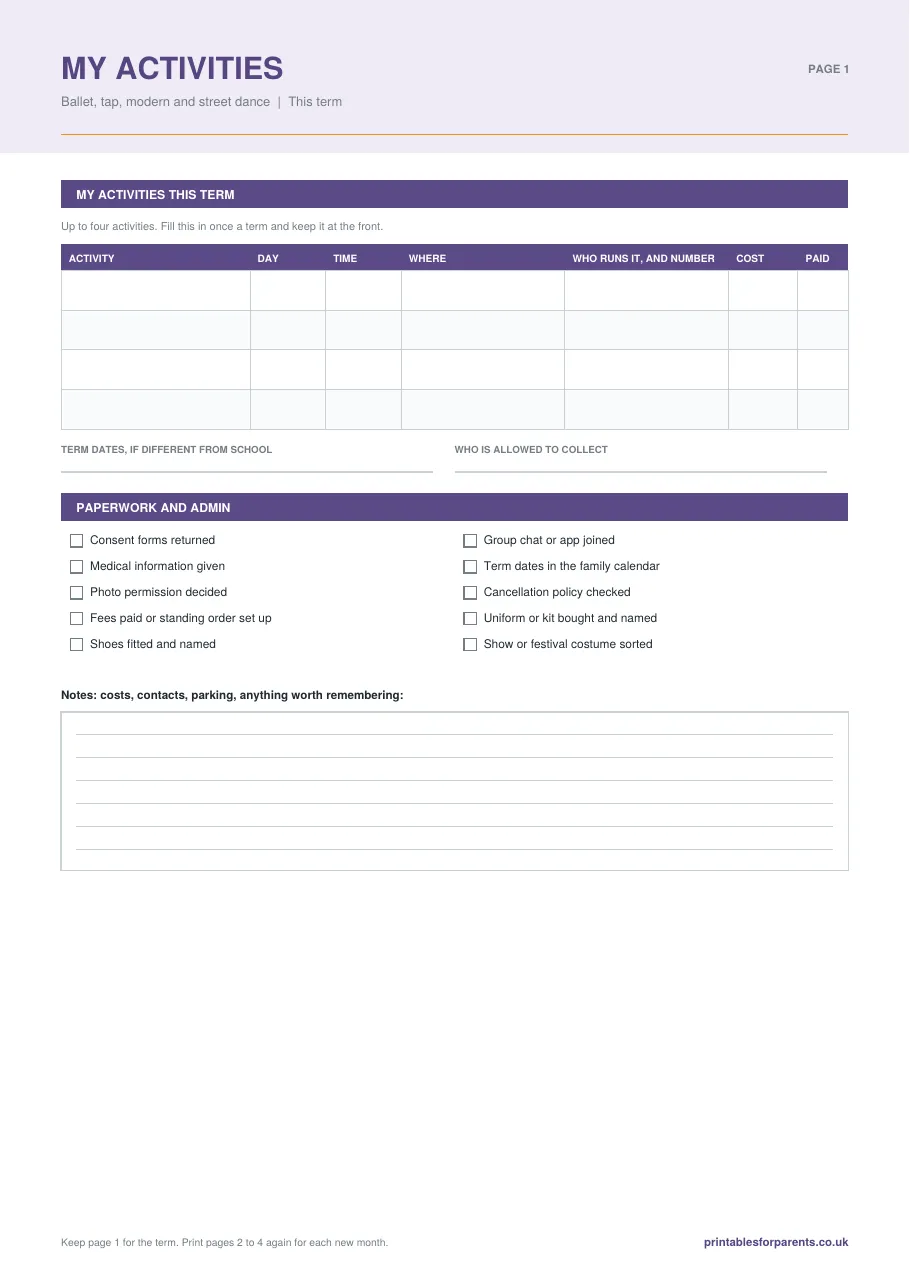
Dance tracker
Ballet, tap, modern and street. Milestones are syllabus neutral, so any school's grading fits.
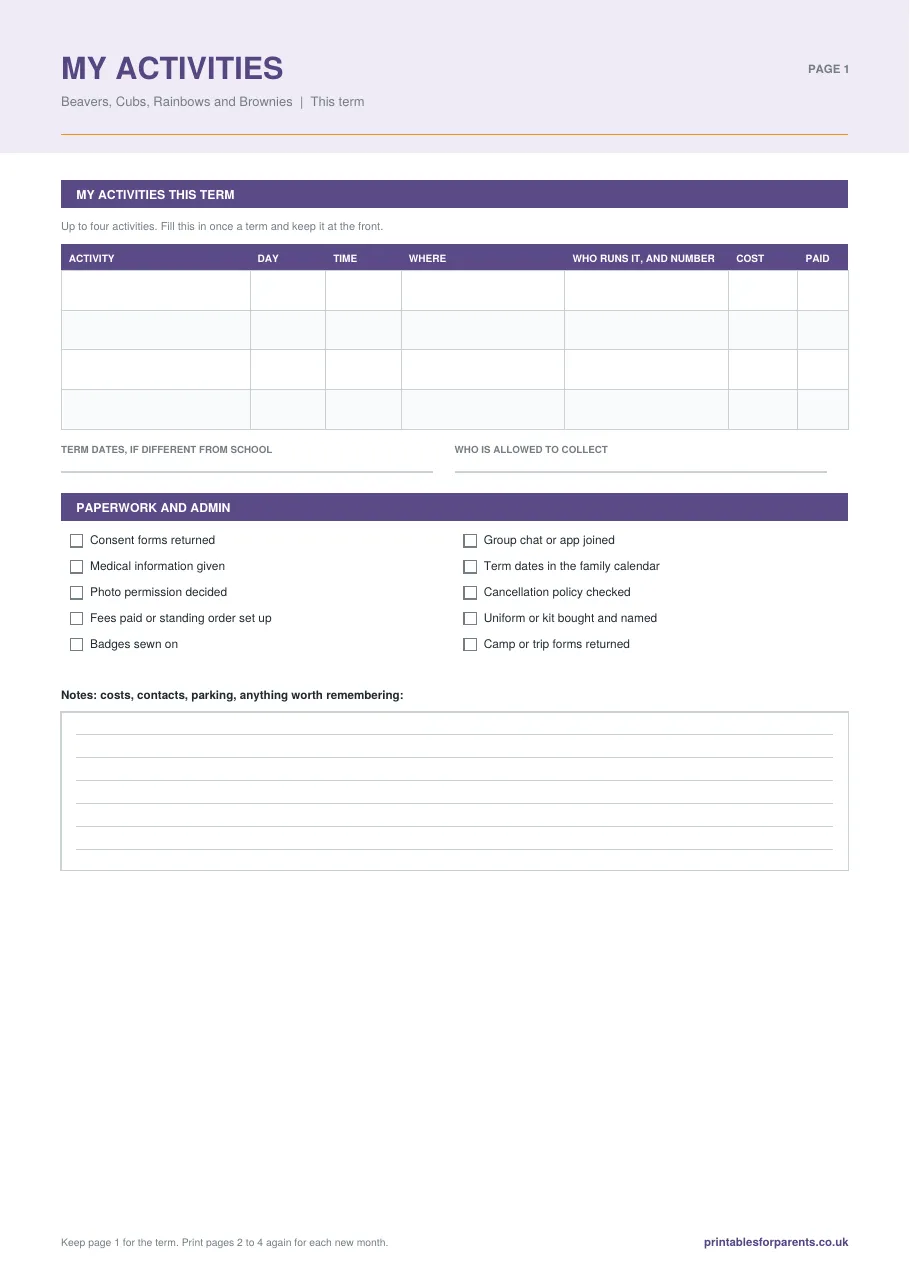
Scouts and Guides tracker
Beavers, Cubs, Rainbows and Brownies. Worded to suit both, including camps and first sleepovers.
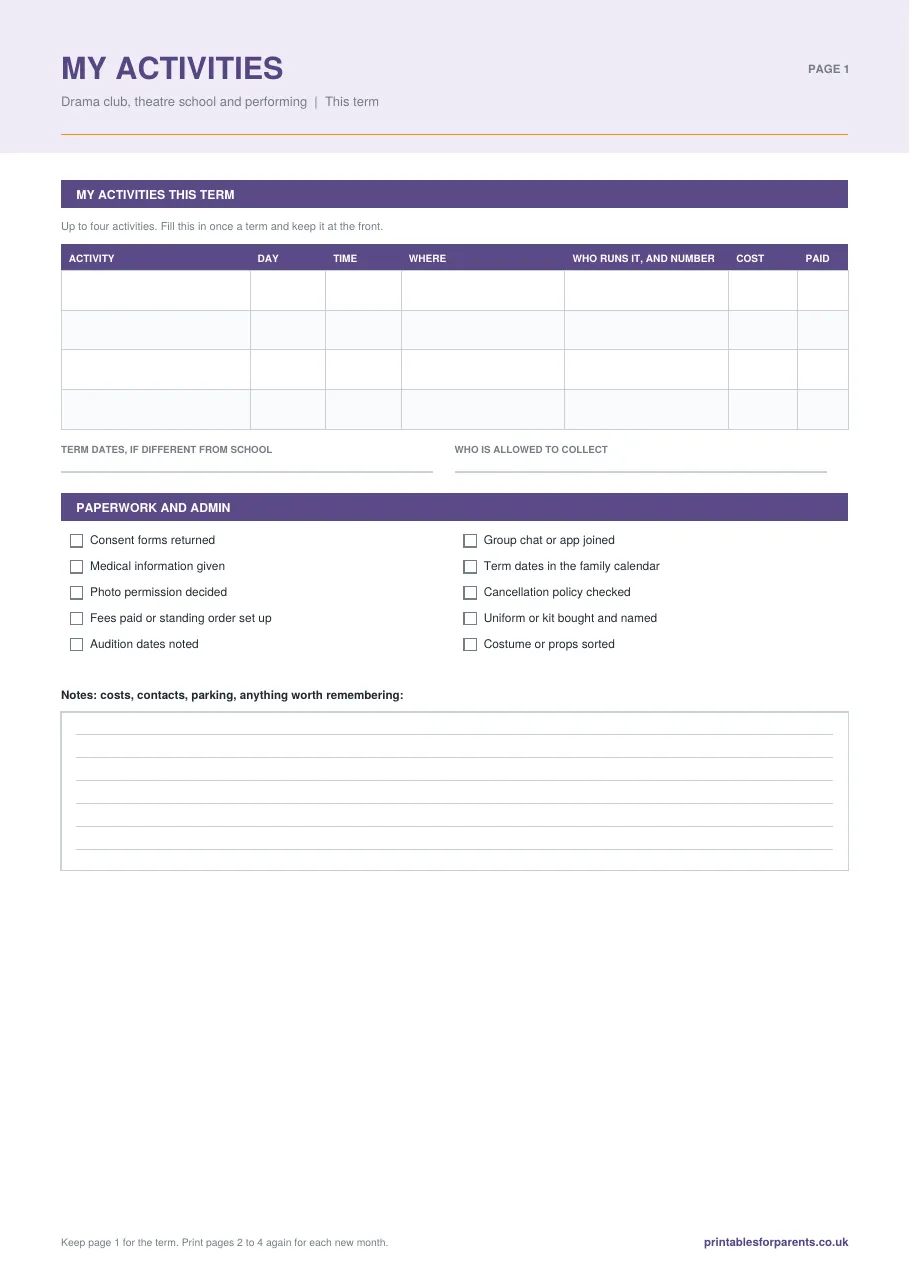
Drama tracker
Drama club and theatre school. First speaking part, learning all the lines, helping backstage.
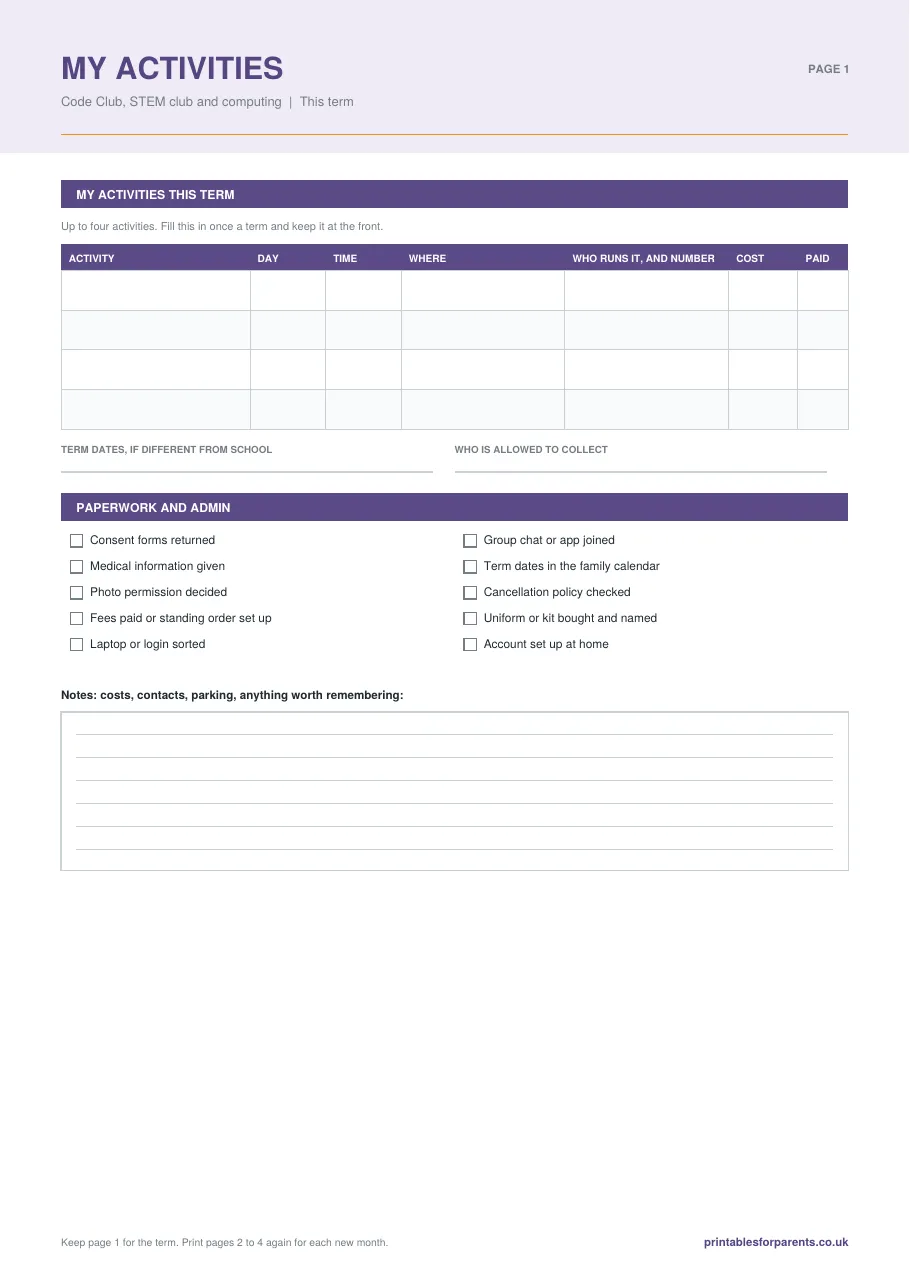
Coding and STEM tracker
Code Club and computing. First program that worked, first bug fixed alone, first game made.
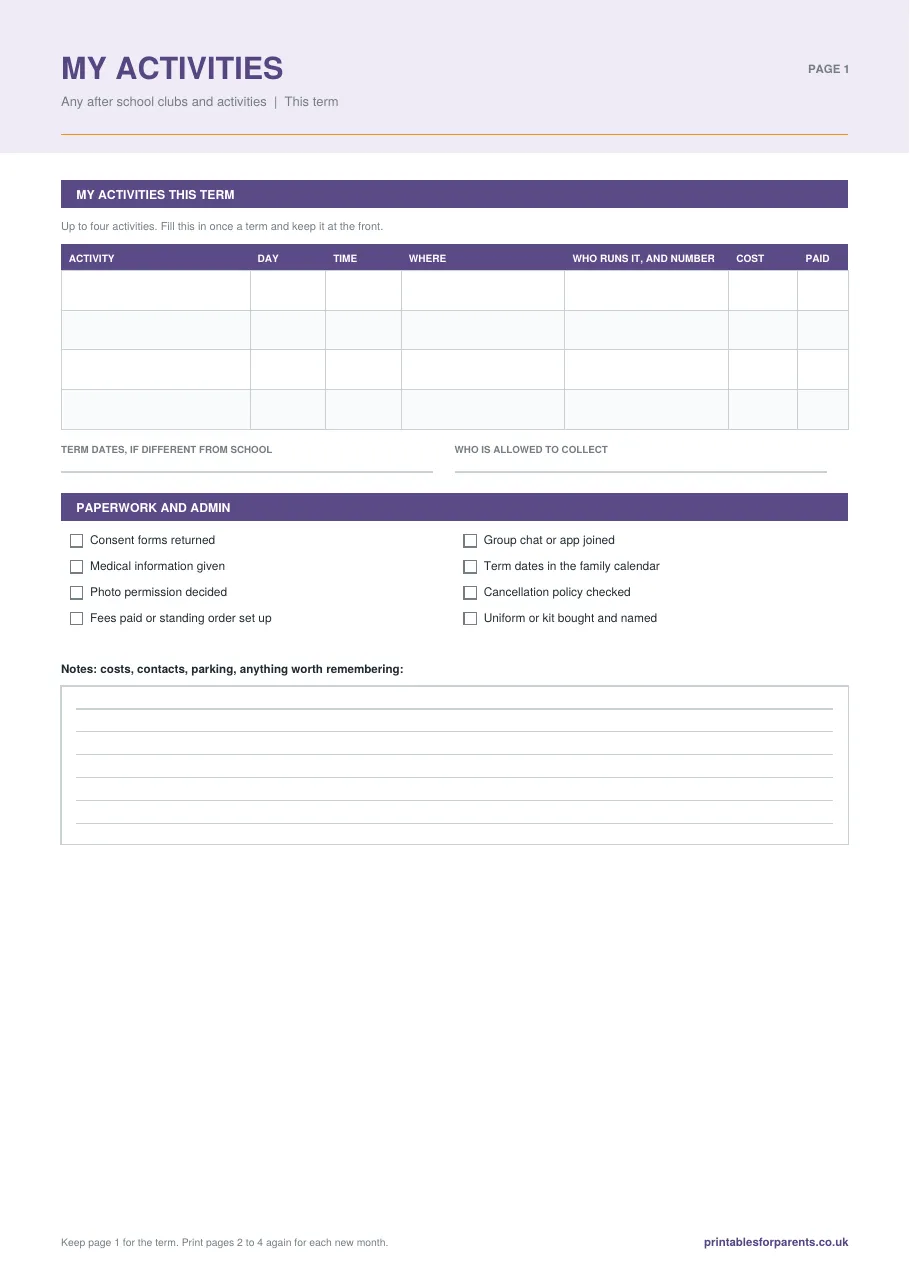
Any activity tracker
The same four pages with nothing pre-filled. Works for any club, including one that lasts half a term.
What to print, and when
- Print page 1 once a term. Pages 2 to 4 are monthly, so print those again each month.
- Page 2 holds up to four activities across a normal week, which is where most families find out they have committed to more than they thought.
- The blank tracker works for anything not covered, including clubs that only run for half a term.
Common questions
What if my child does three different things?
Page 1 takes four activities with their day, time, venue, who runs it and what it costs, and page 2 lays a normal week out in one grid. Seeing all of it on one sheet is often the moment somebody decides Thursday is too much.
Are these tied to a particular exam board or organisation?
No. The dance sheet uses neutral milestones rather than one syllabus, since it covers ballet, tap, modern and street. The Scouts and Guides sheet is worded to suit Beavers, Cubs, Rainbows and Brownies equally, without terminology belonging to only one of them.
What goes in the one-offs box?
Shows, competitions, gradings, trips and camps. Anything that breaks the normal week, which is exactly the thing that gets missed because it isn't in the usual pattern.
My child's club has no badges or grades.
Page 4 is called achievements and milestones for that reason. The coding sheet, for instance, tracks the first program that worked and the first bug fixed on their own, which matter far more to a nine year old than any certificate.
Printables that go with these
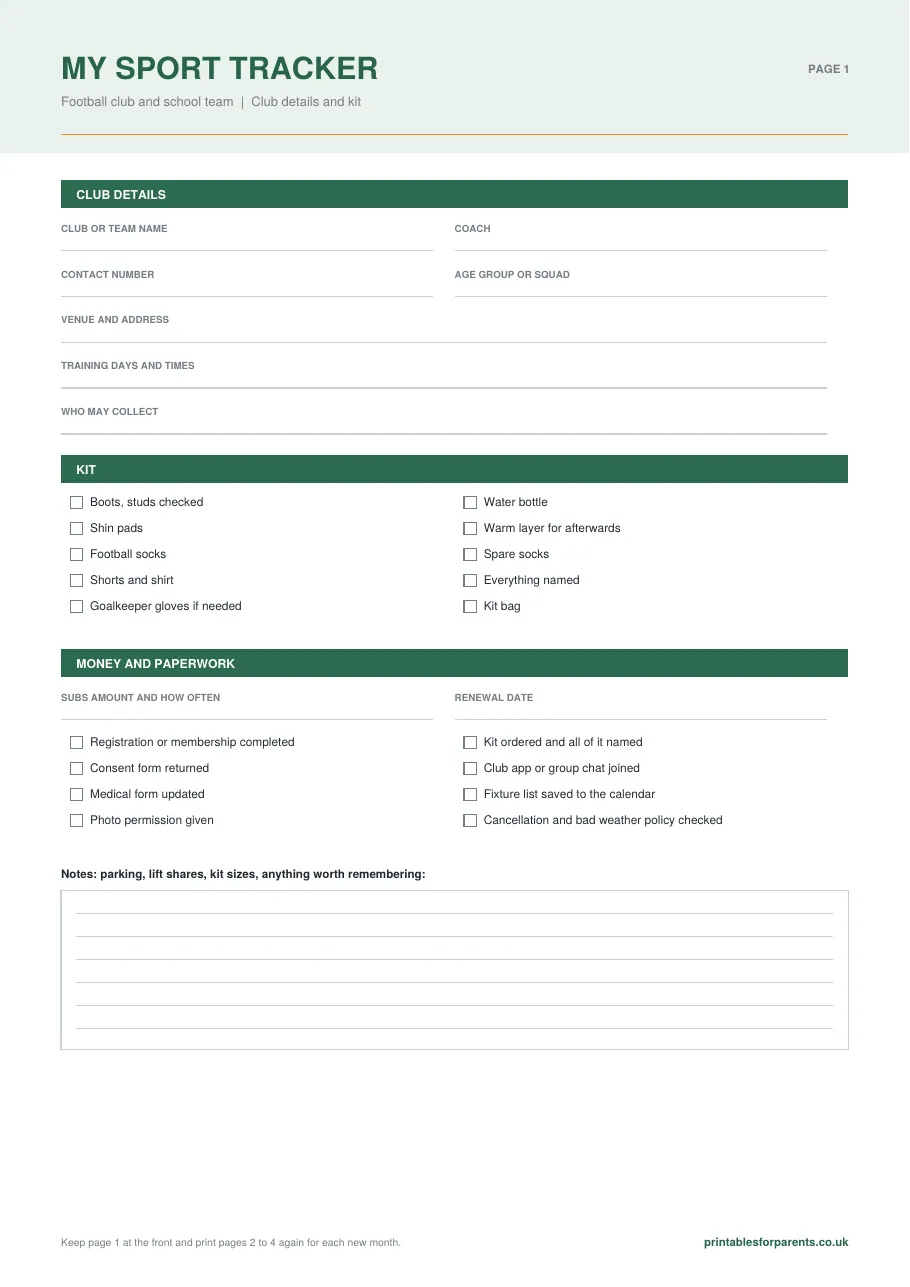 6 sheets
Sport trackers
Free printable trackers for children's sport. One page of club details and kit that you fill in once, then three pages a month for fixtures, effort and progress. Football, netball, rugby, gymnastics, swimming and a blank one.
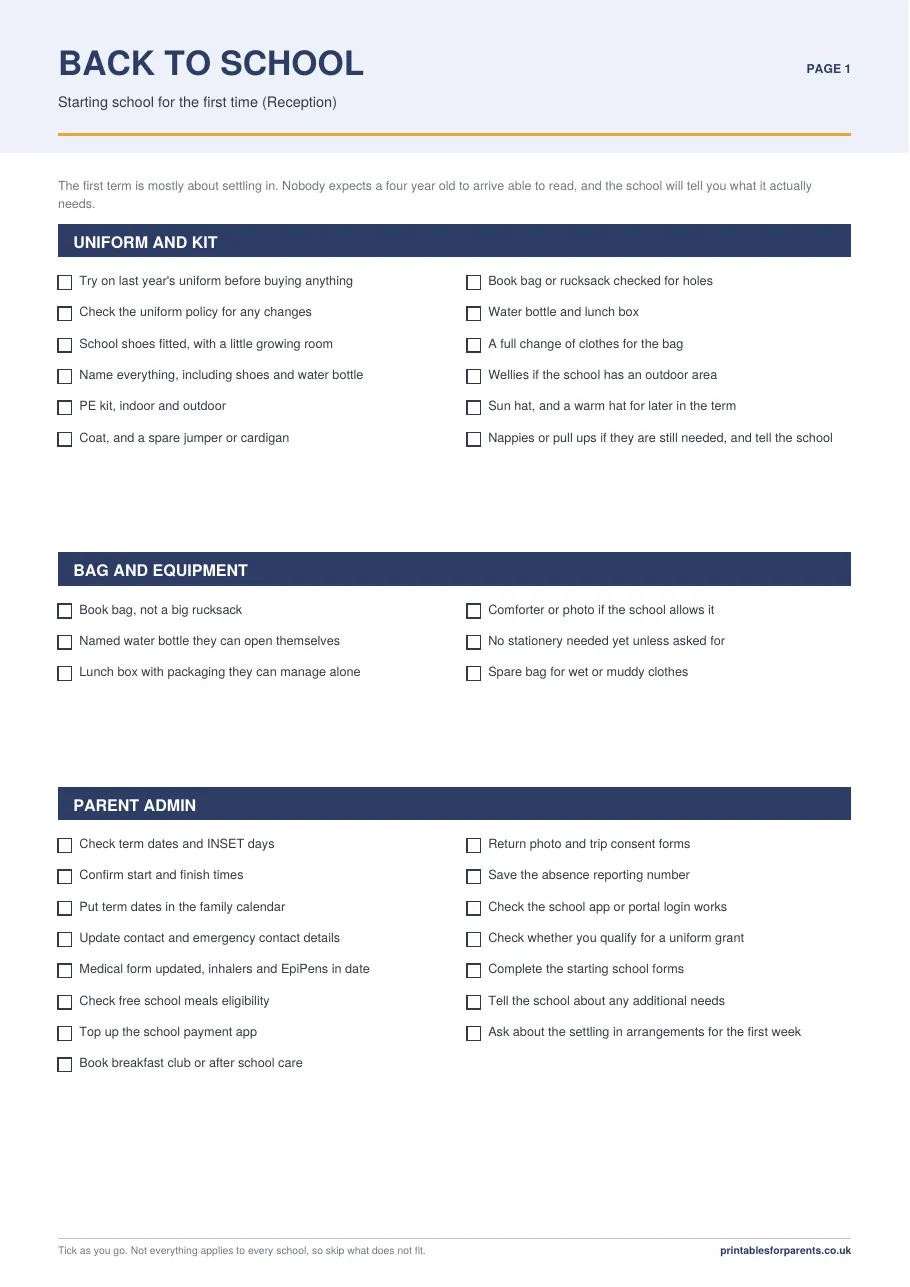 5 sheets
Back to school checklists
Free printable back to school checklists, one for each stage from starting Reception to the first week of secondary. Uniform, equipment, the parent admin, the routine reset and the conversations worth having first.
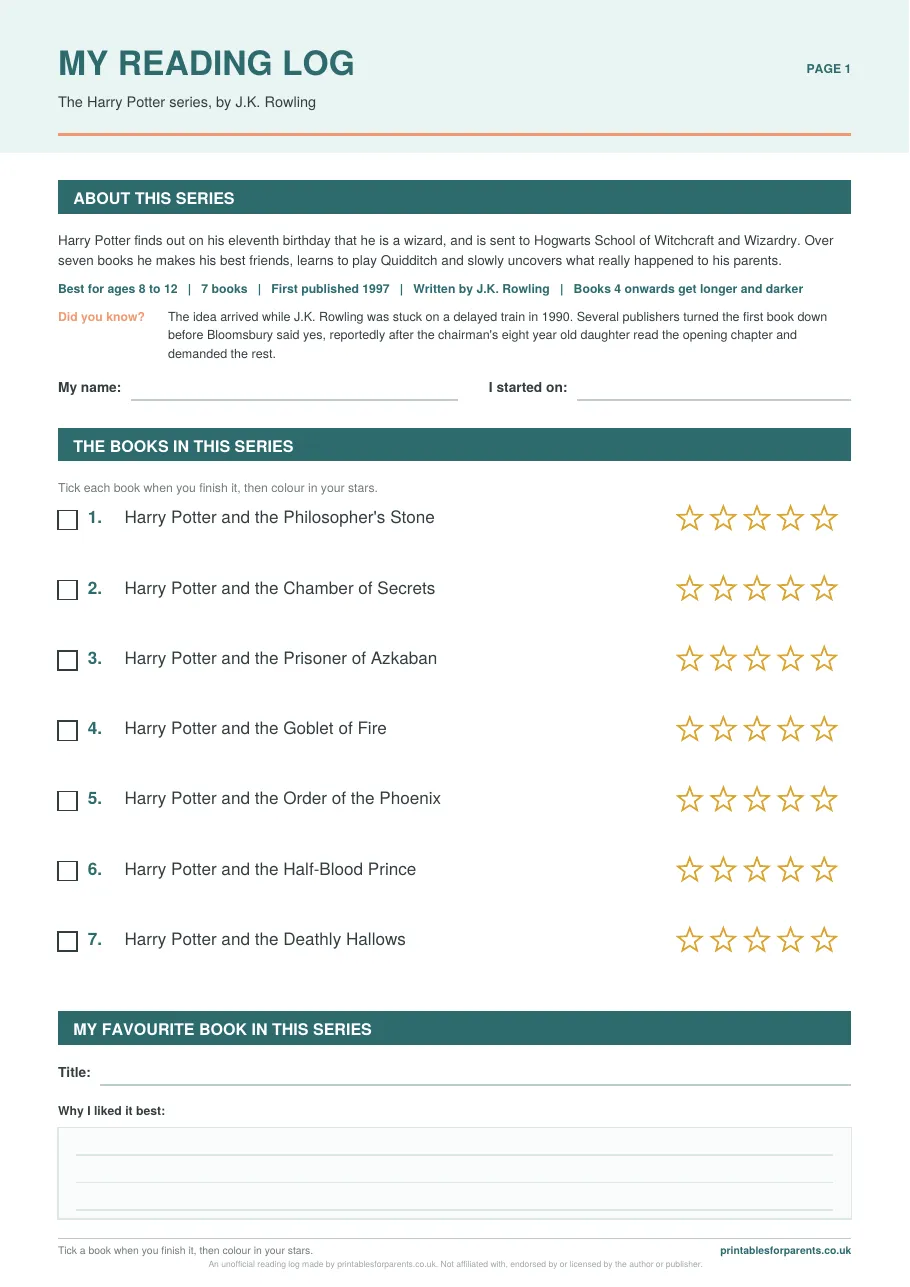 10 sheets
Reading logs
Free printable reading logs built around the series children actually read, with the books already listed so they can tick them off, rate them and write what they thought. Plus a blank one for any series at all.
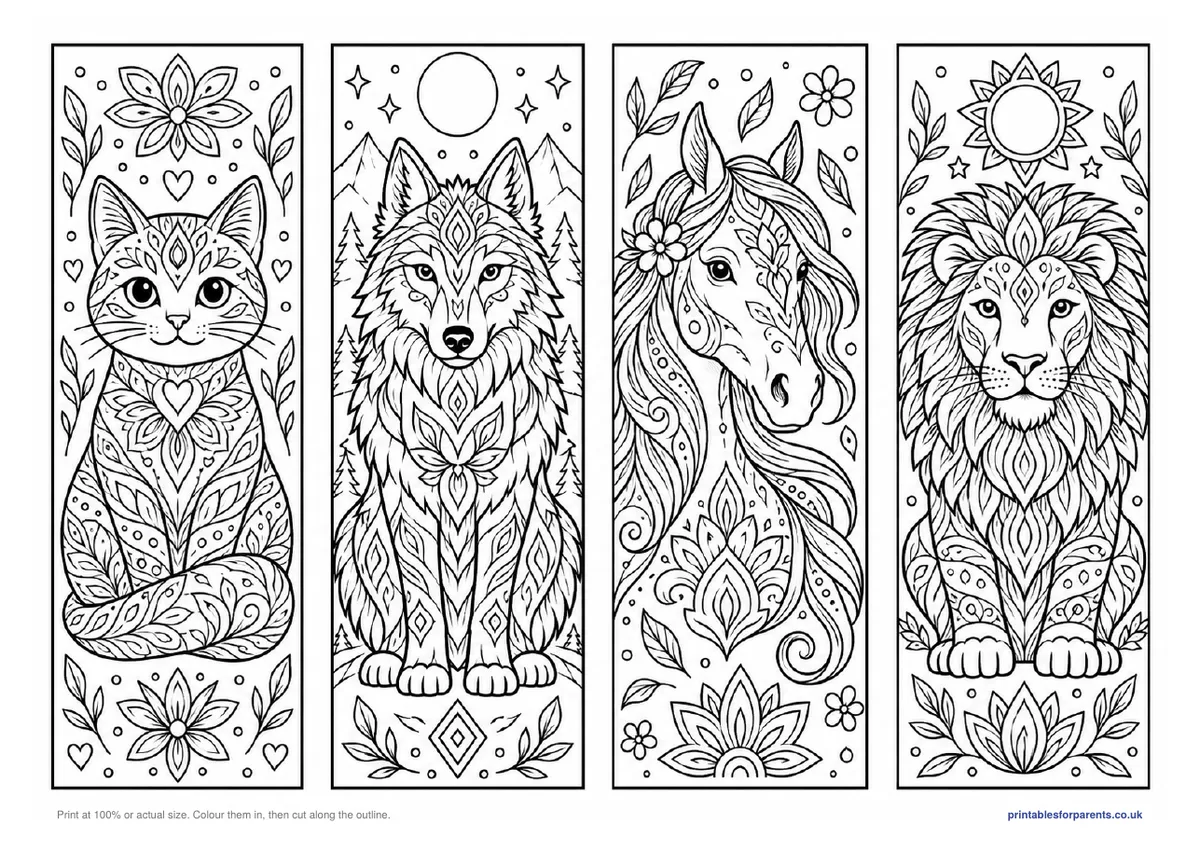 4 sheets
Colouring bookmarks
Four free printable sheets of colouring bookmarks, sixteen in total. Two sheets of simple designs for younger children and two of detailed patterns for older ones. Colour them in, cut them out and use them.