Browse by age
Newborn printables
Logs and trackers for the first few months, when nobody is sleeping and nobody can remember which side you fed from last.
4 topics · 10 printable sheets
Printables in this section
 4 sheets
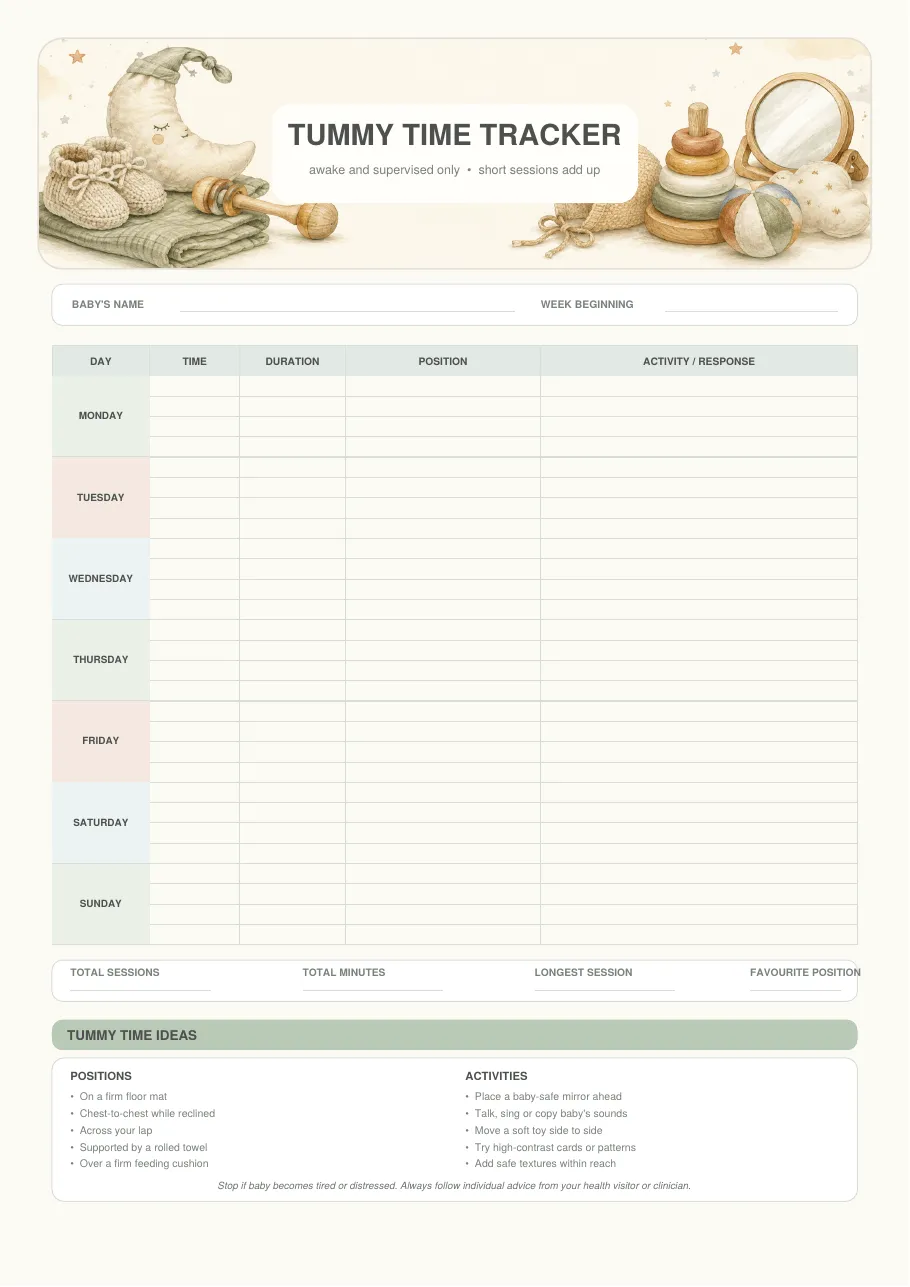
Tummy time trackers
Four free printable tummy time trackers for the first few months, with somewhere to note the position, how long you managed and whether anybody enjoyed it. Blue, pink, illustrated and a plain ink-light version.
 1 sheet
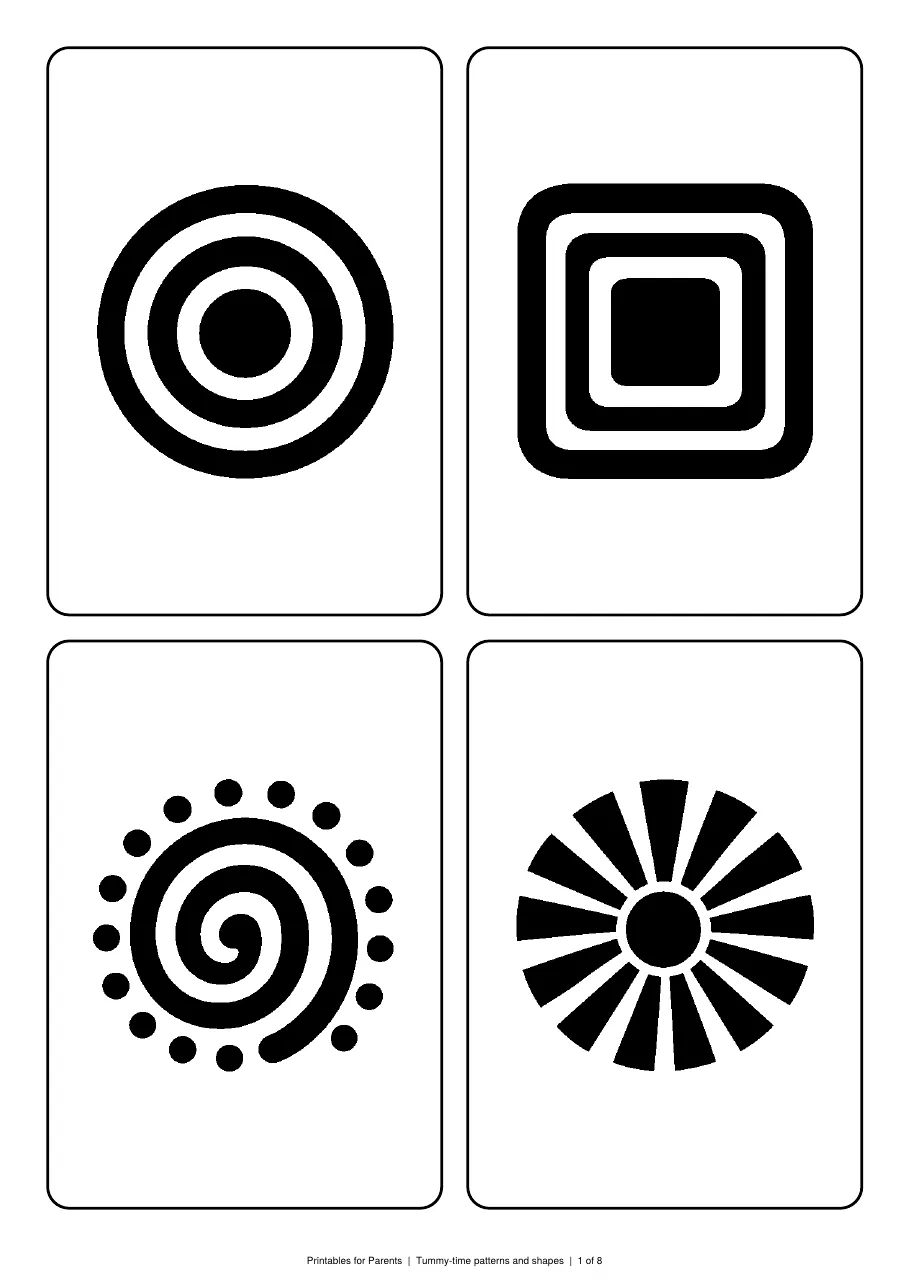
High contrast baby cards
Thirty two free black and white cards for newborns, four to an A4 page, with patterns, shapes, faces and animals to prop up during tummy time or hold at the distance a new baby can actually focus on.
 1 sheet
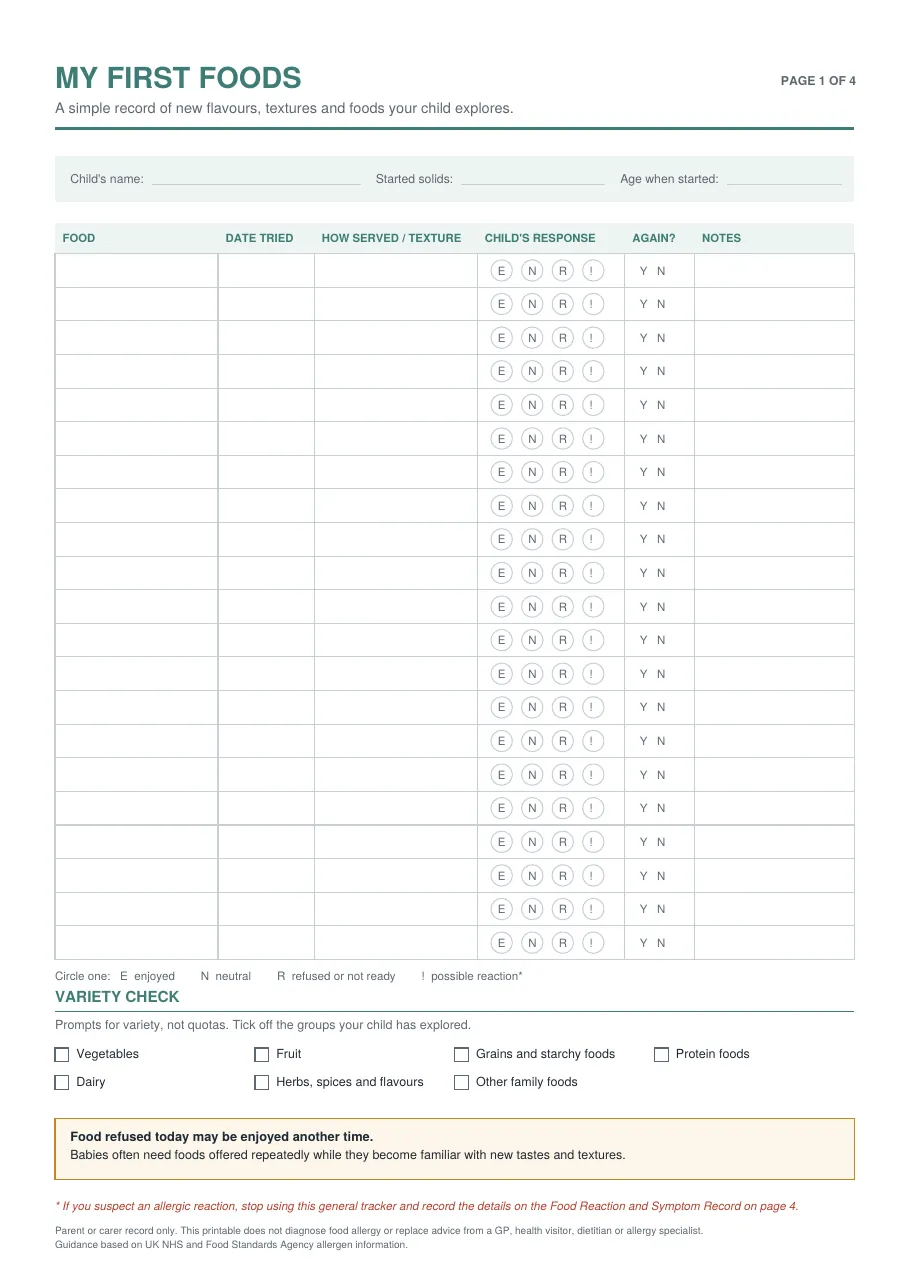
First foods and allergen tracker
A free printable four page tracker for weaning. Somewhere to record new foods, a chart for introducing the UK 14 allergens, a page for keeping them in the diet afterwards, and a detailed reaction record to take to an appointment.
 4 sheets
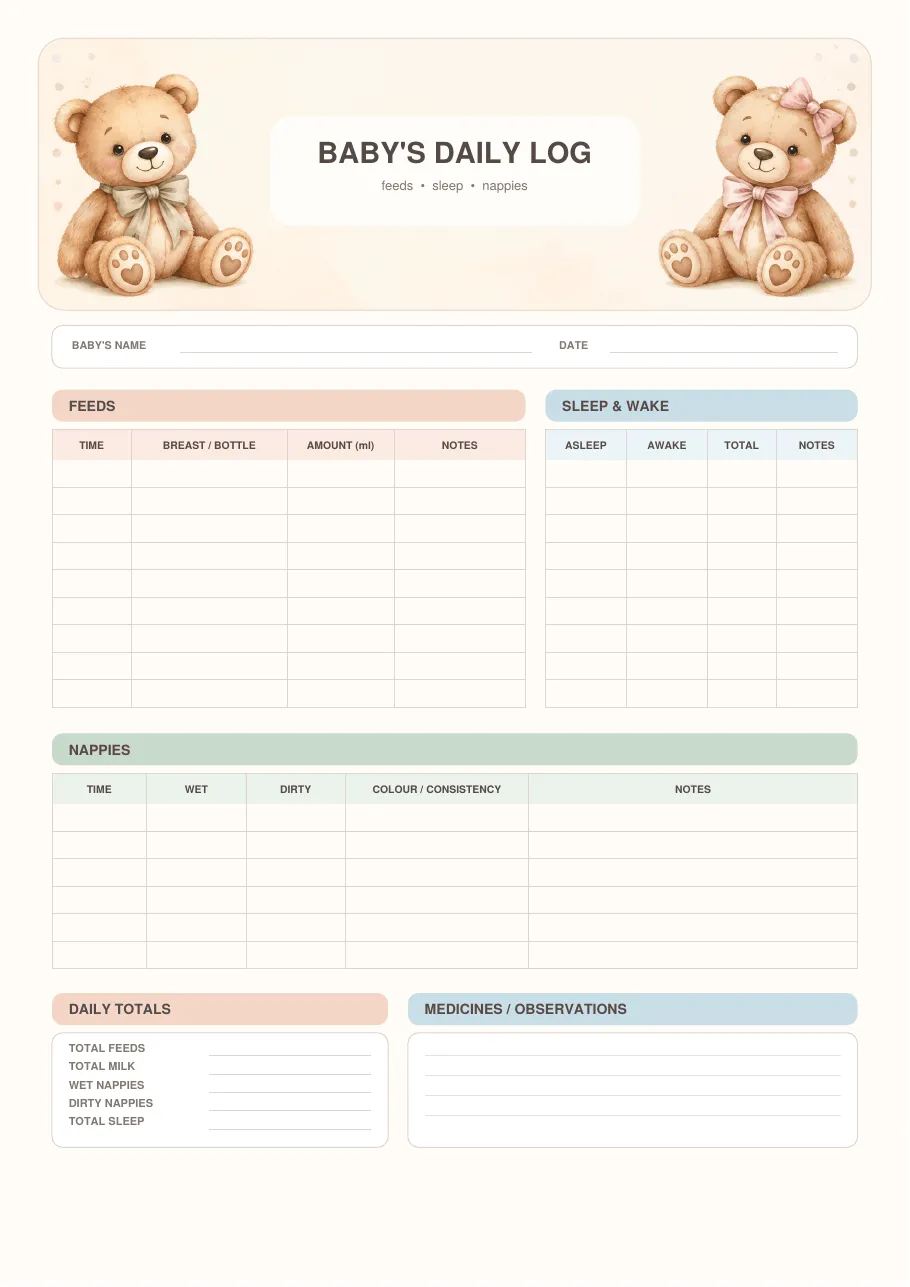
Newborn daily logs
Four free printable daily logs for feeds, sleep and nappies, all on one A4 sheet. Teddies, elephants, wooden blocks or a plain version for when the ink is running low.
What’s actually worth printing right now
Almost nothing, if we’re honest with each other. The first months don’t need a system. They need a piece of paper somewhere near the kettle that you can scribble on with whatever pen hasn’t been lost.
That’s all these are. Somewhere to put the information your brain is currently far too tired to hold.
The two that earn their place are a daily log, because health visitors and GPs will ask about feeds and nappies and nobody remembers accurately, and a tummy time tracker, if only so you can see that forty seconds became three minutes without anyone noticing.
If you are still in the buying stage rather than the recording stage, the nursery checklist is the one that will save you the most money.
Print one week, not one month
You’ll change your mind about how much you want to record. Everybody does. Print seven sheets, see how it goes, and print more only if you’re still using them.
And if it starts making you anxious
Stop. Genuinely. A chart is meant to take something off your mind, and if you find yourself counting, comparing, or lying awake because Tuesday has a gap in it, the chart has turned into the problem it was supposed to solve.
Your health visitor would tell you exactly the same thing, probably with more authority and better biscuits.
The three questions you’ll be asked
Feeding, nappies, sleep. Every midwife, health visitor and GP appointment in the first weeks circles those three, and nobody can answer them accurately from memory on four hours of broken sleep.
That’s the whole argument for a log. When somebody asks, you can answer in two seconds instead of reconstructing Tuesday from a standing start. I kept mine on a clipboard for about eleven weeks, and I couldn’t have told you what happened on any given day without it.
Keep it where it happens
A sheet in a drawer records nothing. A clipboard by the chair you feed in, with the pen clipped to it, gets filled in.
Fill it in during, not afterwards. Afterwards never arrives.
What not to compare
Somebody else’s chart. A number from a book. An average.
Ranges at this age are enormous and your baby hasn’t read any of it. If a pattern worries you, that’s a conversation with your health visitor rather than a reason to look up what other babies do, which will reliably make you feel worse and tell you nothing useful about your own.