First foods and allergen tracker
A free printable four page tracker for weaning. Somewhere to record new foods, a chart for introducing the UK 14 allergens, a page for keeping them in the diet afterwards, and a detailed reaction record to take to an appointment.
Also known as: weaning tracker, allergen tracker, first foods chart, baby food diary, allergen introduction chart, food reaction record.
What the four pages do
I kept one of these for about eight months and needed it twice, both times sitting in a GP’s room being asked something I could not answer.
Page one is the general record. What was offered, how it was served, how it went and whether to try it again. The response options are enjoyed, neutral, refused and possible reaction, rather than liked and disliked, because a refusal on Tuesday means very little and children often need a food offered many times before it’s familiar.
Page two is the allergen chart, covering all fourteen allergens that UK food law requires to be declared, with a star against the ones usually considered during early introduction.
Page three is the one most allergen charts leave out, and the reason this exists.
Page four is a proper reaction record, in the sense that a health professional could read it and learn something.
Introduction isn’t a single event
The common weakness of an allergen chart is that it invites you to introduce a food once, tick a box, and consider the job done.
That isn’t what the guidance asks for. Once an allergenic food has been introduced without a reaction, the advice is to keep offering it as part of your child’s usual diet. Page three is simply a grid of dates for doing that, so the foods stay visible rather than disappearing behind a tick from four months ago.
It deliberately doesn’t tell you how often. That depends on your child, and it’s a question for your health visitor, GP or dietitian rather than a printable.
Why it never says safe
Every column that could have said safe, passed or cleared says no reaction observed instead.
That’s a meaningful difference. One uneventful exposure is a fact about one occasion. It isn’t a verdict, and a sheet that implies otherwise would be doing something it has no business doing.
The reaction record is the page to know about
Most food trackers give a reaction one narrow column. This gives it a full page, because if you ever need it you’ll be trying to remember detail under stress.
It covers the exposure itself, including brand and ingredients, symptoms grouped by skin, mouth and throat, stomach, breathing and general behaviour, when symptoms started and how long they lasted, what you did, and what happened afterwards.
At the foot of that page there’s an emergency panel. Call 999 immediately if a child develops sudden swelling of the mouth, throat or tongue, difficulty breathing or swallowing, becomes very pale, blue or grey, collapses, or becomes limp, floppy or unusually unresponsive. Deal with the emergency first, and fill the sheet in afterwards.
Before you start
Speak to a healthcare professional first if your baby has significant eczema, an existing food allergy, or you have been told they may be at higher risk. That’s on page two at the top for the same reason it’s here.
Never give whole nuts to a child under five, because of the choking risk. Nuts and peanuts belong in an age-appropriate form, finely ground or as a smooth butter thinned down.
The limits of this sheet
It’s a record you keep, and that’s all it claims to be. Nothing on it tests or diagnoses anything, and a completed sheet proves nothing either way. What it does is become useful the moment somebody asks you a question you can’t answer from memory.
If a reaction means a dose of antihistamine, the medication record is where the times go, especially if somebody else is doing a day.
The guidance on the sheet follows NHS and Food Standards Agency information, checked in September 2026. If you think your child has a food allergy, speak to your GP or health visitor, and don’t deliberately offer a suspected food again before you have.
1 free first foods and allergen tracker to print
Every sheet is a PDF sized for A4. Tap a design to download it. No sign-up, no watermark.
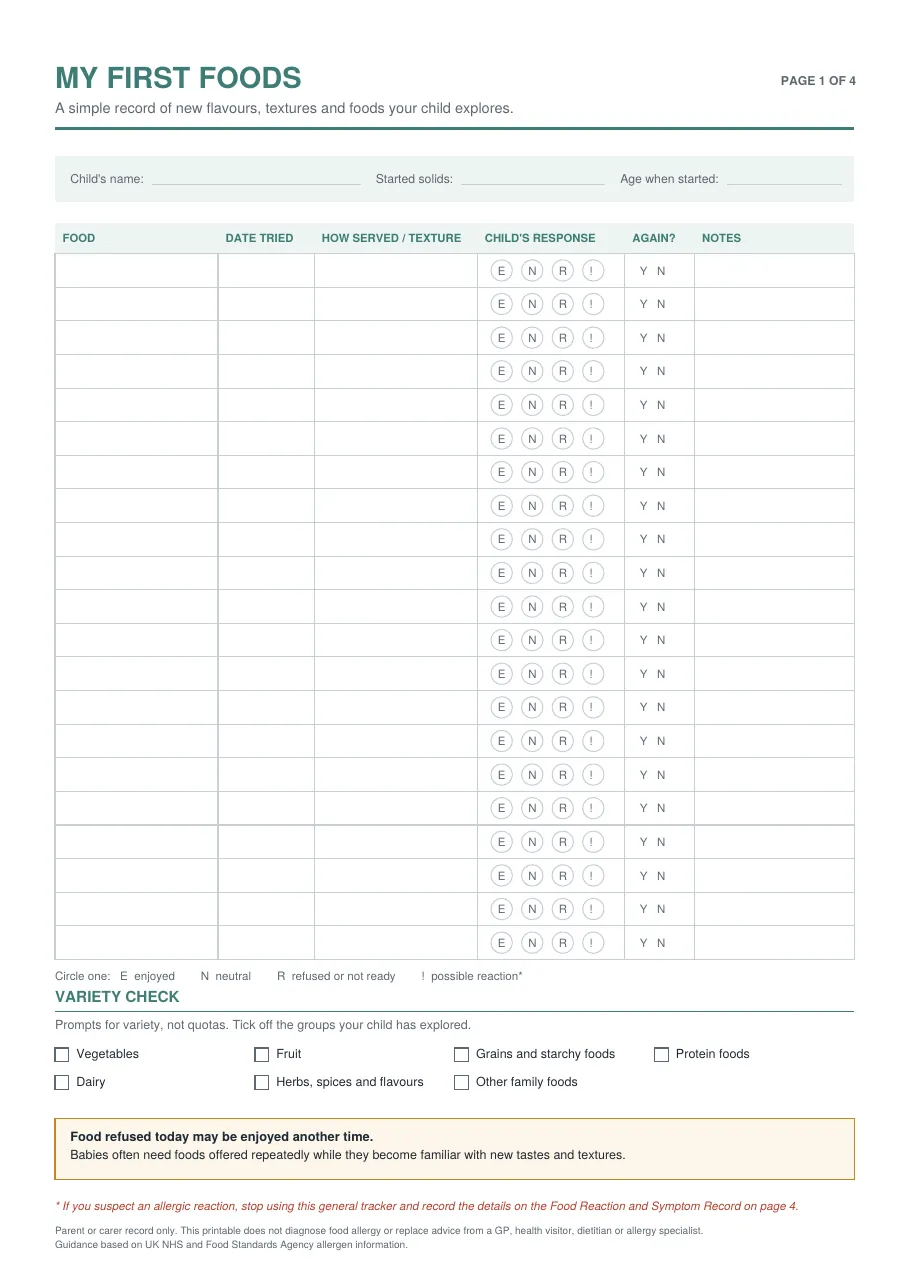
First foods and allergen tracker
Four pages. New foods, the UK 14 allergens, keeping allergens in the diet, and a detailed food reaction record.
Printing and keeping it
- Four A4 pages. Print the lot once, then reprint whichever page fills up. Pages one and three are the ones that run out.
- Keep it somewhere near where you eat. A tracker in a drawer records nothing.
- Take page four with you if you ever need an appointment about a reaction. It's designed to be handed over.
Common questions
Do I need to track any of this?
No. Plenty of families wean without writing anything down and everything is fine. It earns its place if you find the allergen side hard to keep straight, if somebody has asked you to keep a record, or if you simply want to stop wondering whether you have offered sesame yet.
Is this a way of testing for allergies?
No, and it says so on every page. It's a record you keep, not a diagnostic tool. Nothing written on it means a food is safe, which is why the sheet says no reaction observed rather than safe or cleared.
Why are there three exposure columns rather than one tick?
Because introduction isn't a single event. One tick and a moved-on parent is the weakness of most allergen charts. Recording the first few exposures, and then keeping the food in the diet on page three, reflects what the guidance actually asks for.
Which allergens does it cover?
All fourteen that UK food law requires to be declared as ingredients, with a star against the ones commonly considered during early introduction. Other foods can cause reactions too, which is why there's space to write your own.
My baby has eczema. Should I use this?
Speak to a healthcare professional before introducing allergens if your baby has significant eczema, an existing food allergy, or you have been told they may be at higher risk. That advice is on page two, at the top, because it's the thing that most needs saying first.
Printables that go with these
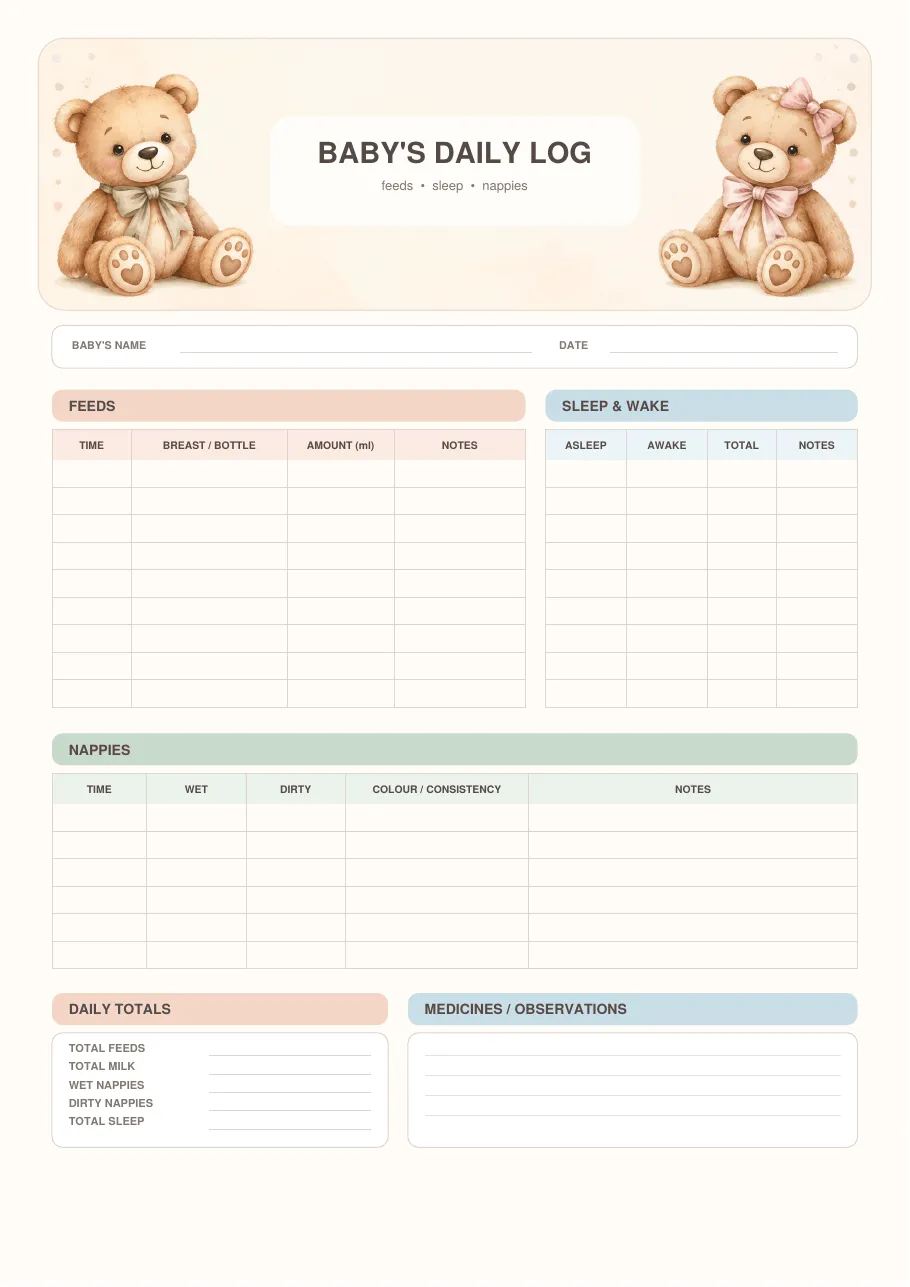 4 sheets
Newborn daily logs
Four free printable daily logs for feeds, sleep and nappies, all on one A4 sheet. Teddies, elephants, wooden blocks or a plain version for when the ink is running low.
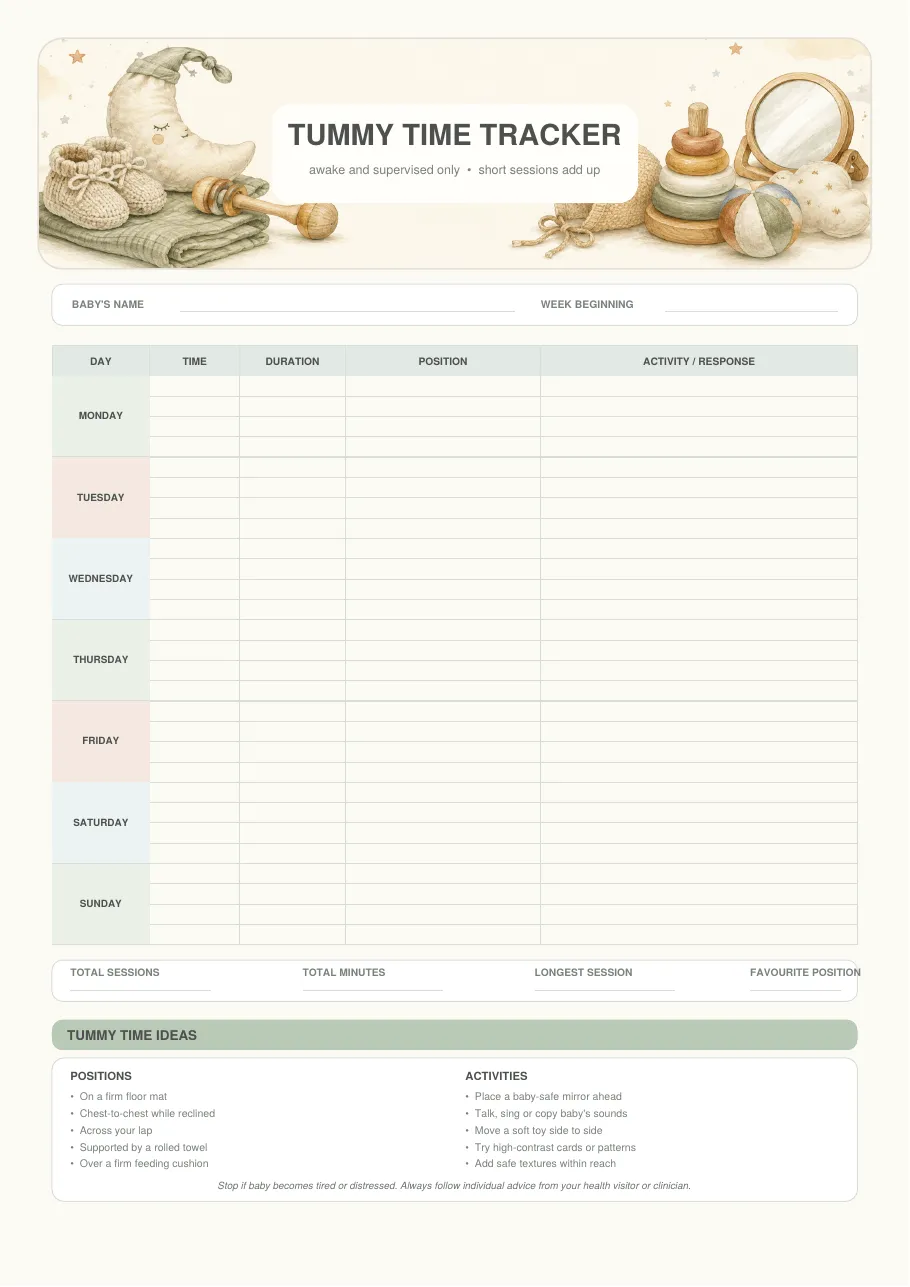 4 sheets
Tummy time trackers
Four free printable tummy time trackers for the first few months, with somewhere to note the position, how long you managed and whether anybody enjoyed it. Blue, pink, illustrated and a plain ink-light version.
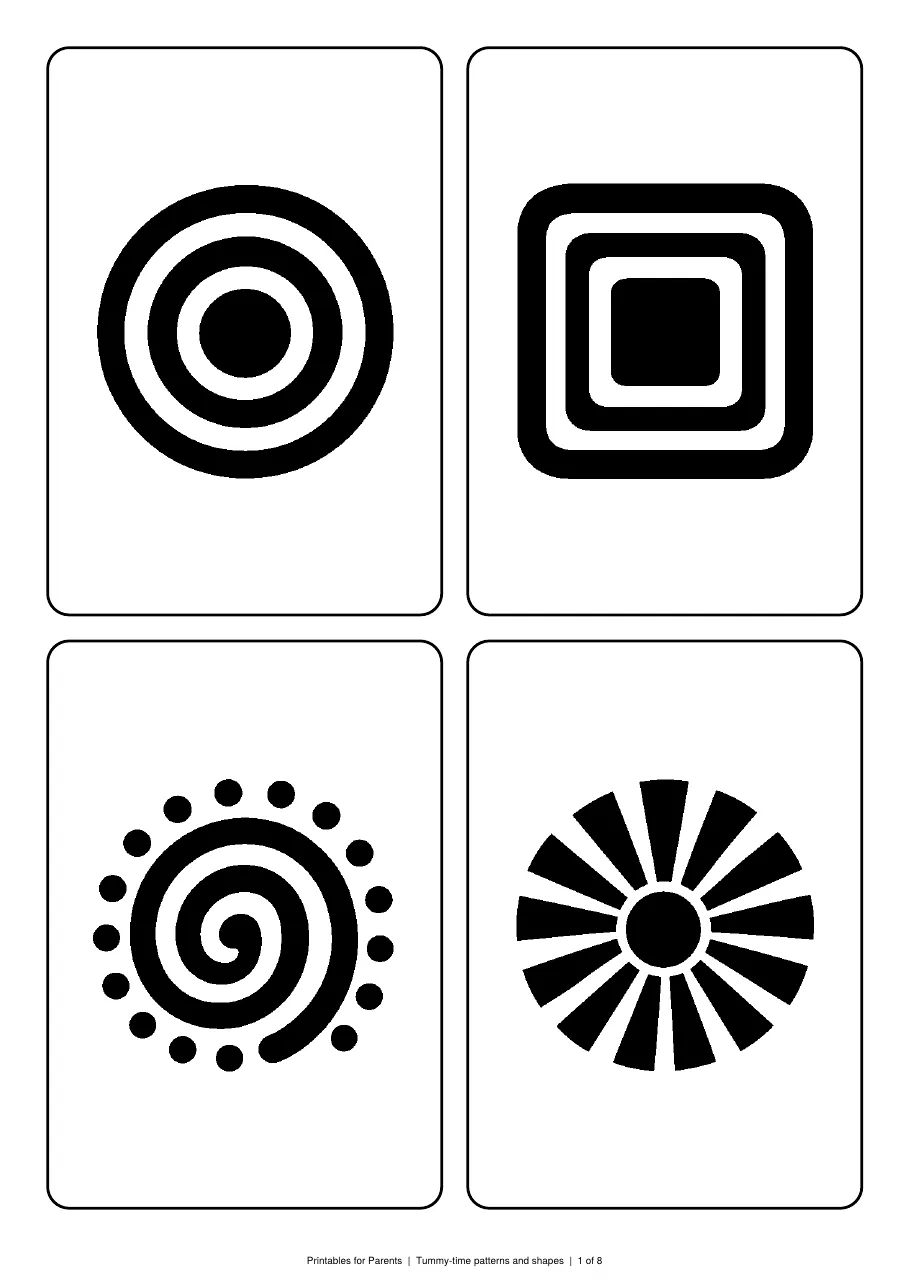 1 sheet
High contrast baby cards
Thirty two free black and white cards for newborns, four to an A4 page, with patterns, shapes, faces and animals to prop up during tummy time or hold at the distance a new baby can actually focus on.
 6 sheets
Routine charts
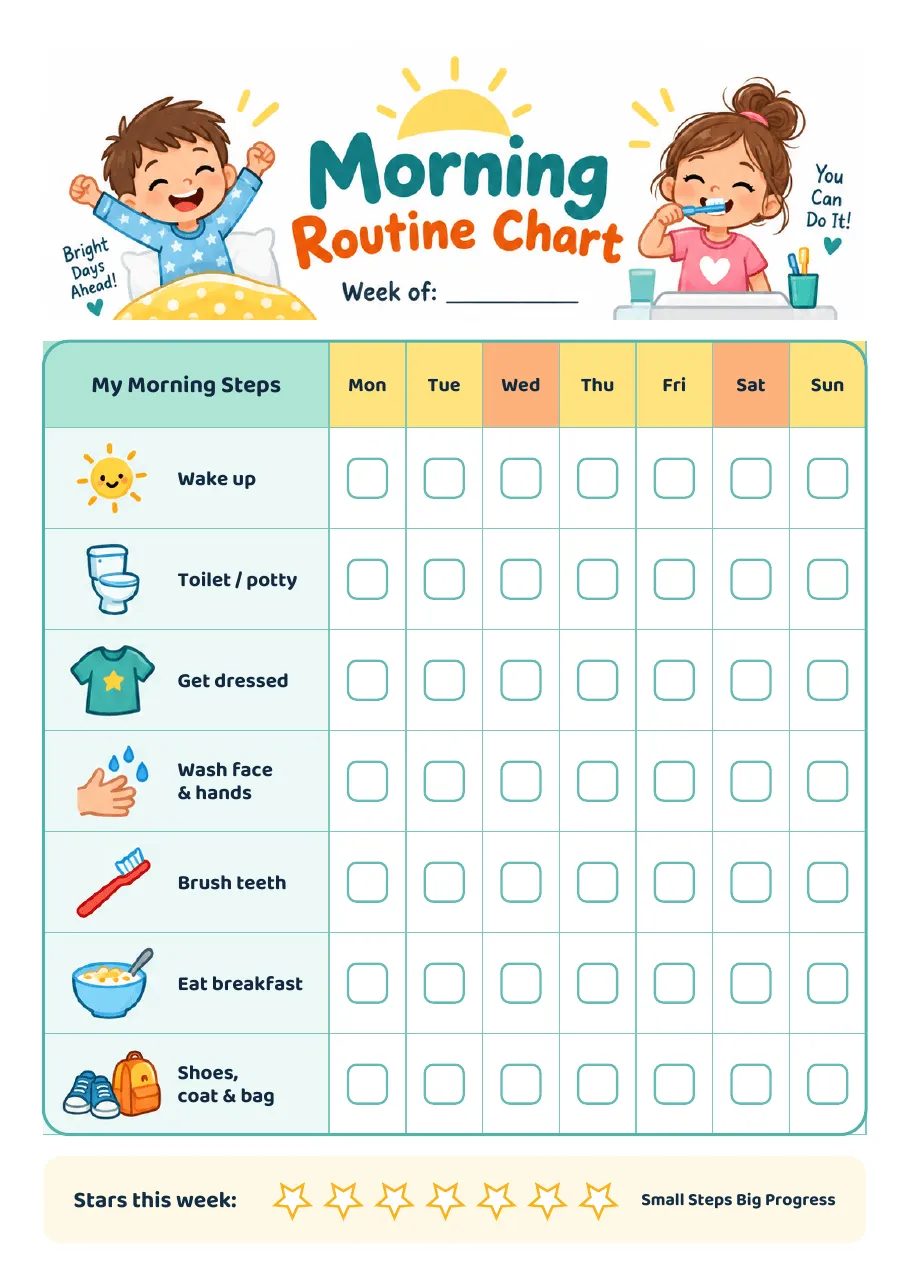
Six free morning and bedtime routine charts to print on A4, in a colourful design and in pink and blue, with picture steps a child can follow before they can read and a full week of boxes to tick.