Browse by age
Printables for 5 to 10 year olds
Sheets for the school years: weekly planners, reading and homework logs, chore charts and reward systems a child can run themselves.
13 topics · 106 printable sheets
Printables in this section
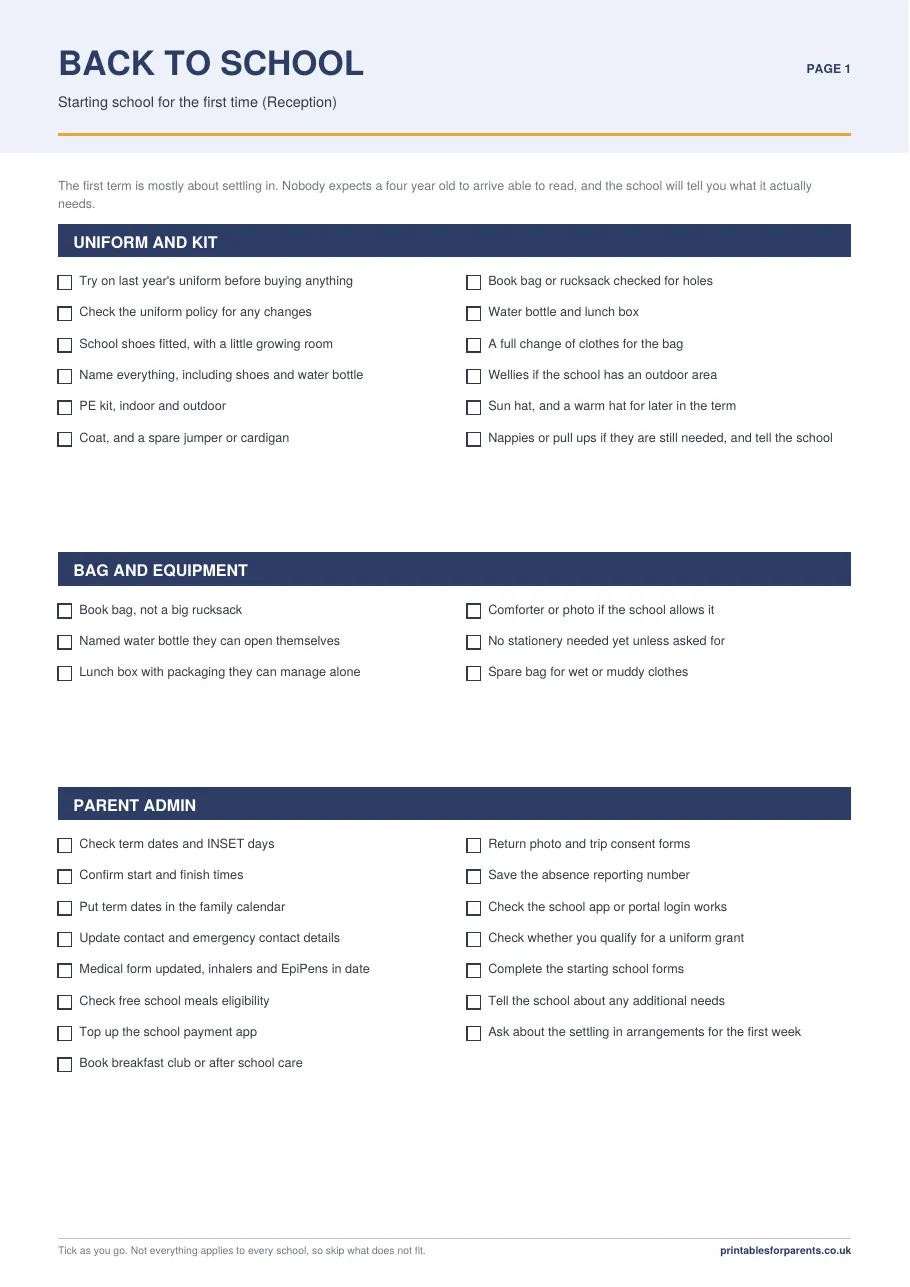 5 sheets
Back to school checklists
Free printable back to school checklists, one for each stage from starting Reception to the first week of secondary. Uniform, equipment, the parent admin, the routine reset and the conversations worth having first.
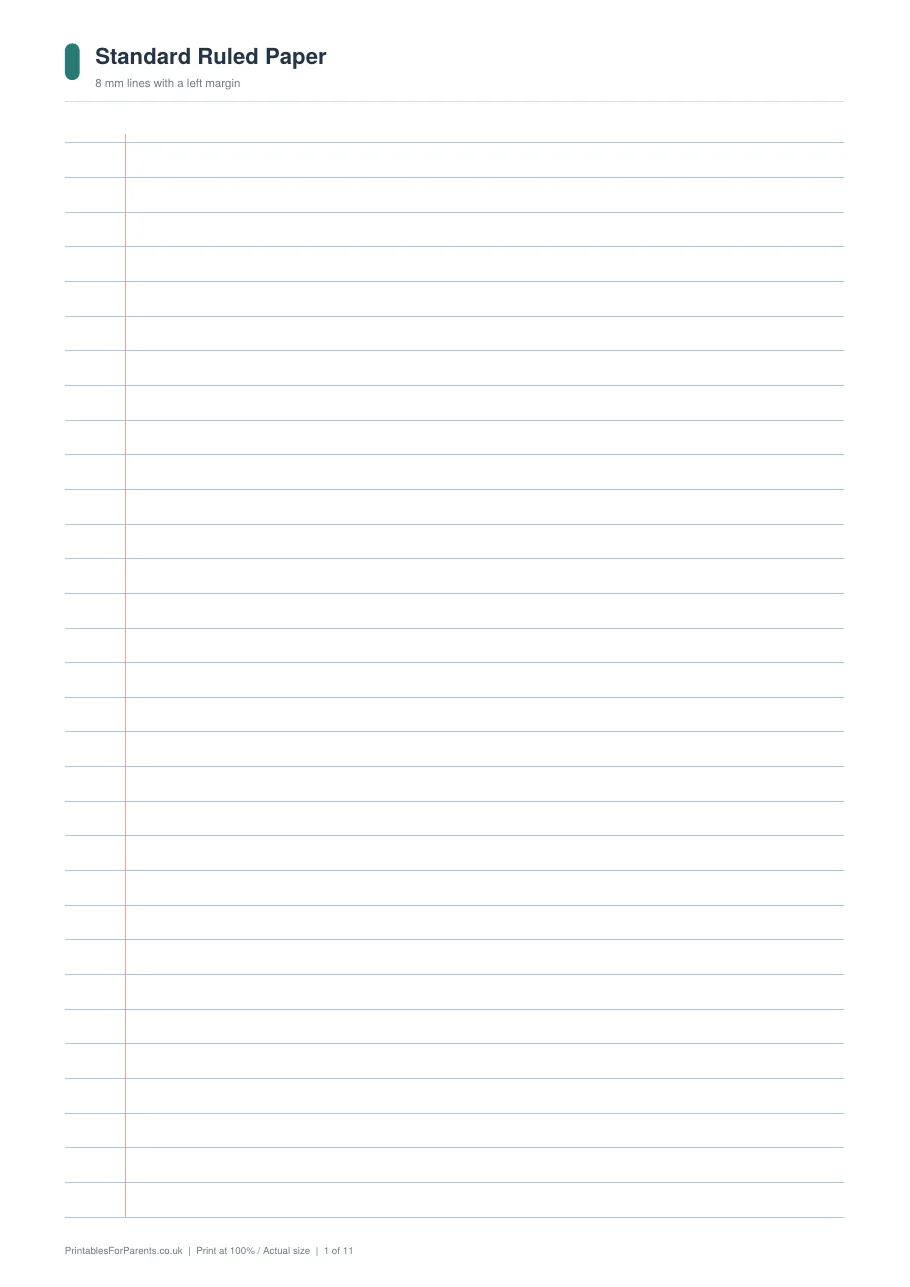 12 sheets
Lined and grid paper
Eleven kinds of A4 paper to print at home: ruled, wide ruled, handwriting lines, squared, graph, dot grid, isometric, draw and write, and Cornell notes. Download one sheet or the whole pack.
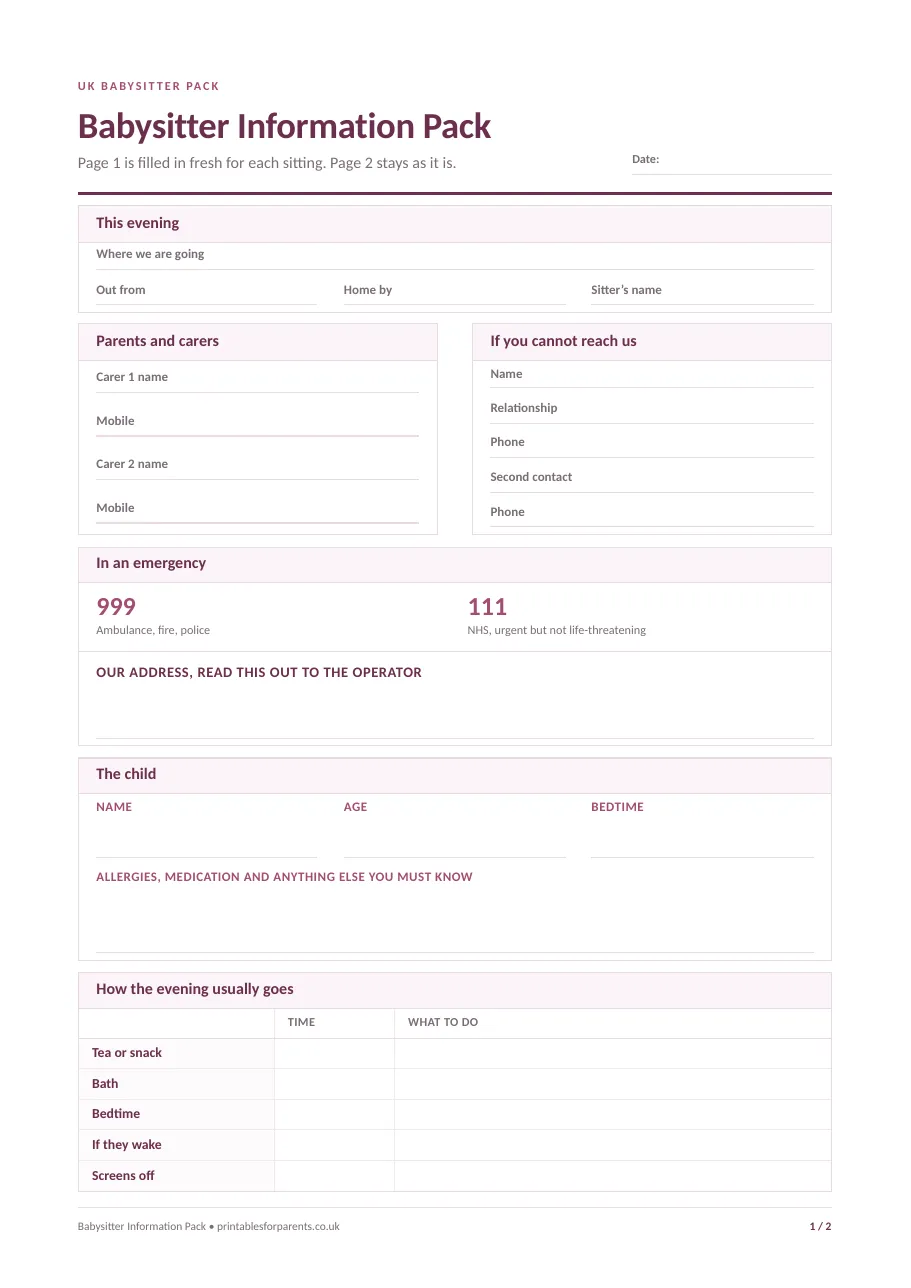 2 sheets
Babysitter and emergency information sheets
Two free printable sheets for the times somebody else is looking after your child: a babysitter pack for the evening, and an emergency contacts and medical information sheet to keep on hand.
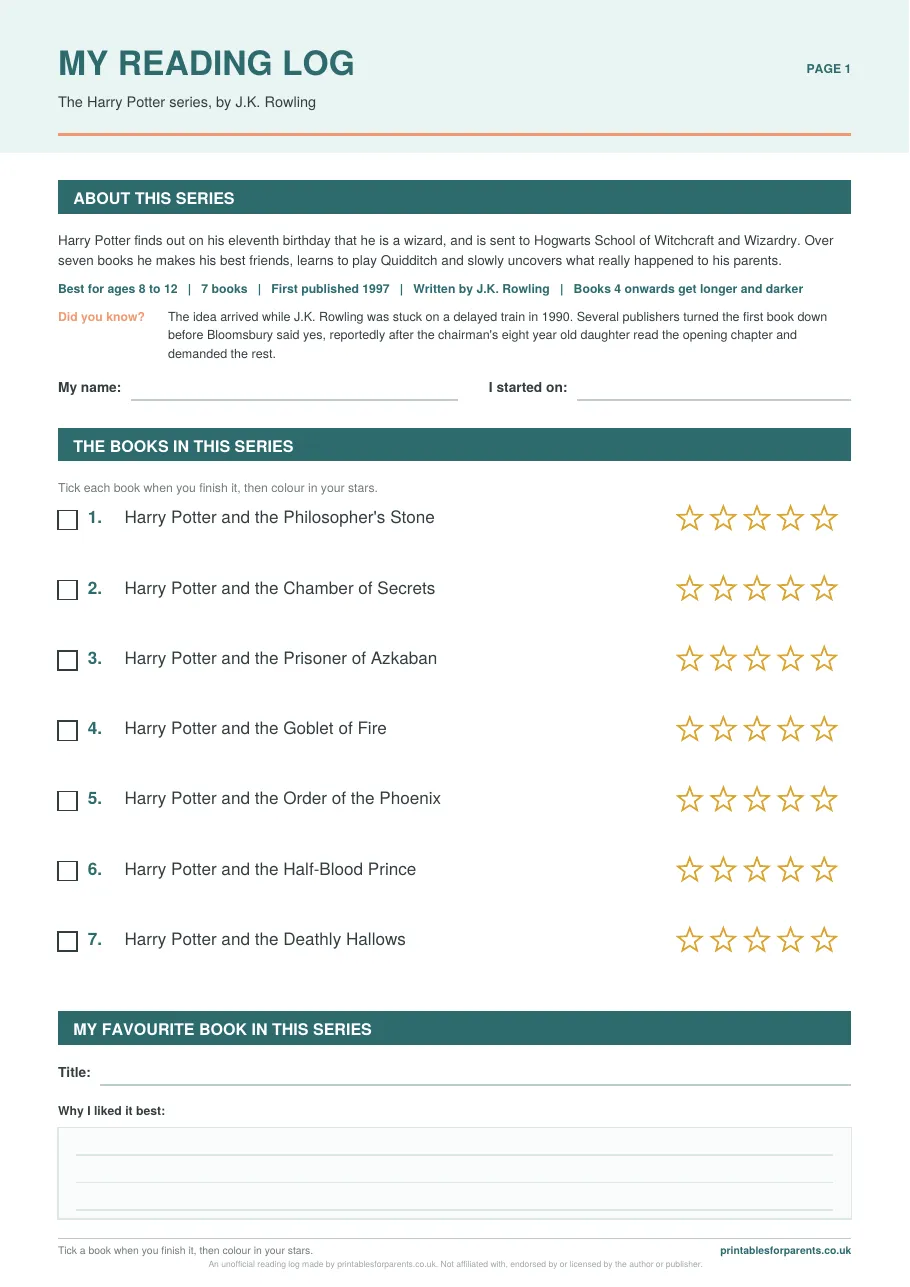 10 sheets
Reading logs
Free printable reading logs built around the series children actually read, with the books already listed so they can tick them off, rate them and write what they thought. Plus a blank one for any series at all.
 5 sheets
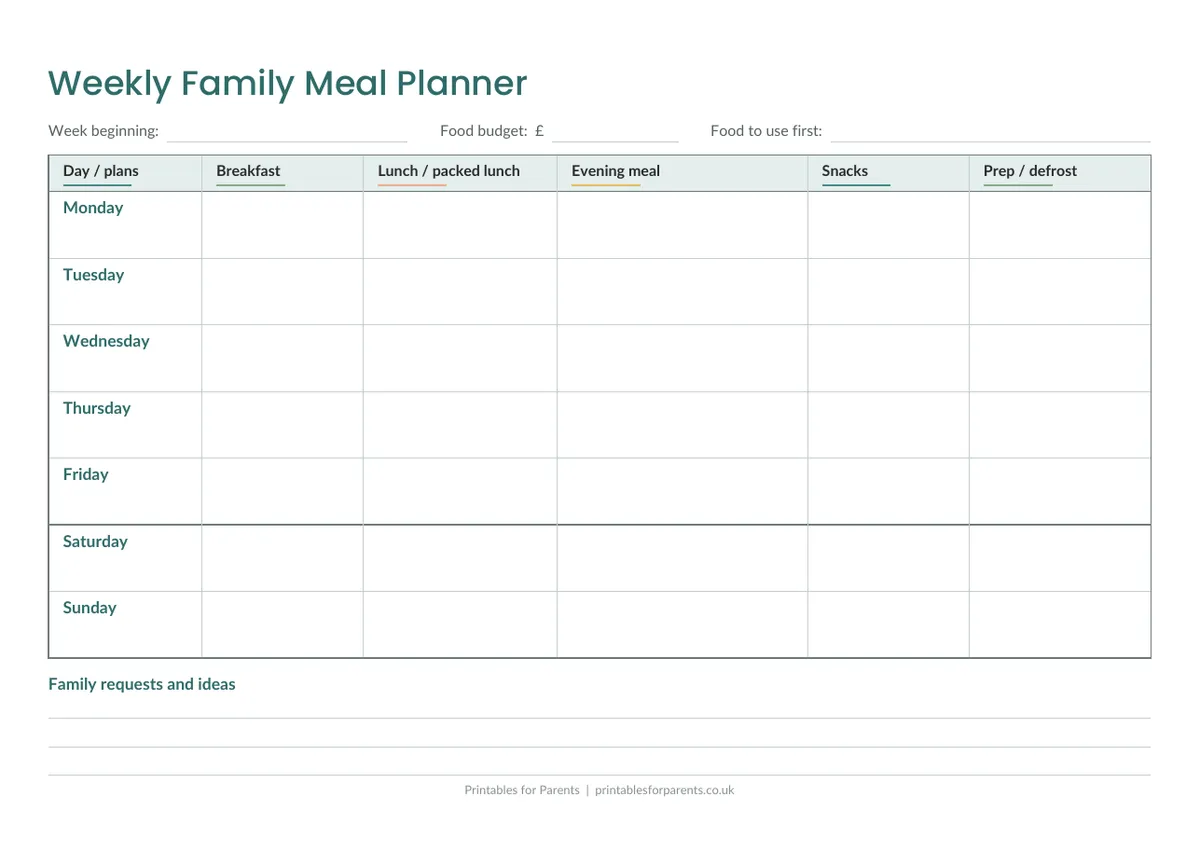
Meal planners and shopping lists
Free printable meal planners, a shopping list built to match them and a meal ideas bank so you stop staring at the fridge on a Sunday. Take one sheet or the whole four page pack.
 6 sheets
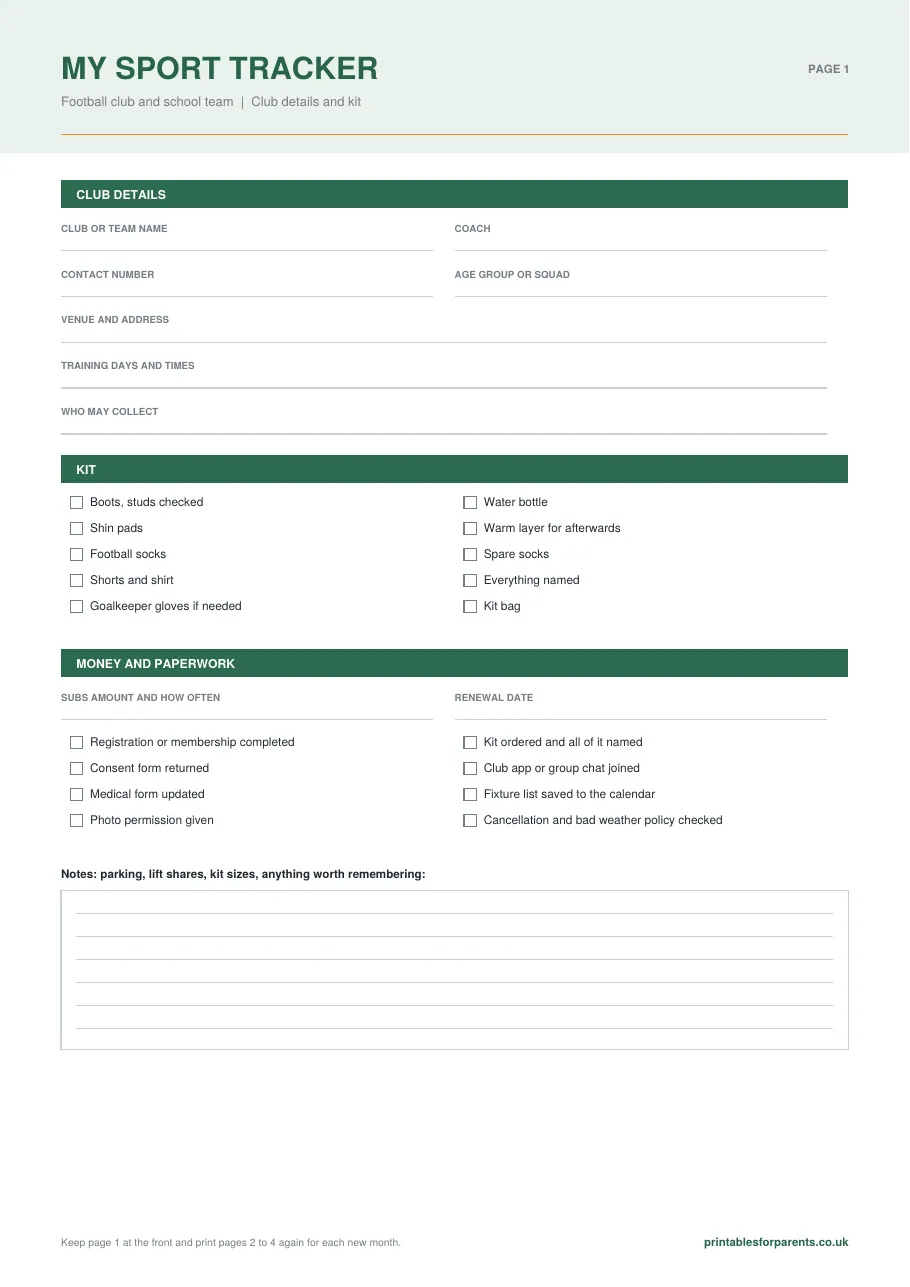
Sport trackers
Free printable trackers for children's sport. One page of club details and kit that you fill in once, then three pages a month for fixtures, effort and progress. Football, netball, rugby, gymnastics, swimming and a blank one.
 6 sheets
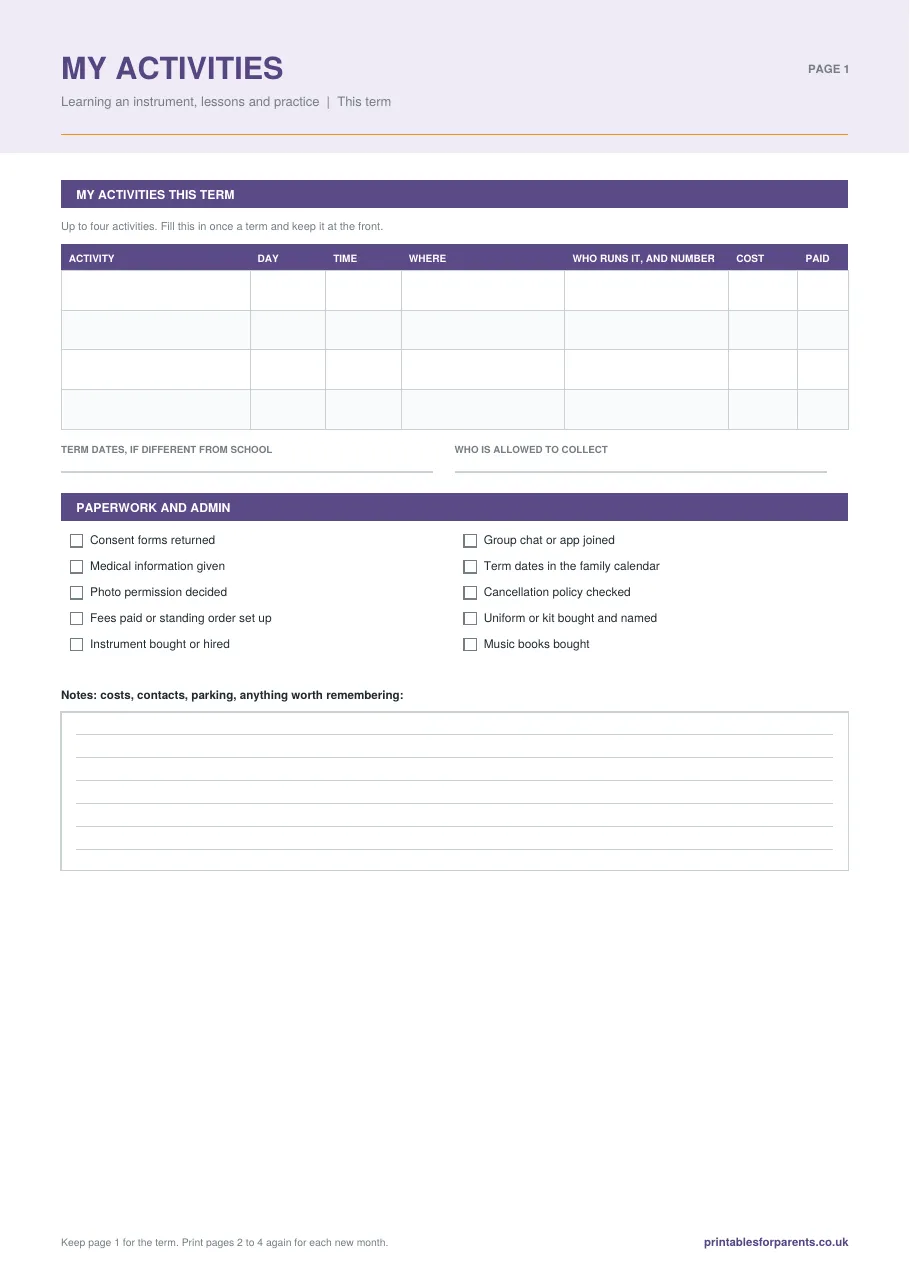
Activity and club trackers
Free printable trackers for after school clubs and activities. One page a term for the timetable, costs and admin, then three pages a month for the week, the effort and the achievements. Music, dance, drama, coding, Scouts and Guides, and a blank one.
 7 sheets
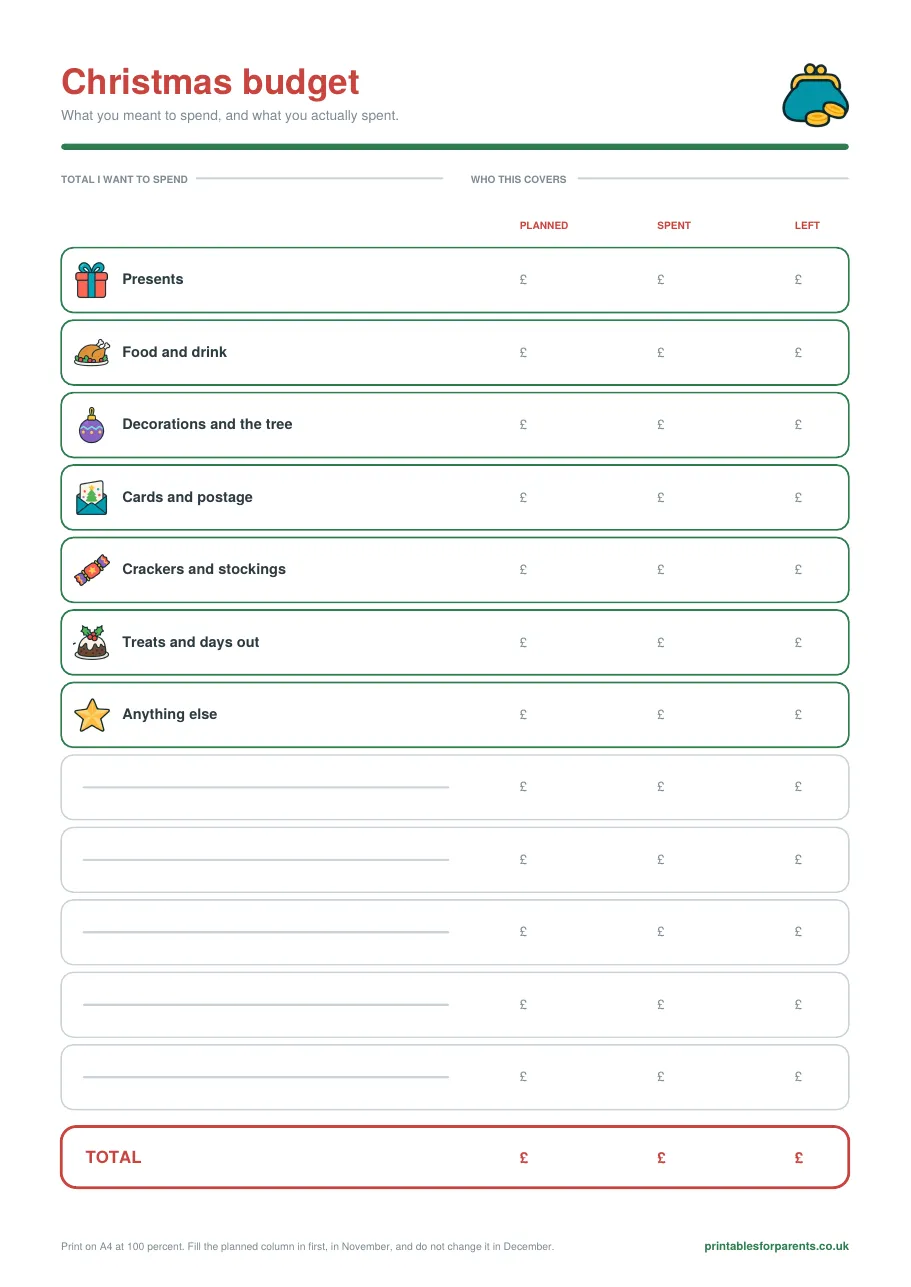
Christmas planning sheets
Seven free printable Christmas planners. A budget, a present tracker, a food plan, two advent calendars, a countdown chart and a letter to Father Christmas, all sized for A4.
 18 sheets
Colouring pages
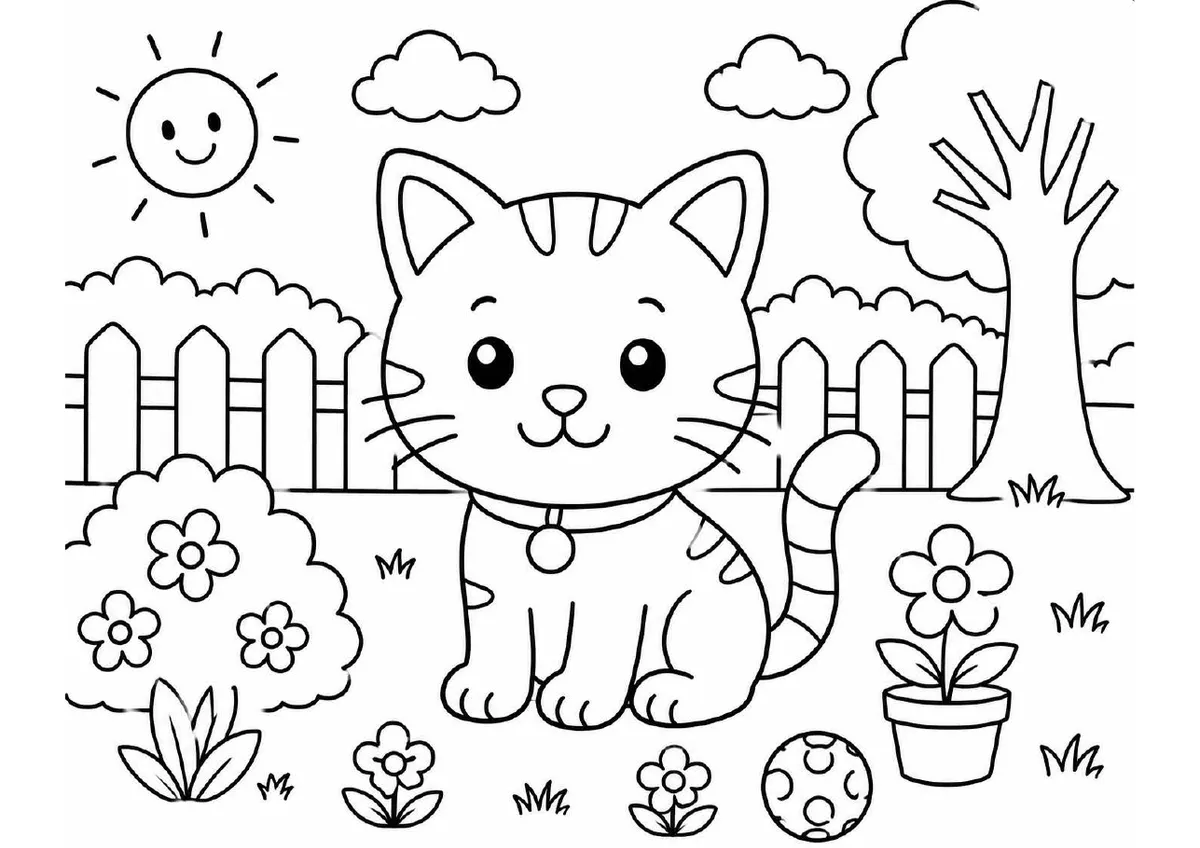
Eighteen free printable colouring pages, cats, dogs, sea creatures, diggers, tractors, cars, unicorns, shapes, numbers and fruit, all black and white line art, ready for A4.
 19 sheets
Christmas colouring pages and crafts
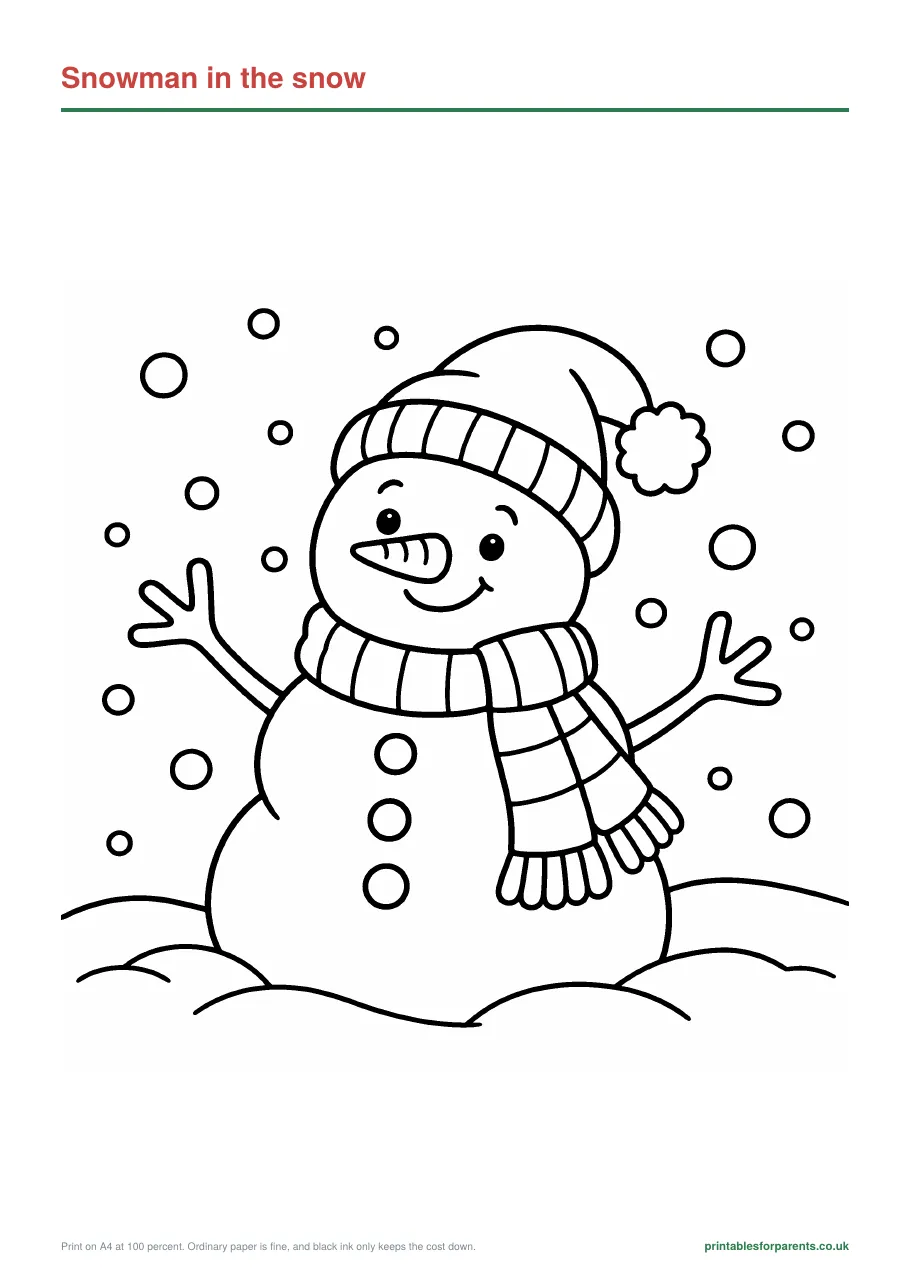
Nineteen free printable Christmas sheets. Eleven colouring pages from simple to detailed, four cards to colour and fold, a Father Christmas mask, gingerbread chains and paper chain strips.
 4 sheets
Colouring bookmarks
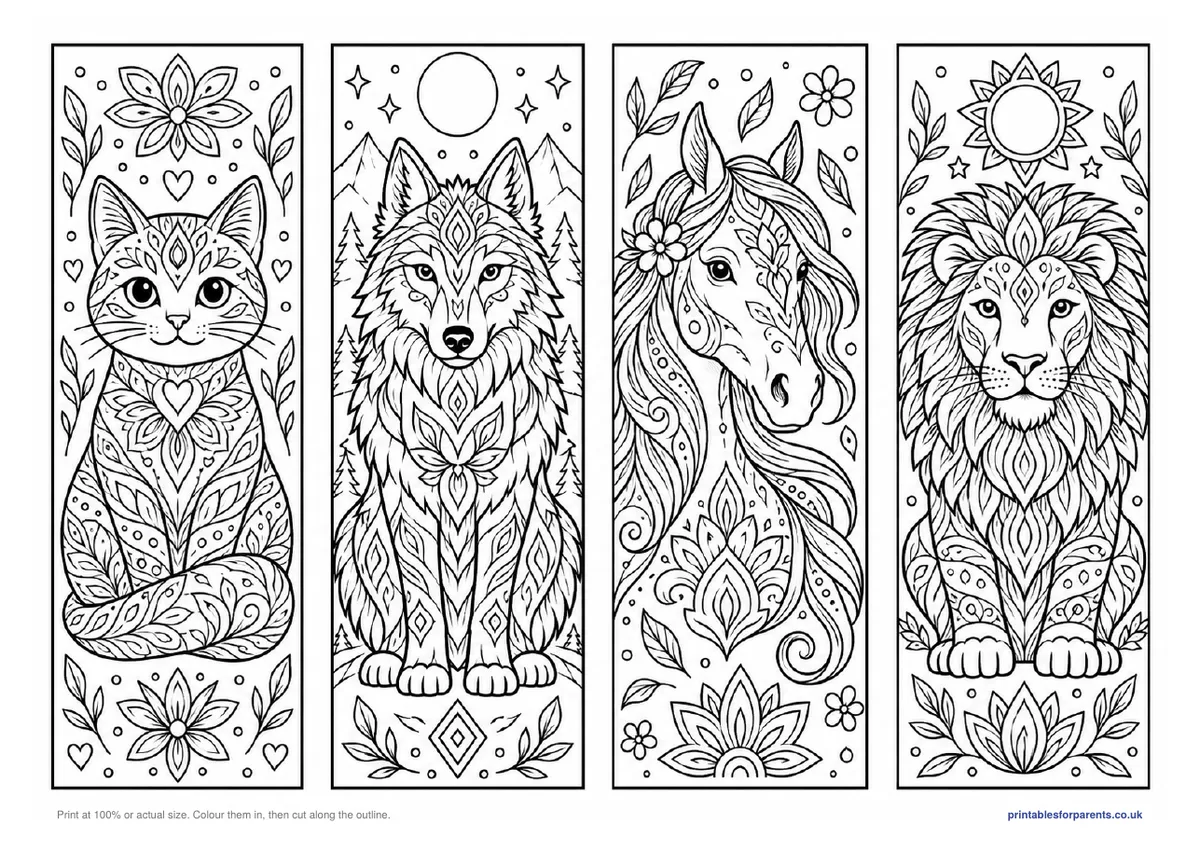
Four free printable sheets of colouring bookmarks, sixteen in total. Two sheets of simple designs for younger children and two of detailed patterns for older ones. Colour them in, cut them out and use them.
 5 sheets
Paper aeroplane templates
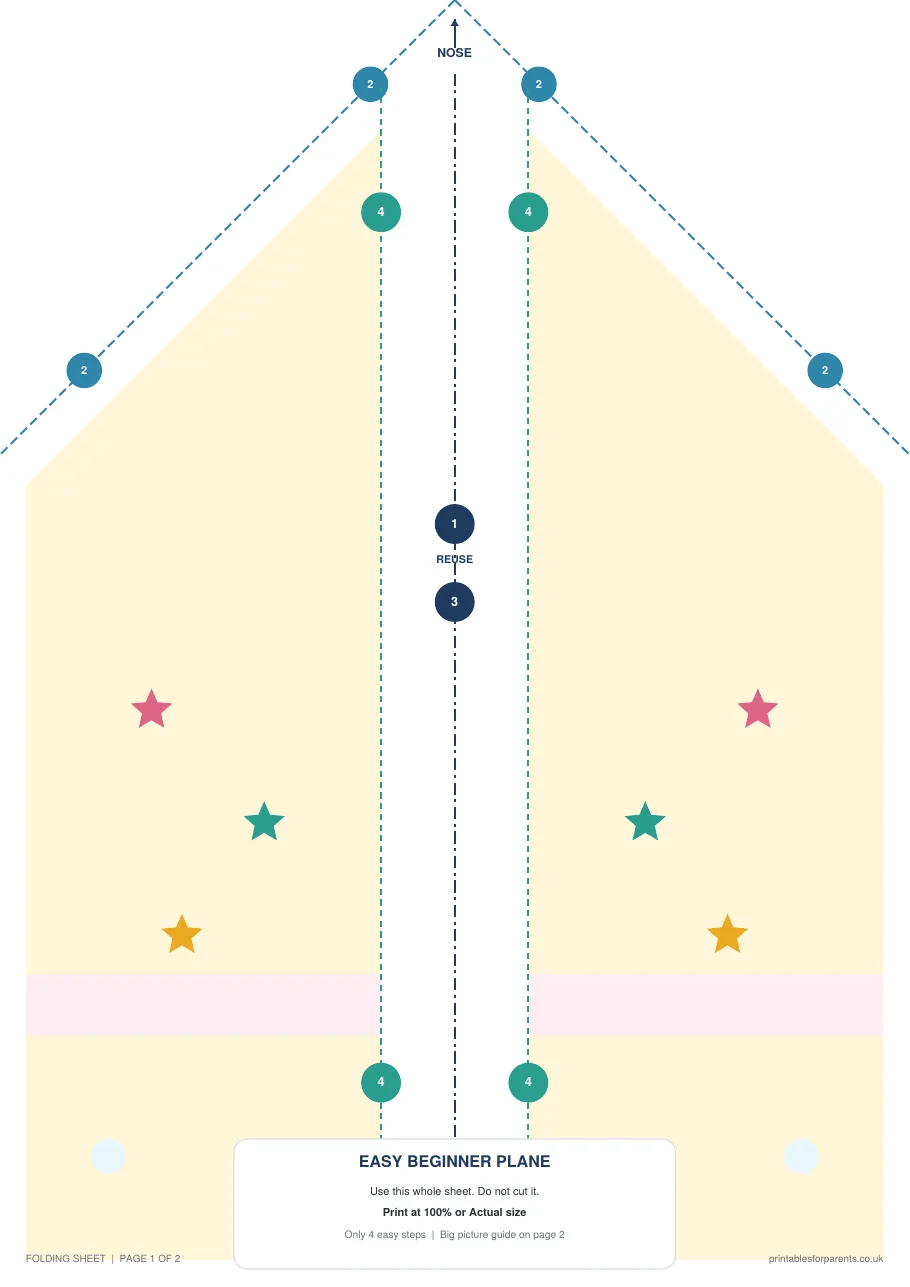
Five free printable paper aeroplane templates with the fold lines already on the paper. Numbered creases on page one, big illustrated steps on page two, from a four step beginner plane up to a stunt plane with adjustable tabs.
 7 sheets
Chore charts and pocket money sheets
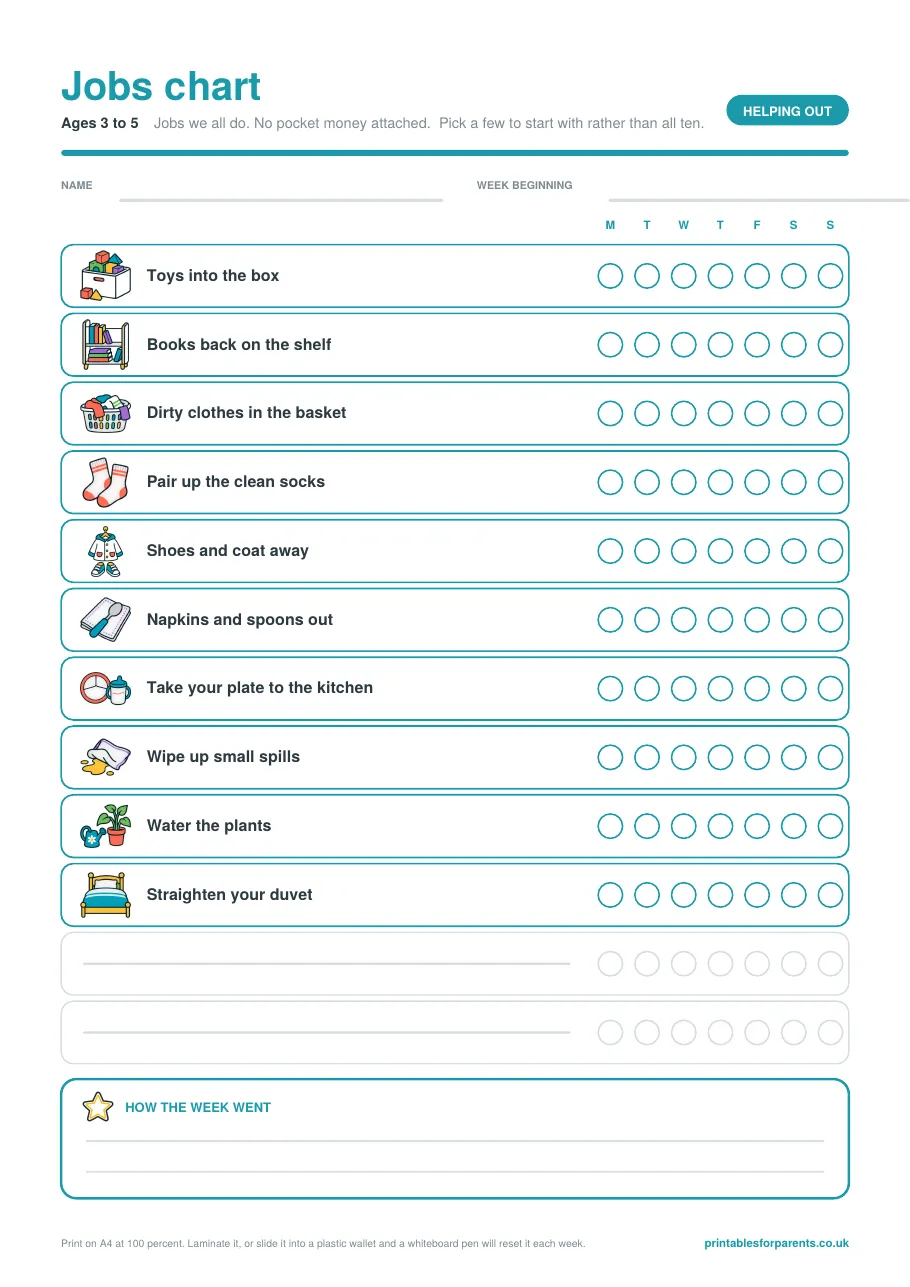
Seven free printable jobs charts and a pocket money tracker. Three age bands in two versions, one with pocket money attached and one without, so you can pick the approach that suits your house.
Handing it over
Somewhere around six or seven, a child can start to own a chart rather than have one done to them. That changes what the sheet needs to look like: room for their handwriting, space for their choices, and nothing that reads as babyish to a nine year old.
The honest test is whether they’ll fill it in without being asked twice. If they won’t, it’s too complicated, too young, or about something they simply don’t care about, and no amount of enthusiasm from you will fix the third one. Mine didn’t, for about a month, and then redesigned the whole thing in felt tip and has used it ever since.
Think in weeks
School-age children can hold a whole week in their heads, which is a genuinely useful development. A weekly planner on the fridge does more for a Monday morning than any number of reminders shouted up the stairs.
Let them fill it in badly
The first thing that happens when a child takes a chart over is that it stops looking nice. The spelling goes, the columns wander, Tuesday gets three lines and Wednesday gets none, and somebody draws a dog in the corner.
Leave it alone. The moment you tidy it up, or correct the spelling, or quietly redo it properly, it becomes your chart again and they will stop touching it. A sheet filled in badly by the child it belongs to still does the job. A beautiful one filled in by you does nothing whatsoever.
Homework is mostly about starting
Most of the friction on a Sunday evening isn’t the work. It’s the ten minutes spent finding something to do it on, and the twenty minutes of avoidance before that.
A drawer with the right paper in it removes the first. A fixed time and a clear table removes most of the second.
What to stop measuring
Reading levels, against other children. Handwriting, in a child who is otherwise fine. Speed at anything.
School measures those already and does it with more context than you have. What you can usefully watch is whether they’ll pick a book up unprompted, and whether they’ll have a go at something they might get wrong. If the first of those is the one worrying you, reading with a reluctant child goes into it properly.