Lined and grid paper
Eleven kinds of A4 paper to print at home: ruled, wide ruled, handwriting lines, squared, graph, dot grid, isometric, draw and write, and Cornell notes. Download one sheet or the whole pack.
- All ages
- School
- 5 and under
- 5 to 10
Also known as: printable lined paper, printable graph paper, squared paper, dot grid paper, handwriting paper, isometric paper, writing paper, cornell notes template.
Print at 100 per cent, or don’t bother
This is the one instruction on the page that genuinely matters. Squared paper, graph paper and the handwriting guides are all defined by their measurements, and “fit to page” quietly shrinks everything by a few per cent. Your 5mm squares become 4.7mm squares, and nobody notices until a scale drawing refuses to work.
Find the scale setting in your print dialogue and set it to 100% or actual size. I printed a whole term of squared paper at 97% before anybody worked out why the graphs looked wrong.
Which handwriting paper
Schools differ, so the honest answer is to ask their teacher which they use. It takes five seconds and saves teaching a child two systems at once.
Failing that: dotted thirds for a child working out where letters sit, since the dotted centre line shows how tall the small letters should be. Four line paper once they’re dealing with ascenders and descenders and the tail of a g is wandering. Wide ruled for early writers who simply need more room, and standard ruled once handwriting has settled down and looks like an exercise book.
The one people forget about
Draw and write paper, with a picture space above the lines. If you have a child who groans at the sight of a blank lined page, letting them draw the thing first and then write about it removes most of the resistance. It’s what schools do in reception and early key stage one, and it works at home for the same reason.
Grid paper isn’t just for maths
The 10mm squares suit early number work, but they’re also the easiest way to draw a chart, plan a bedroom, design a Minecraft build on paper, or write neatly one letter per square when handwriting is still hard work.
Isometric paper is the sleeper hit for anyone about eight and up who likes drawing. It makes 3D shapes come out looking right, which feels like a magic trick the first time.
Keep a stack in a drawer
Half the friction on a Sunday evening comes from the ten minutes spent hunting for something to do it on. Print a dozen of whichever two you use most, put them somewhere obvious, and reclaim the argument. These are also the cheapest sheets here to run off in bulk, which the ink saving guide goes into.
Matching the paper to the task
For spelling and handwriting practice, dotted thirds or four line paper suit most children, because the lines show where the tall letters, small letters and descenders should sit. For long writing, such as a story or a diary, standard ruled paper is the sensible choice once the handwriting is steady. For number work, a 5mm grid is good for sums and for lining up columns, with one digit in each square. A 10mm grid is easier for children who are still learning to write numbers neatly.
Why the squares help with column sums
When a child is adding or taking away in columns, one digit per square stops the numbers from sliding out of line. It’s a small change, but it removes a common reason for wrong answers that have nothing to do with the maths itself. You can print a page of grid paper with a single column at the top, and let them work through a few sums before you move to a blank sheet.
Keeping the paper where it gets used
A stack in the kitchen drawer, next to the pencils, gets used far more than a folder in the study. Keep one sheet of each type at the front, so your child can see the options and choose for themselves. Choice tends to make a child more willing to start, even when the task is one they would rather skip.
12 free lined and grid paper to print
Every sheet is a PDF sized for A4. Tap a design to download it. No sign-up, no watermark.
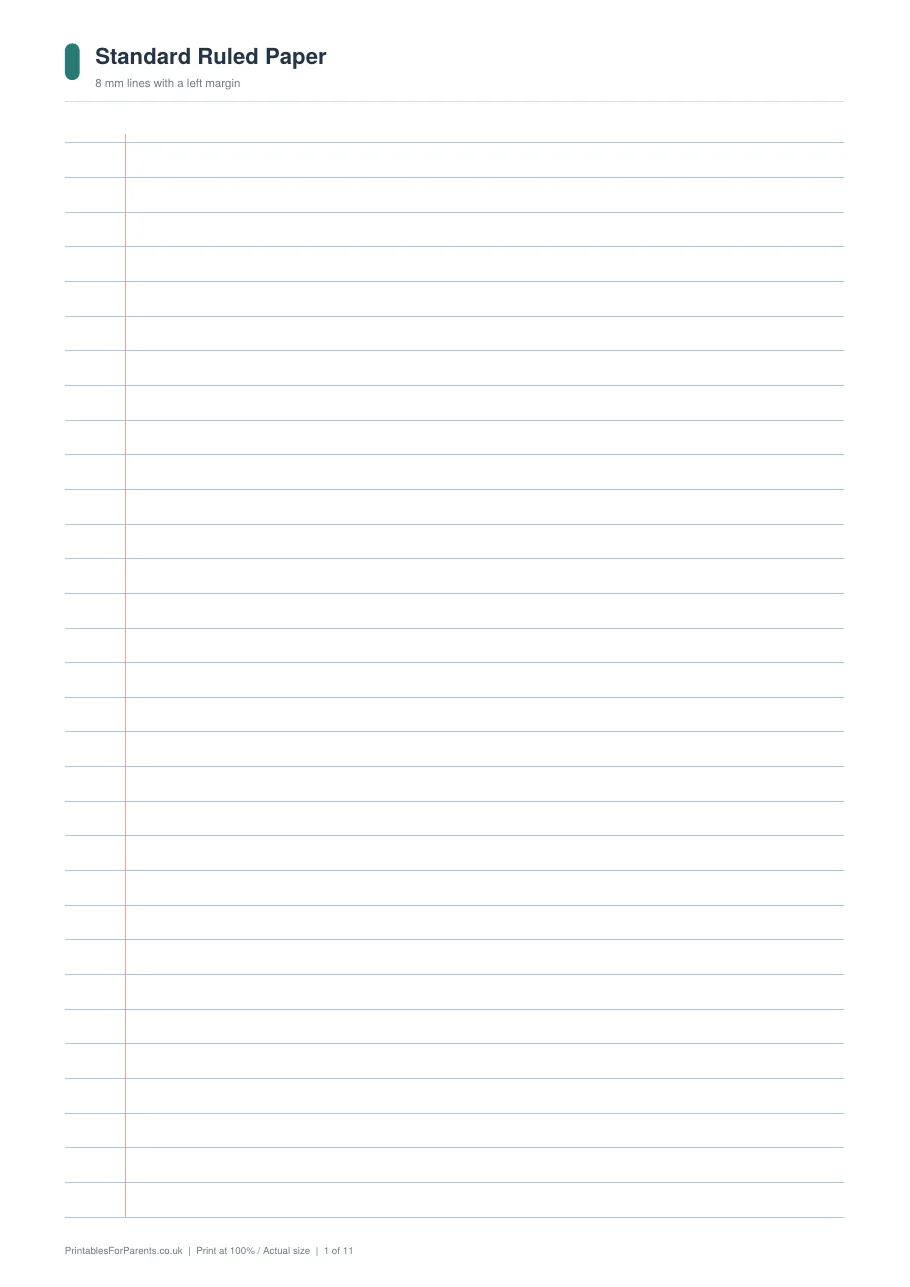
Standard ruled paper
8mm lines with a left margin. The everyday one, and the closest to a school exercise book.
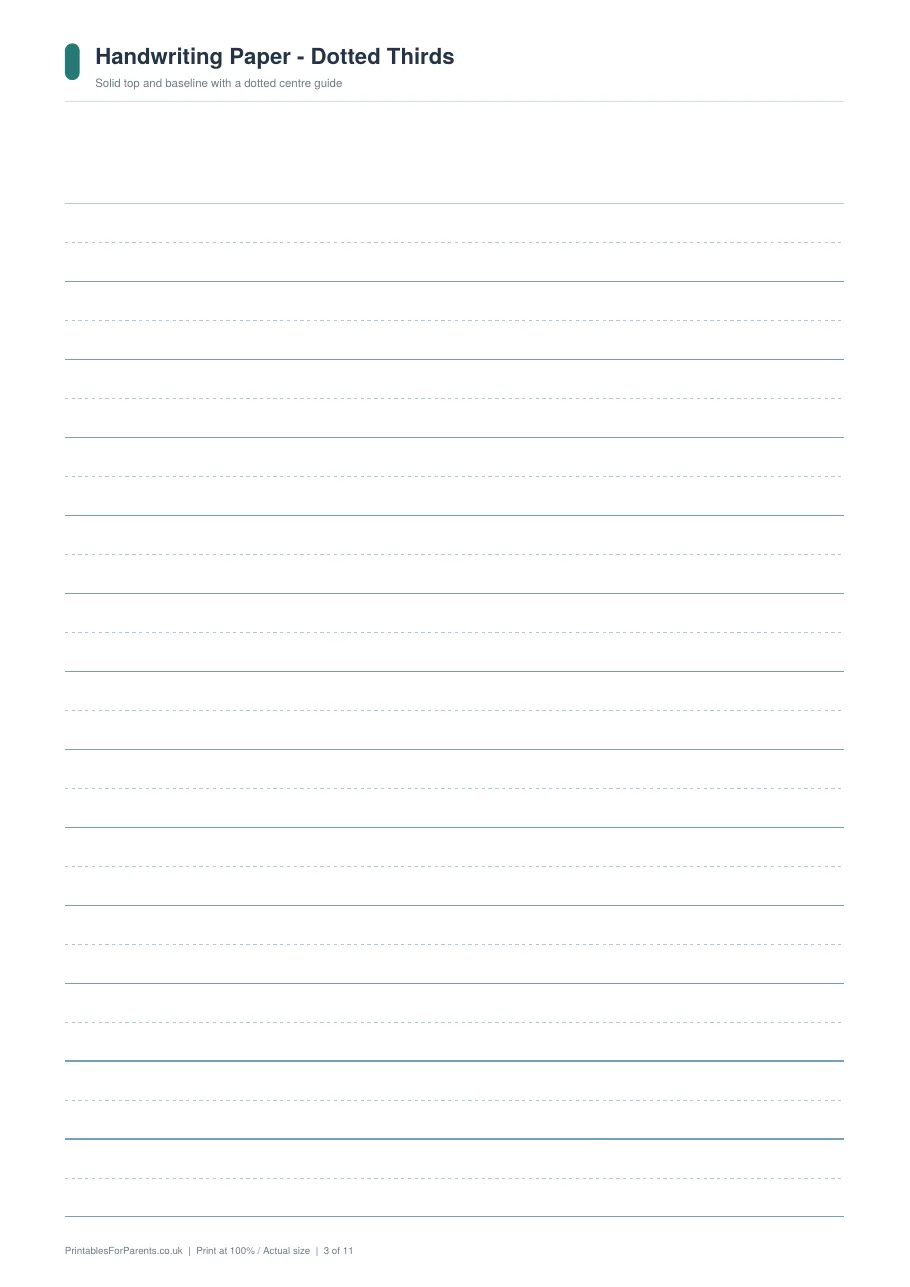
Handwriting paper, dotted thirds
Solid top and baseline with a dotted centre guide, so letters land at the right height.
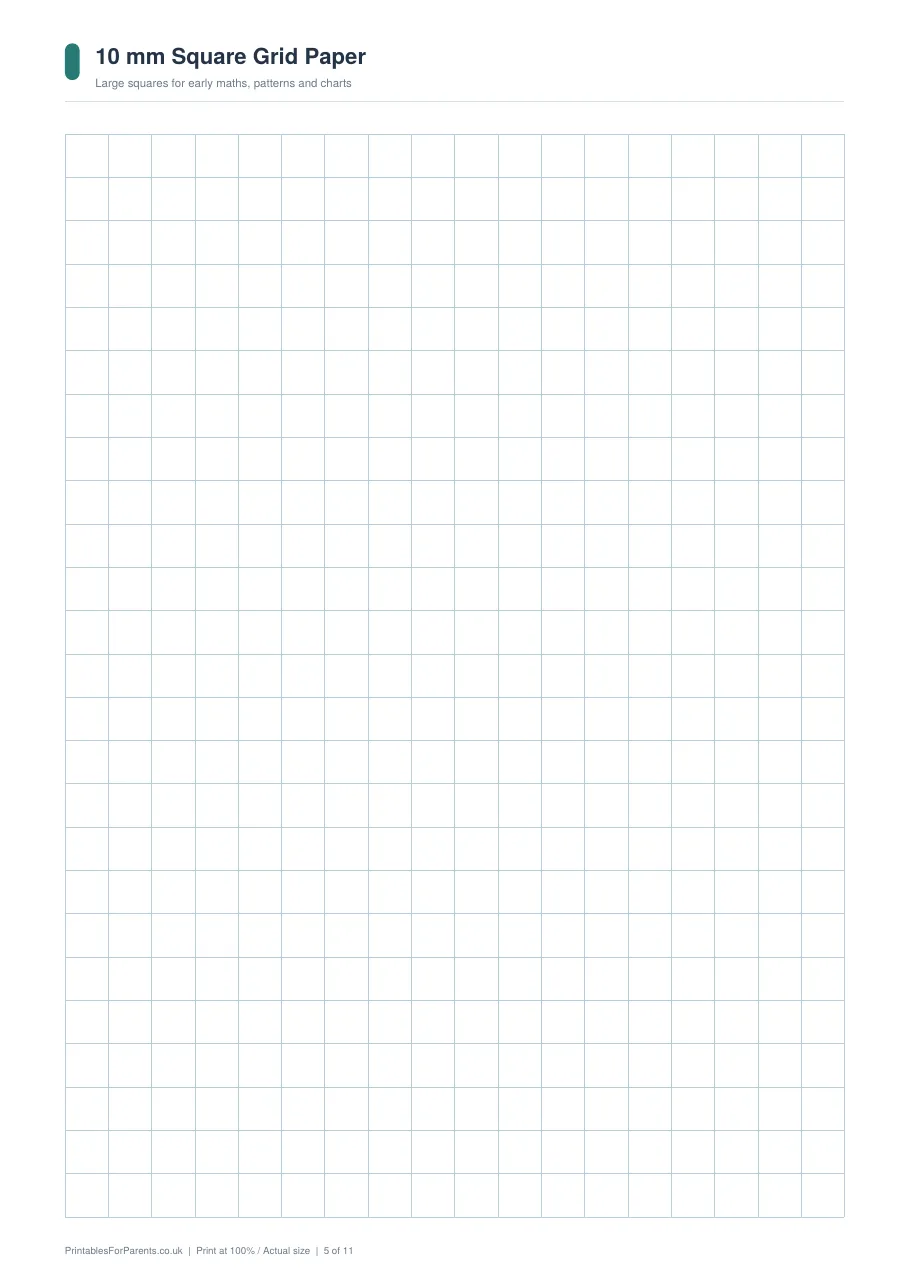
10mm square grid paper
Large squares for early maths, patterns, charts and anything involving a ruler for the first time.
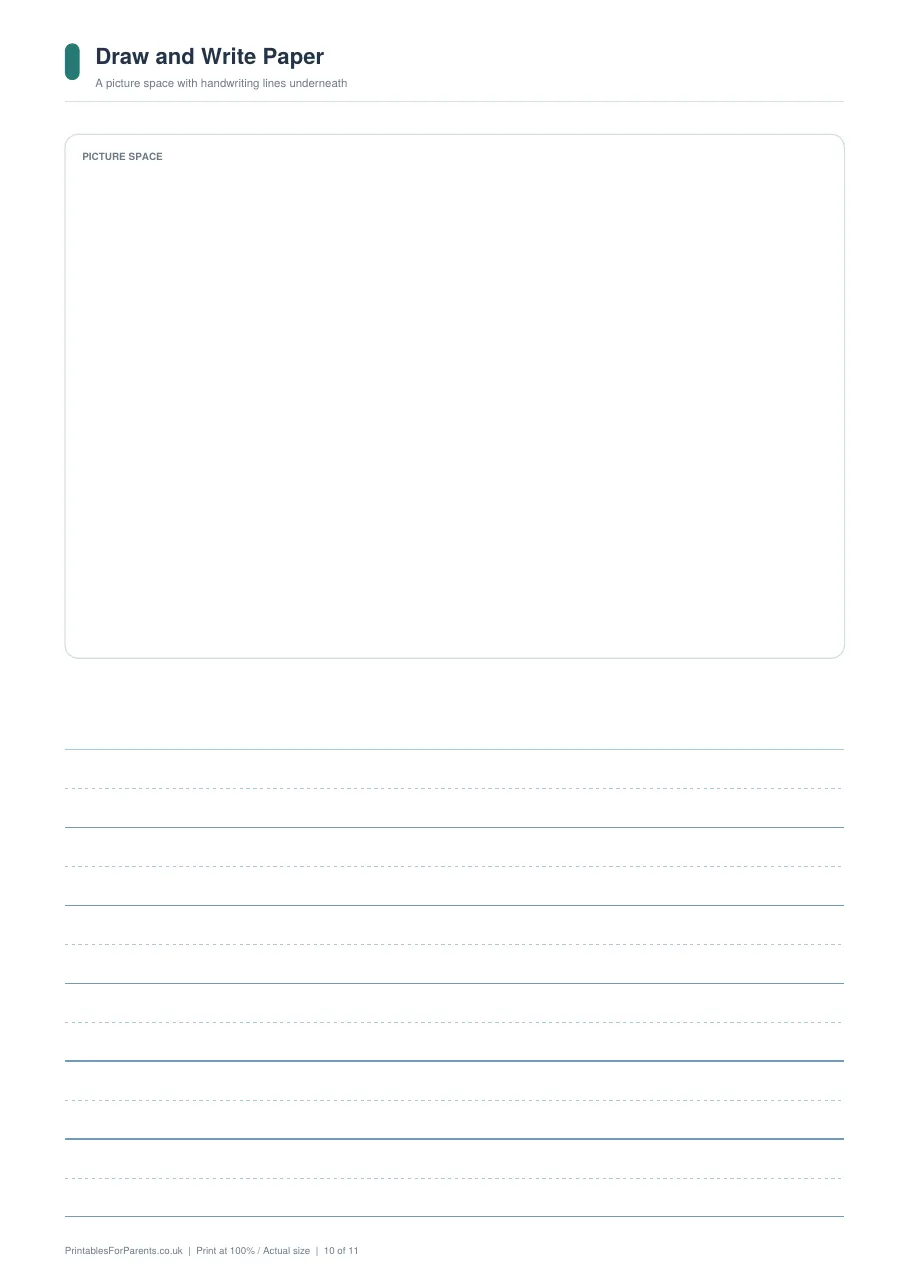
Draw and write paper
A picture space at the top with handwriting lines underneath. A reliable way to get a reluctant writer started.
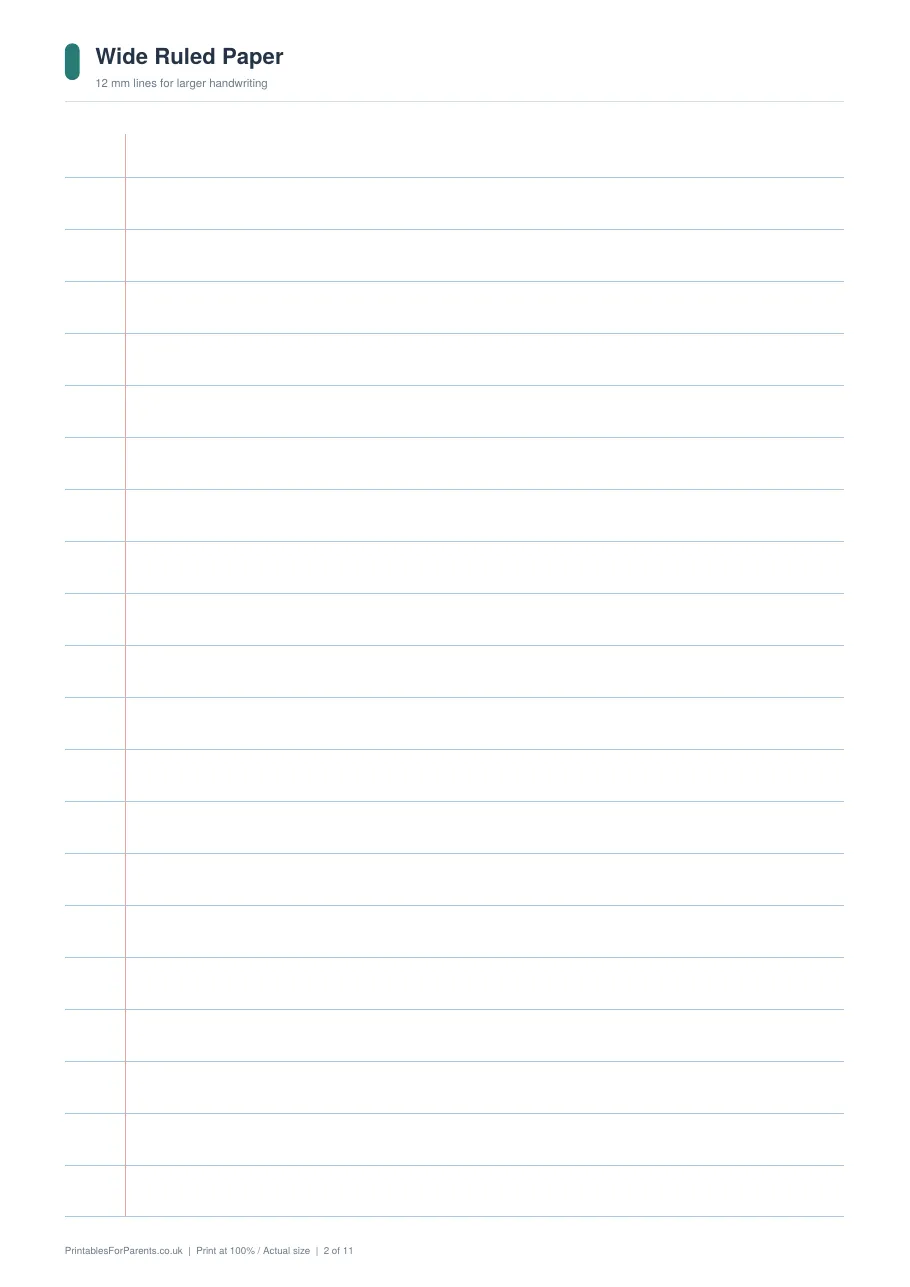
Wide ruled paper
12mm lines for larger handwriting, and for anyone still finding 8mm a squeeze.
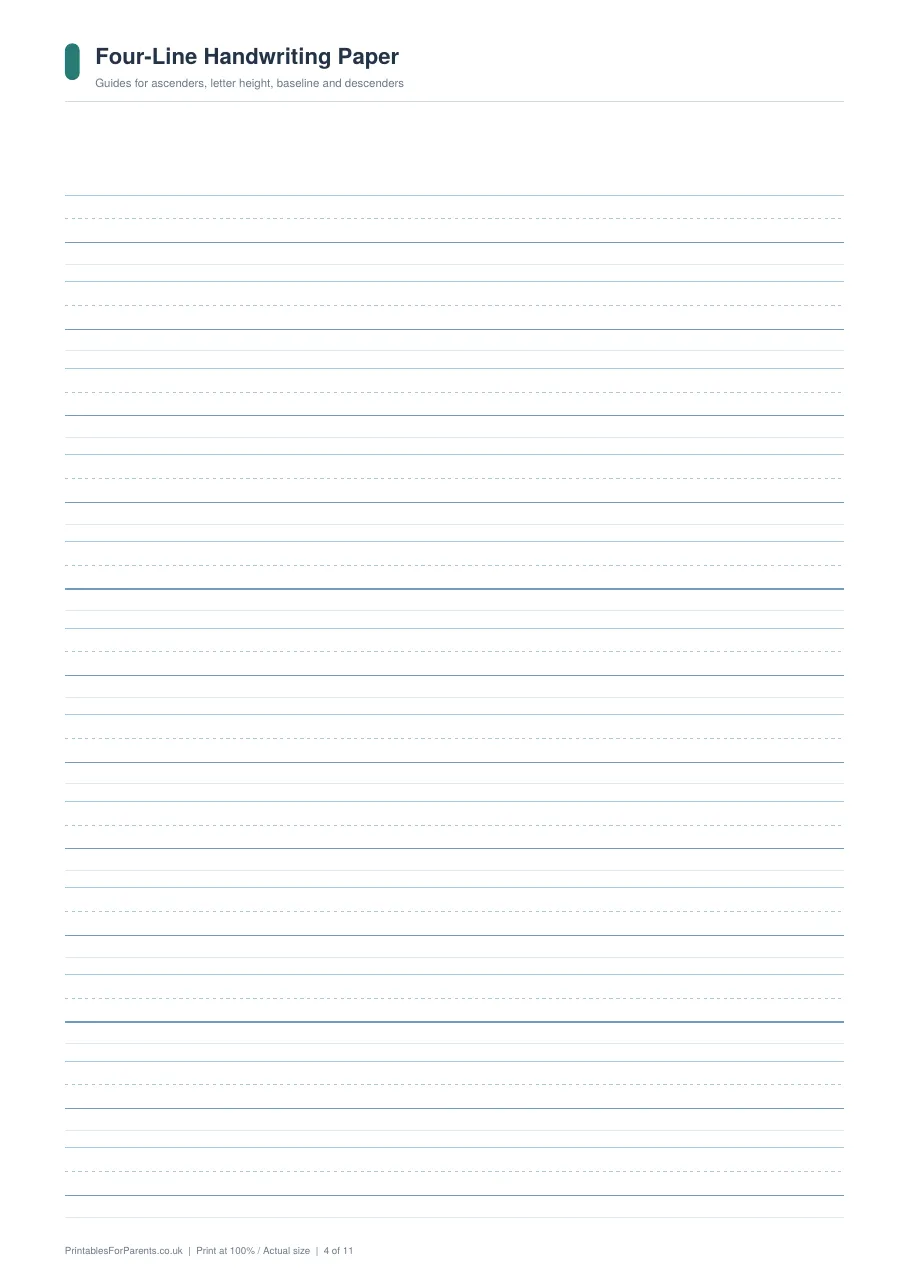
Four line handwriting paper
Guides for ascenders, letter height, baseline and descenders. The next step up from dotted thirds.
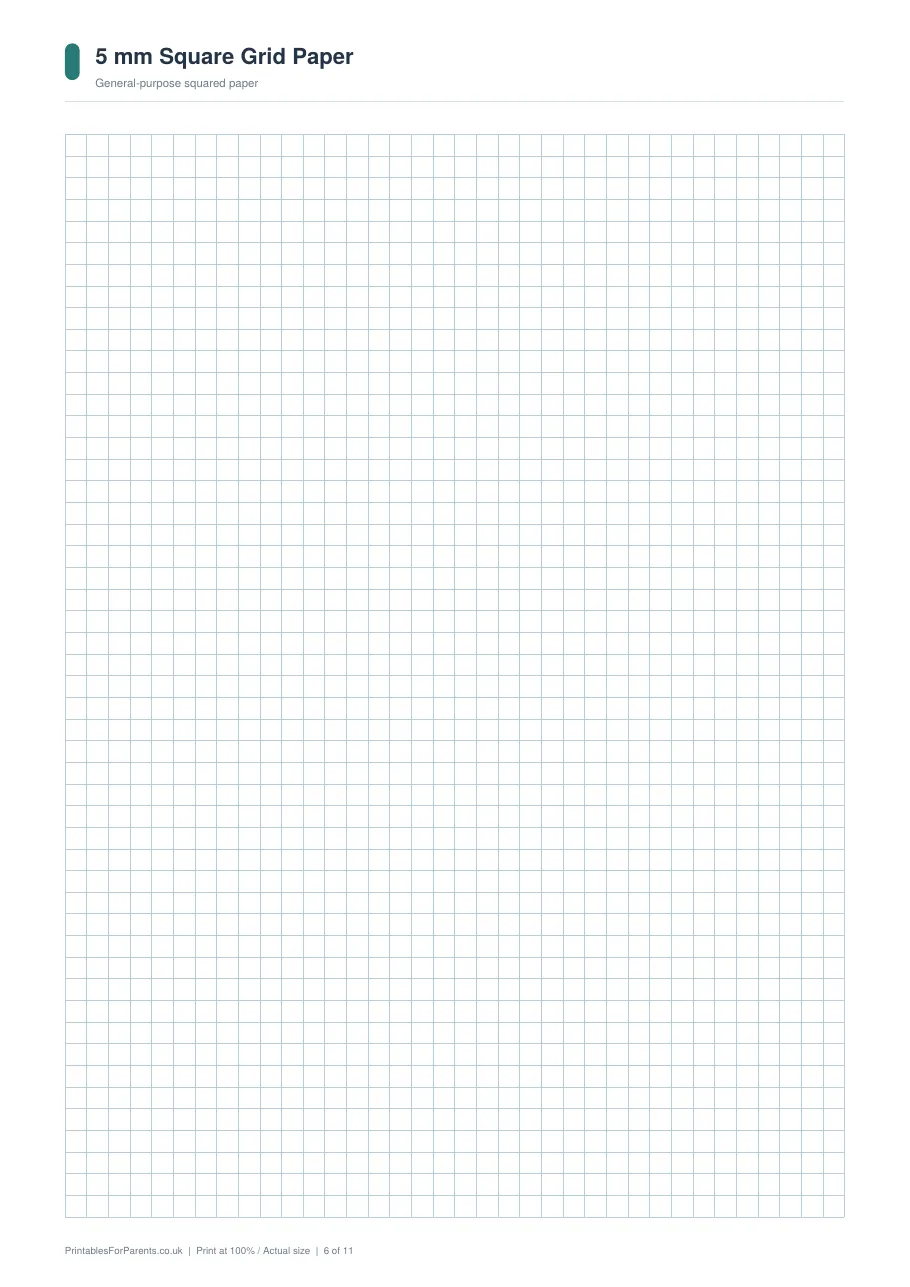
5mm square grid paper
General purpose squared paper, and the one most maths homework actually wants.
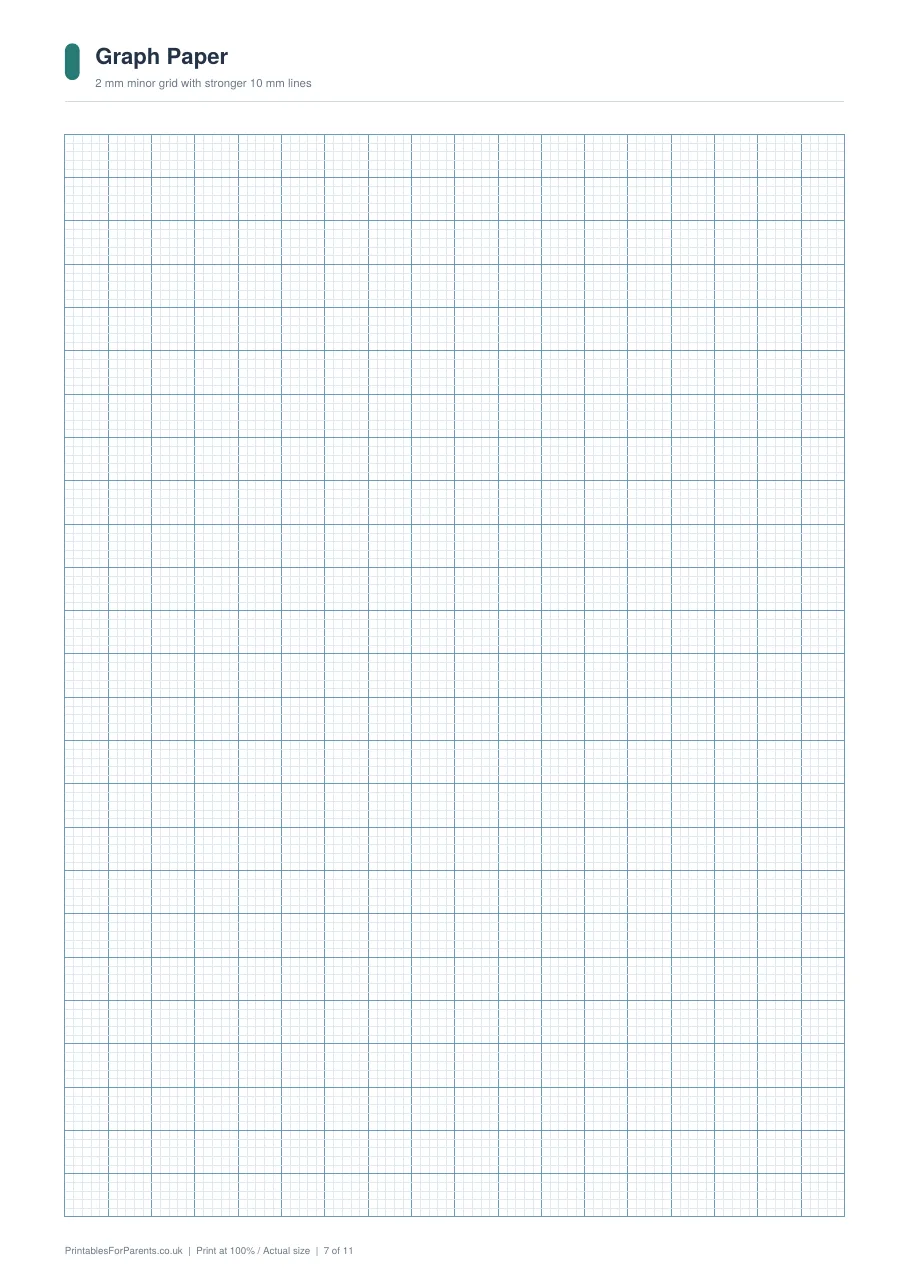
Graph paper
A 2mm minor grid with stronger 10mm lines, for graphs, scale drawings and anything plotted.
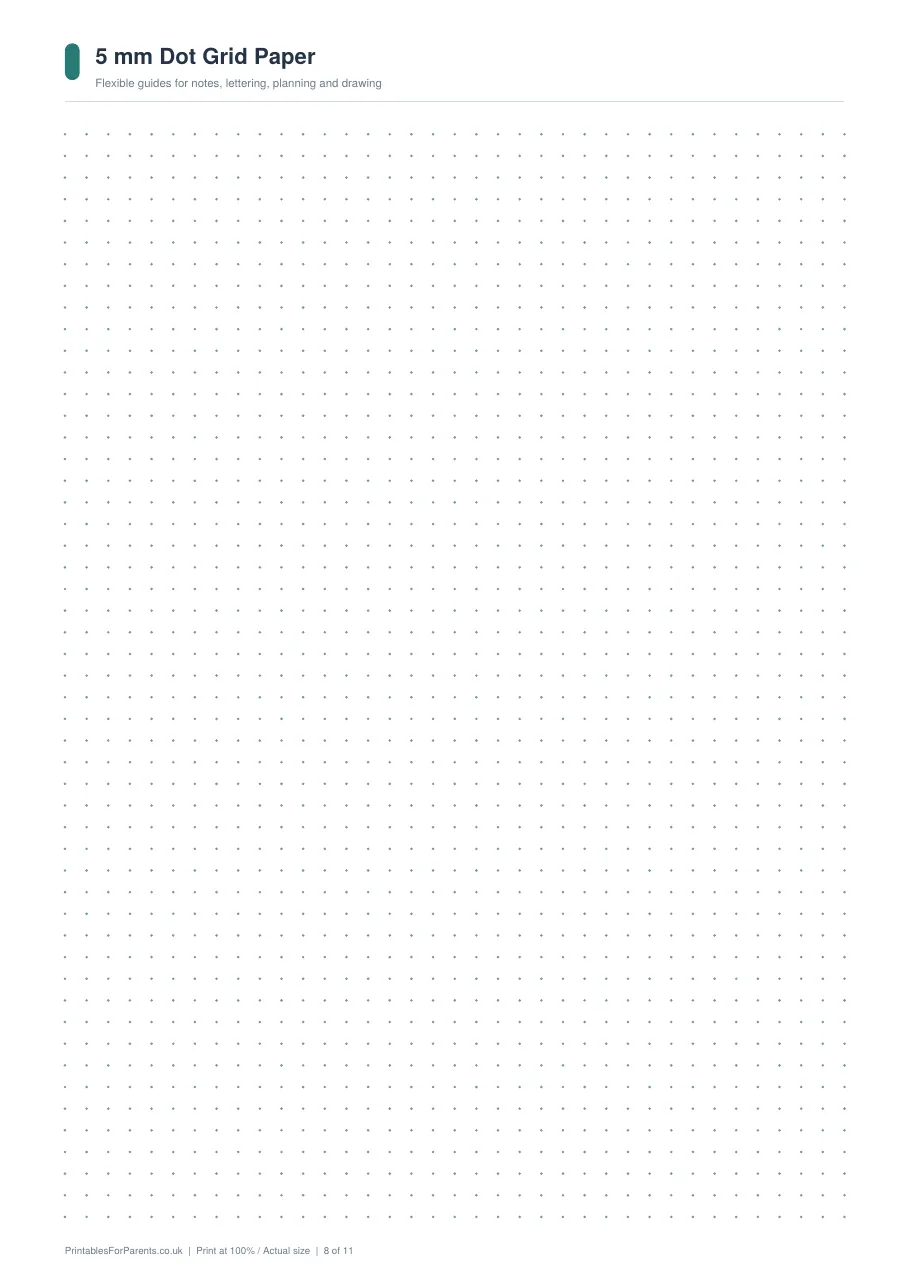
5mm dot grid paper
Dots rather than lines, which suits notes, lettering, planning and drawing without boxing anything in.
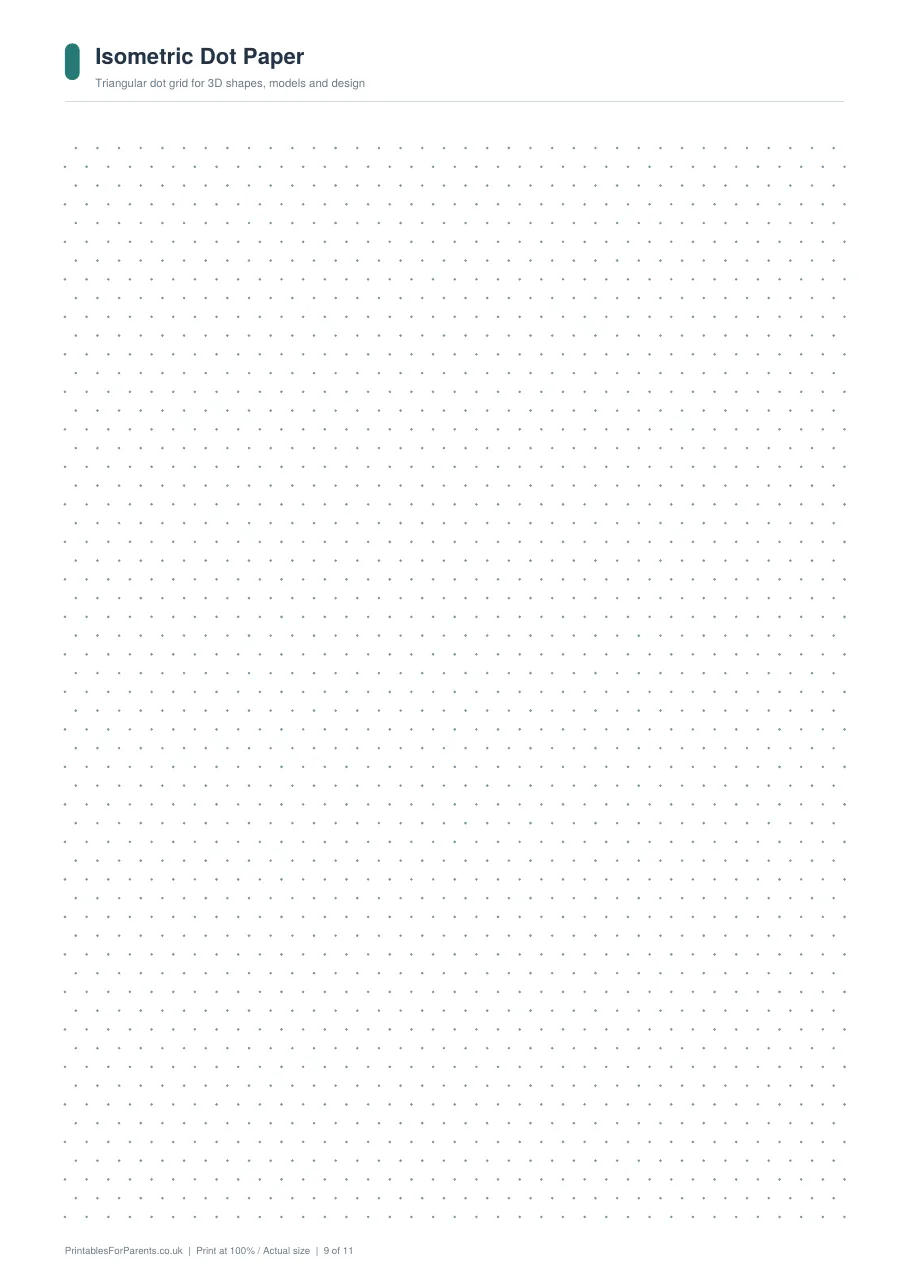
Isometric dot paper
A triangular dot grid for drawing 3D shapes, models and design work.
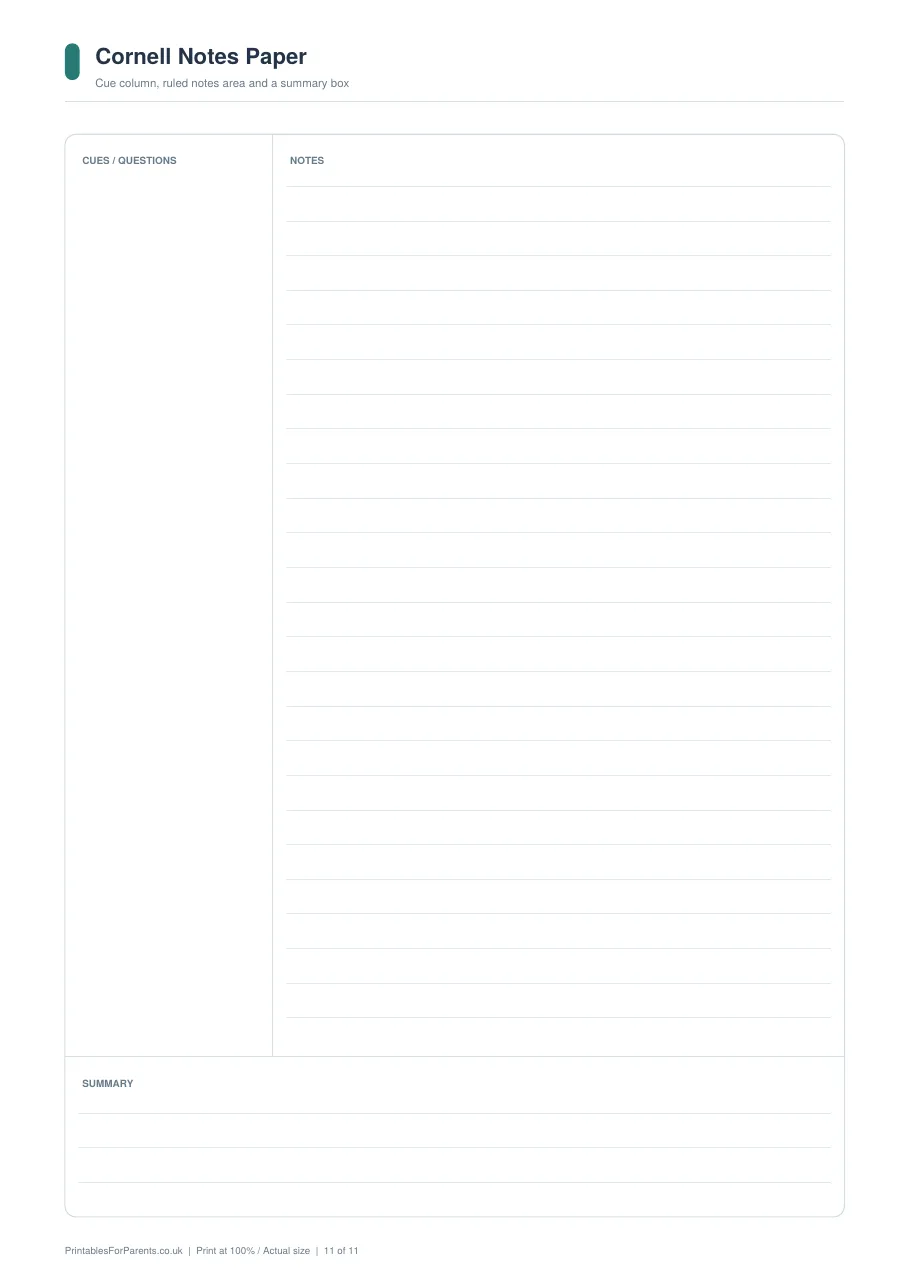
Cornell notes paper
Cue column, ruled notes area and a summary box. For older children revising, and for meetings.
The whole pack
All eleven papers in one file, in the order above. Print only the pages you want.
The one setting that matters
- Print at 100% or actual size, never fit to page. Squared and graph paper that has been shrunk is no longer 5mm or 10mm, which defeats the entire point of it.
- Every sheet is A4 portrait. Download one on its own, or take the eleven page pack and print only the pages you need.
- The grid and dot papers are drawn in a pale blue that photocopies and scans faintly, so pencil work stays the thing you can see.
Common questions
Which paper should a child use for handwriting?
Ask their teacher, because schools differ and a child taught one system finds another confusing. As a rough guide, dotted thirds suit a child learning where letters sit, four line paper suits one working on ascenders and descenders, and wide ruled suits early writers who simply need more room.
Why must I print at 100%?
Because the measurements are the product. Fit to page quietly shrinks the sheet by a few percent, and 5mm squares become 4.7mm squares. Nobody notices until a maths diagram won't line up.
What's Cornell notes paper for?
A note taking layout with a cue column down the left, the main notes on the right and a summary box along the bottom. It suits older children revising, and it's genuinely useful for adults in meetings too.
Can I print these double sided?
Yes, and for homework it's worth it. Be aware that the pale grid shows through slightly on thin copier paper, which bothers some children and not others.
Do I have to download all eleven?
No. Every sheet is a separate download, so you can take just the 5mm squares. The full pack is there for anyone who would rather have the lot in one file.
Read next
Is my child ready for handwriting and fine motor practice?
The skills that come before letters, what's normal at each age, when to start tracing and writing, and why pressure makes everything slower.
Reading with a child who does not want to read
What to do when the reading book comes out and the mood changes. Why the school book isn't the whole job, what counts as reading, and the five minute rule that makes the difference.
Starting reception, what actually matters
The year before school comes with a great deal of noise about what a four year old should be able to do. Here's what schools genuinely want, what they don't care about, and what's worth practising over the summer.
Printables that go with these
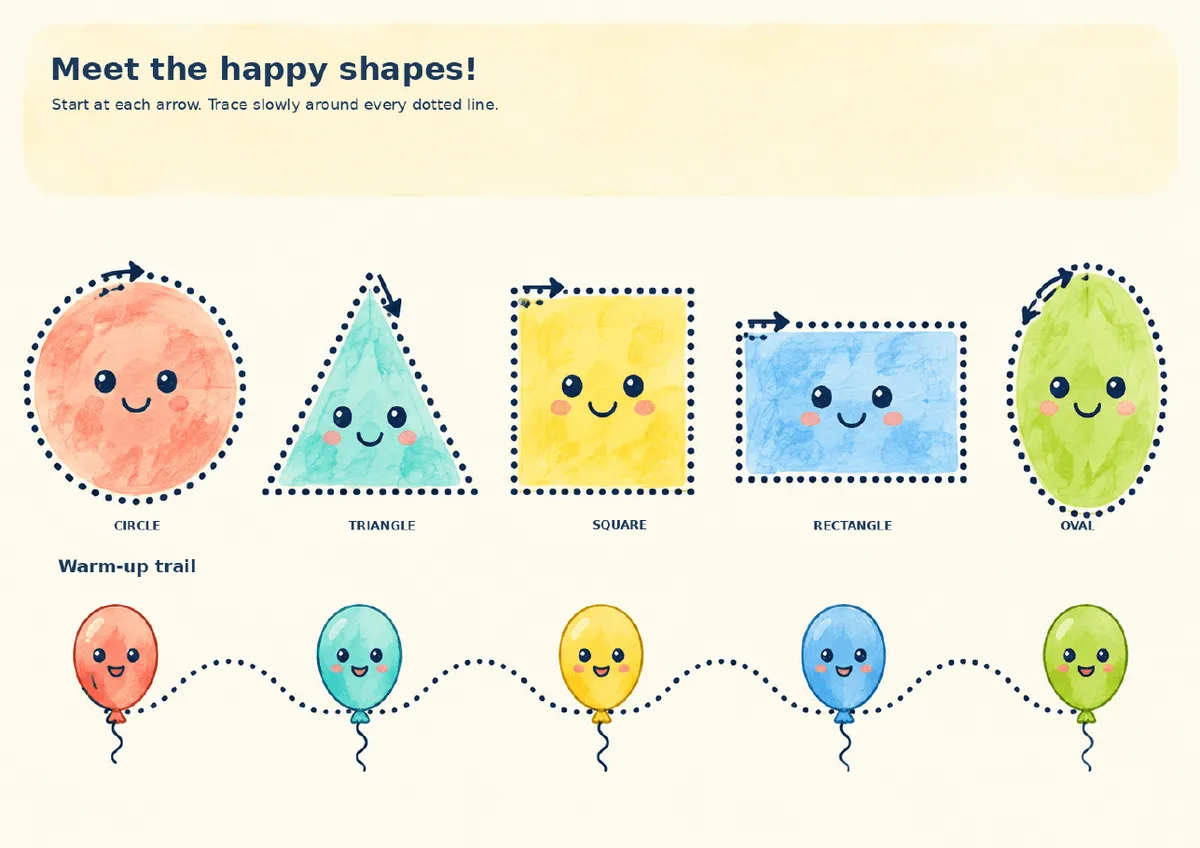 3 sheets
Shape tracing and pre-writing sheets
Three free printable packs for little hands: shape tracing, pre-writing line patterns and a cut out matching set. Twelve pages in total, all A4 landscape.
 5 sheets
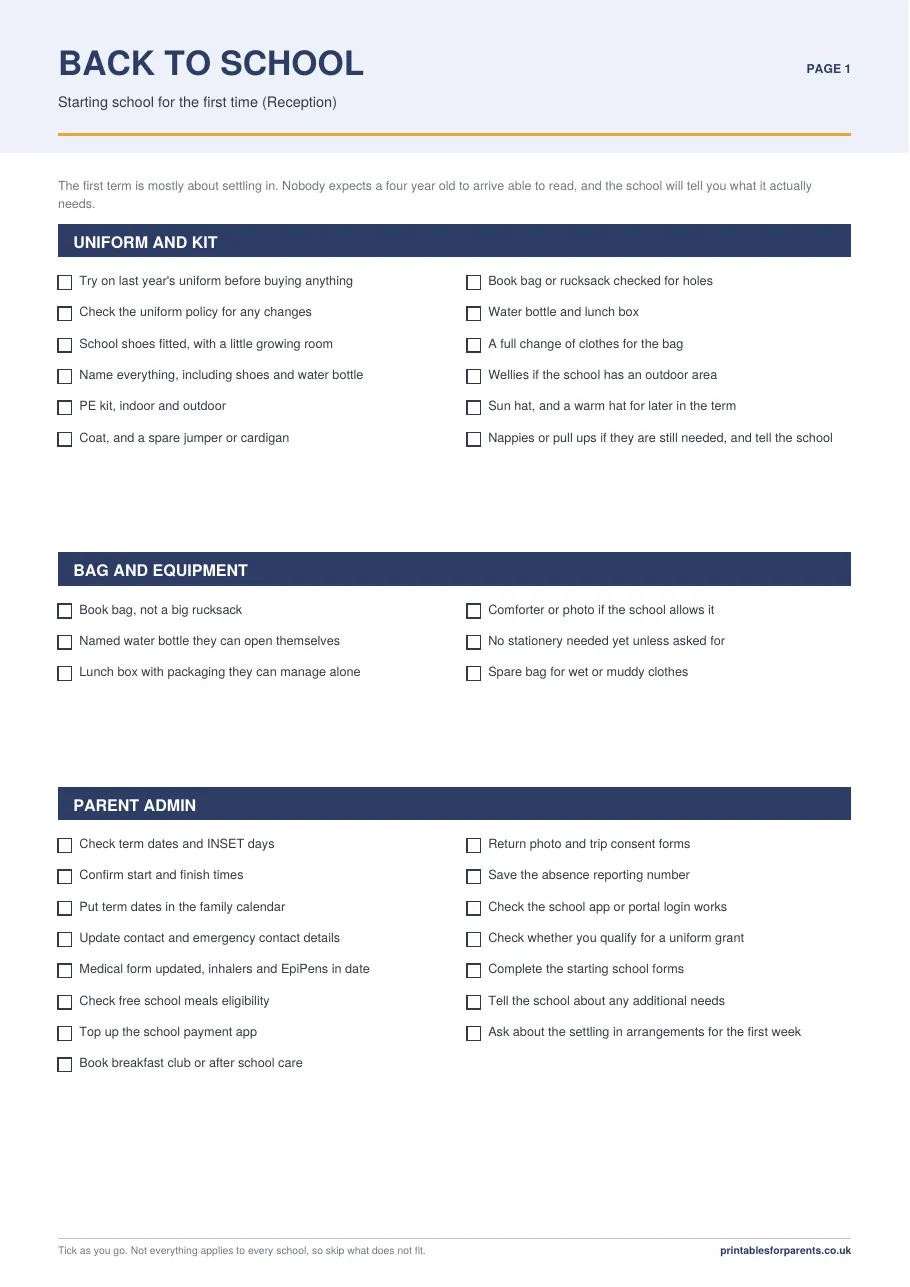
Back to school checklists
Free printable back to school checklists, one for each stage from starting Reception to the first week of secondary. Uniform, equipment, the parent admin, the routine reset and the conversations worth having first.
 4 sheets
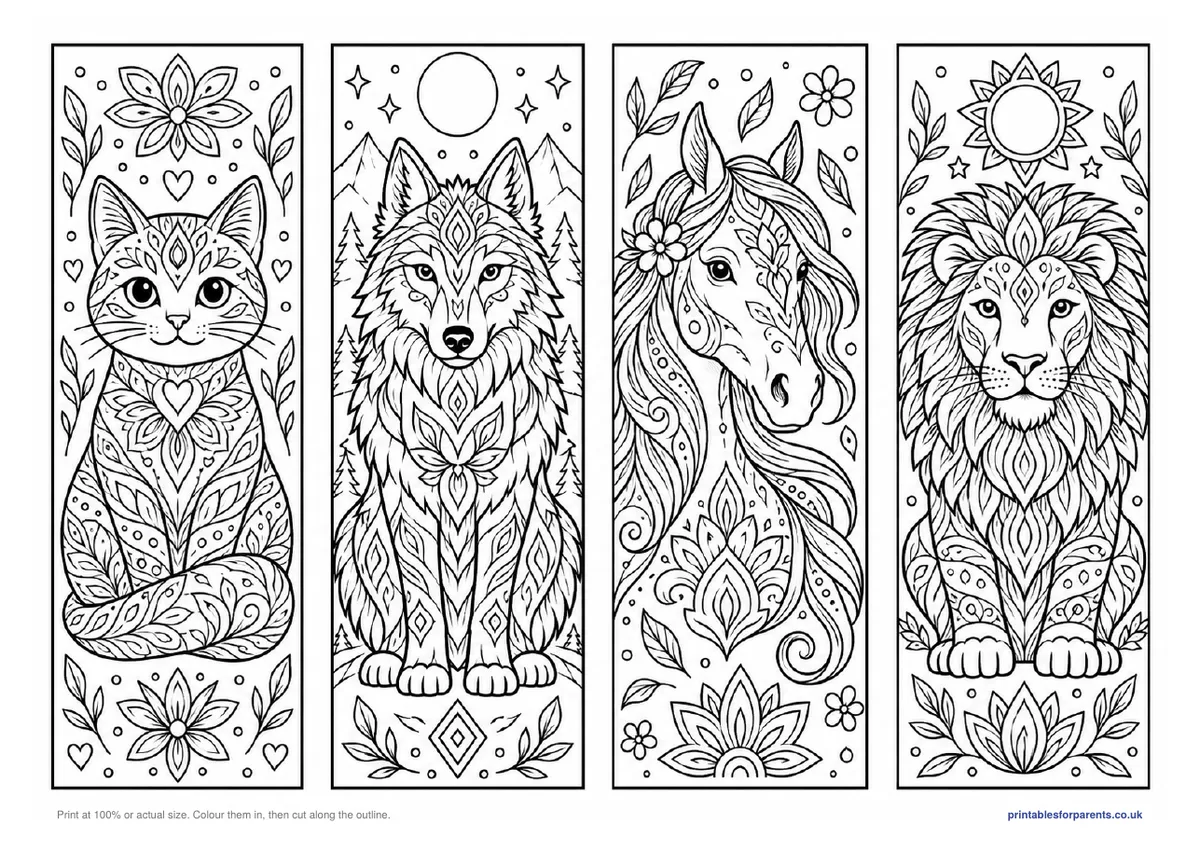
Colouring bookmarks
Four free printable sheets of colouring bookmarks, sixteen in total. Two sheets of simple designs for younger children and two of detailed patterns for older ones. Colour them in, cut them out and use them.
 5 sheets
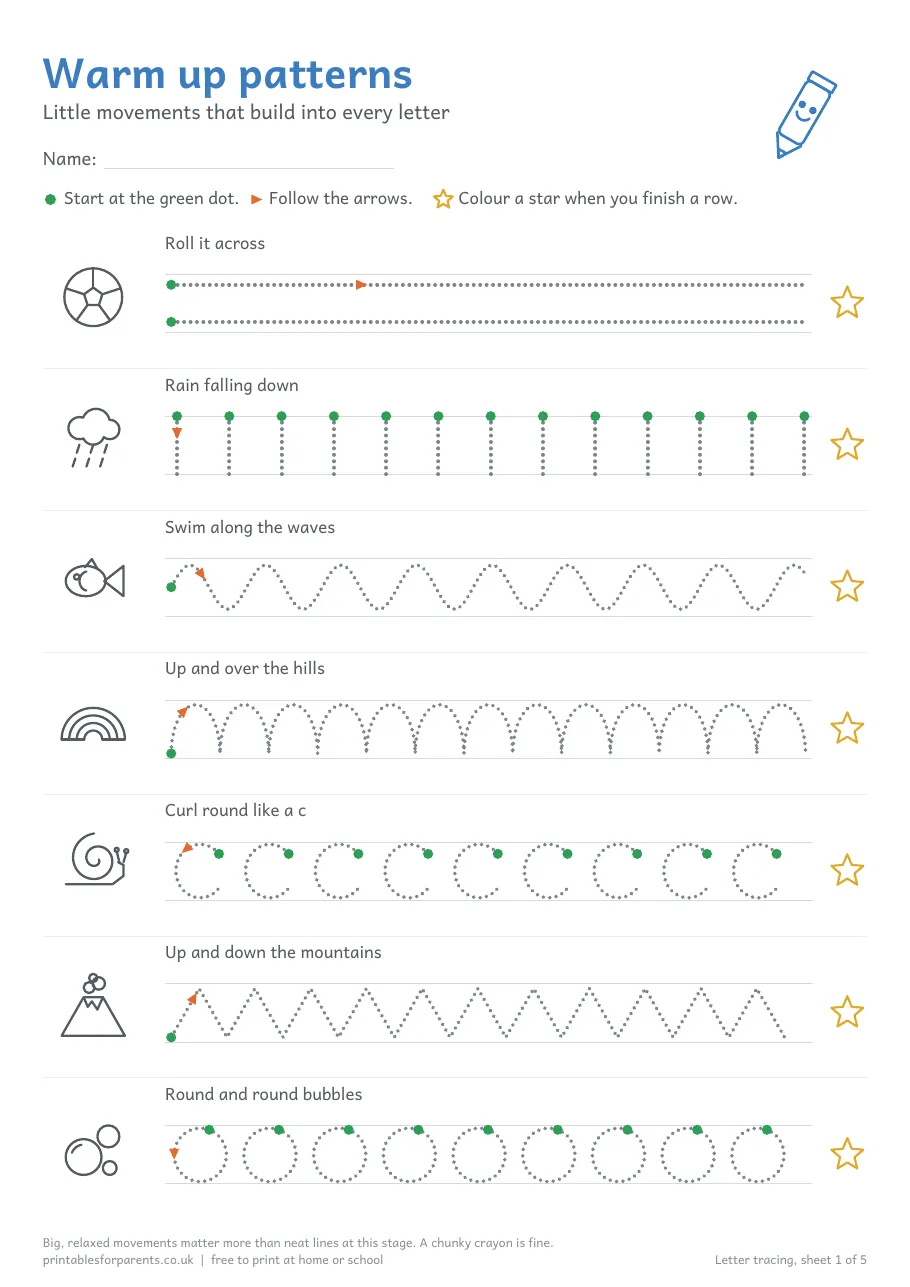
Letter tracing practice sheets
Five free A4 letter tracing sheets, all 26 letters, with a warm up page of lines, waves and loops first. Each letter has a picture word and a dotted start point, so children can see where to begin.