Letter tracing practice sheets
Five free A4 letter tracing sheets, all 26 letters, with a warm up page of lines, waves and loops first. Each letter has a picture word and a dotted start point, so children can see where to begin.
- 4 to 6 years
- School
- 5 and under
Also known as: letter tracing worksheets, handwriting practice sheets, tracing letters for kids, letter formation practice, free letter tracing printables.
Every letter your child will write is built from a few simple movements: a straight line, a curve, a loop, a zigzag. Letter tracing is where those movements start to become letters.
These five sheets cover all 26 letters of the alphabet, in groups. Each letter has a picture word beside it, and a green dot to show where to begin. The arrows show the direction, and a star at the end of each row gives your child something to colour when they finish.
Start with the warm up
The first sheet isn’t about letters at all. It’s lines, waves, zigzags, loops and bubbles, with a picture for each row. Big, relaxed movements matter more than neat lines at this stage. A chunky crayon is fine, and a child who follows the dotted rain from top to bottom has already done the work the letters need.
If your child finds the warm up easy, move on. If the rows are a struggle, stay with the warm up for a few weeks. There’s no need to hurry.
The letters in groups
The letters are grouped by how they’re formed, so children learn the same movement across several letters rather than a random set.
The long ladder letters start at the top and go straight down. These are l, i, t, u, y and j.
The one armed robot letters go down, back up and over. These are r, n, m, h, b, p and k.
The curly caterpillar letters start like a c and curl round. These are c, a, d, o, g and q.
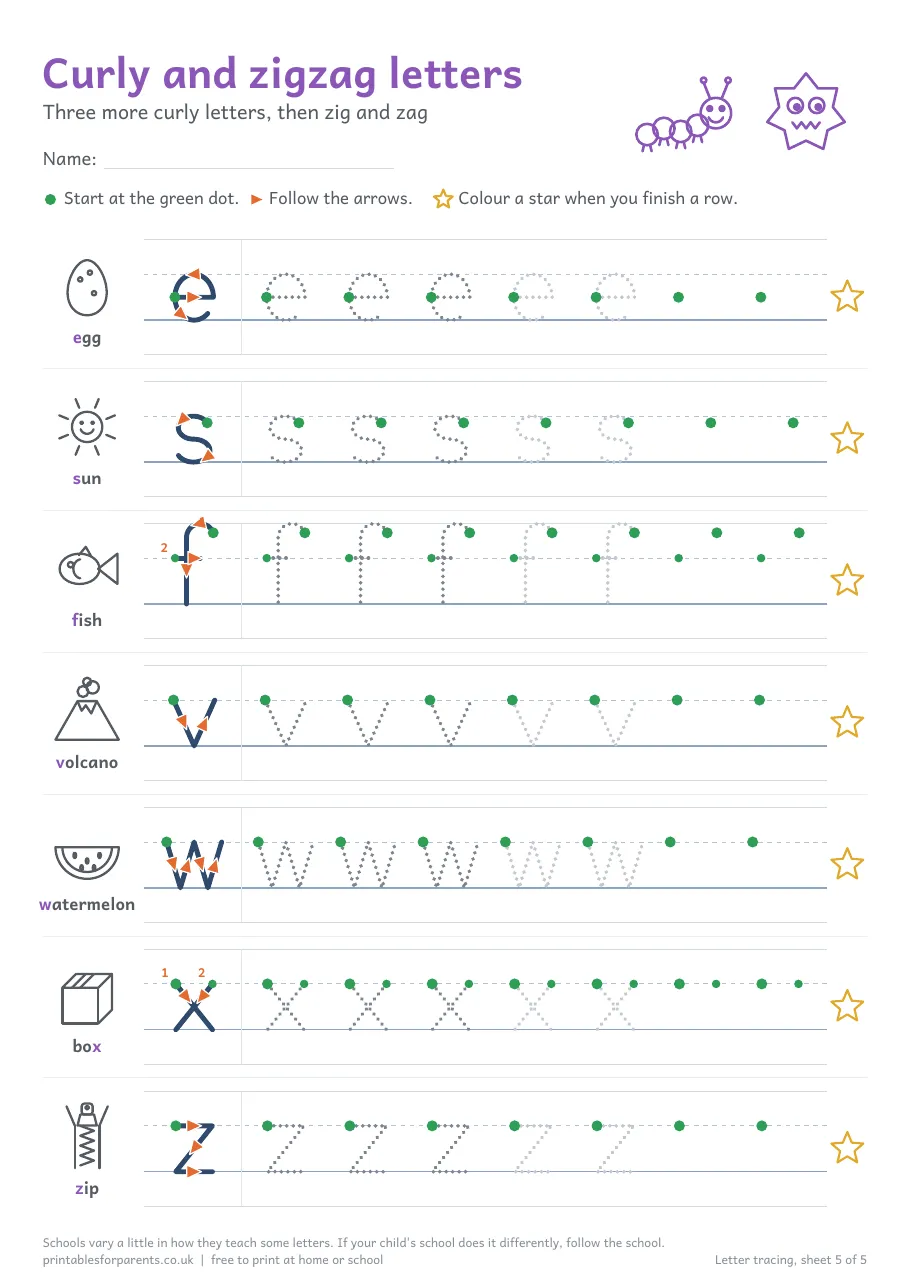
The curly and zigzag page brings in the rest of the alphabet. These are e, s, f, v, w, x and z.
Working through in order gives a steady ramp, and most children find that once one letter in a group clicks, the others follow more quickly.
Keep it short and light
Five minutes at the table, sitting alongside your child rather than over them, is plenty. One row at a time is a reasonable target, and stopping while it’s still going well is better than pushing to finish the sheet.
If letter tracing turns into a battle, put the sheets away. The skills are still building through threading, cutting, drawing and playing with dough, and the same hand movements turn up in all of them.
Follow your child’s school
Each sheet says at the bottom that schools vary a little in how they teach some letters. If your child’s school does it differently, follow the school. They know what your child is learning in class, and these sheets are there to support that.
The handwriting readiness guide covers what is normal at each age, and when to start, which is a good place to read before you begin. The shape tracing packs are a useful step before these sheets for younger children.
5 free letter tracing practice sheets to print
Every sheet is a PDF sized for A4. Tap a design to download it. No sign-up, no watermark.
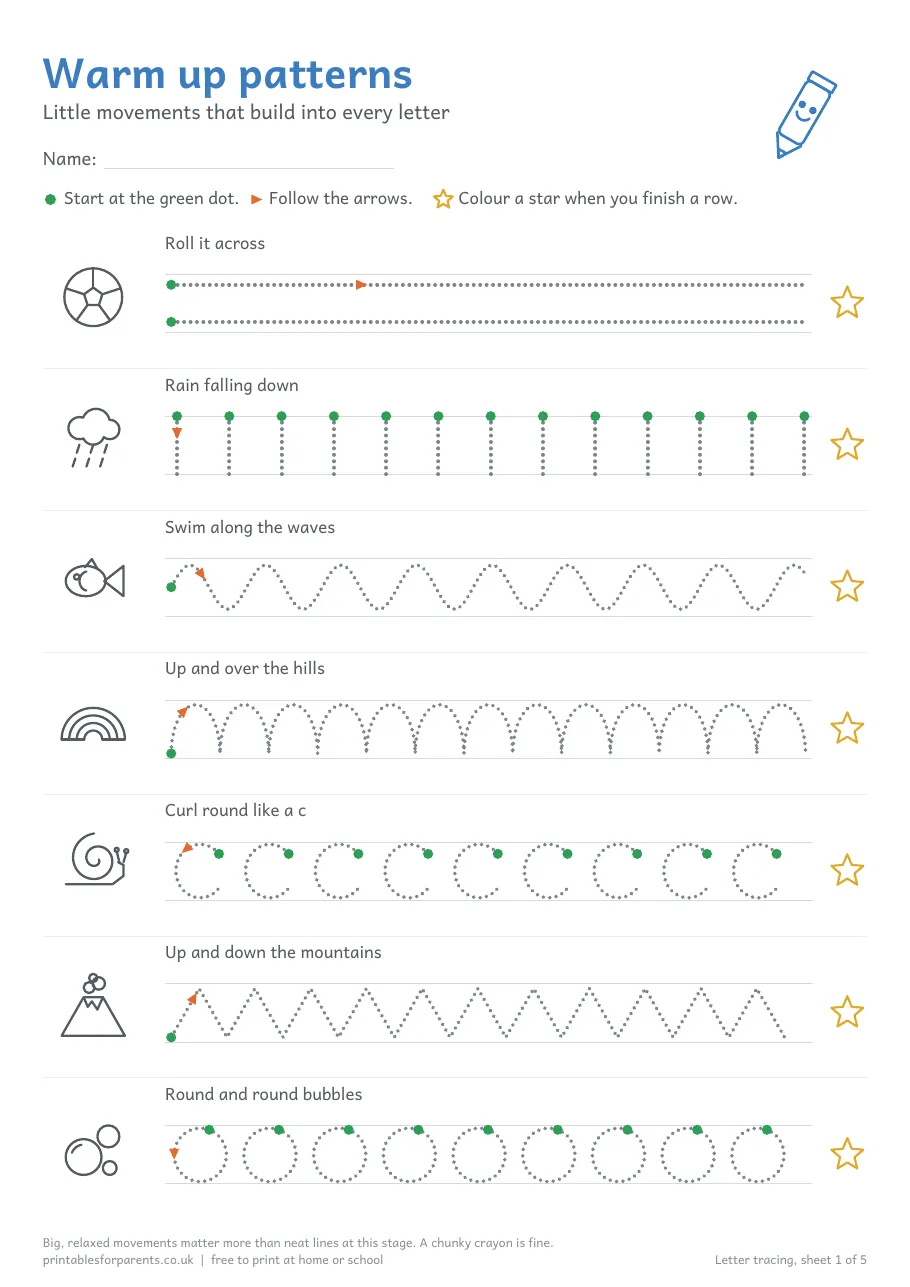
Warm up patterns
Seven rows of lines, waves, zigzags, loops and bubbles, with a picture for each. The first step before any letters.
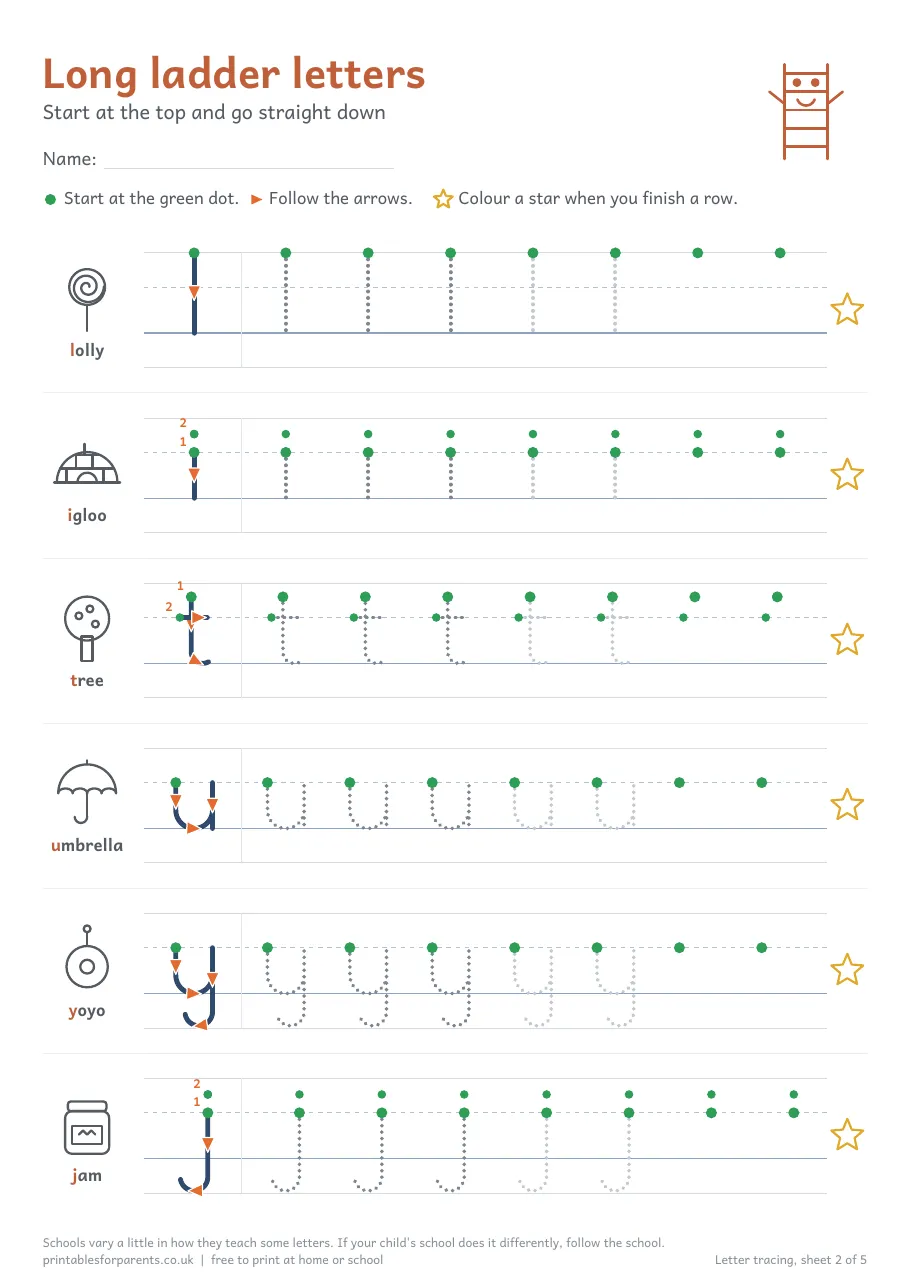
Long ladder letters
Letters l, i, t, u, y and j, all started at the top and taken straight down, with a picture word for each.
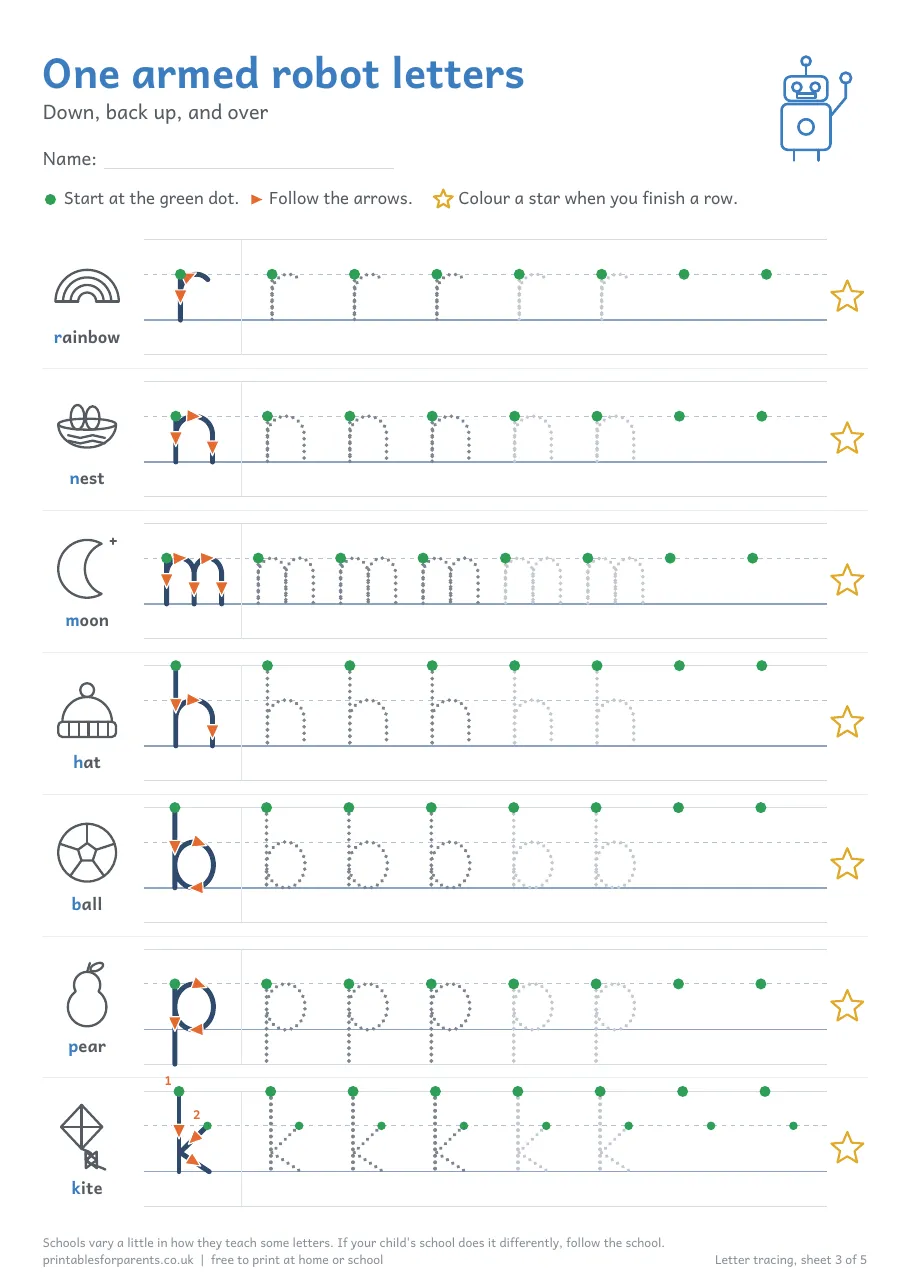
One armed robot letters
Letters r, n, m, h, b, p and k. Each one goes down, back up and over, with a robot's arm for the guide.
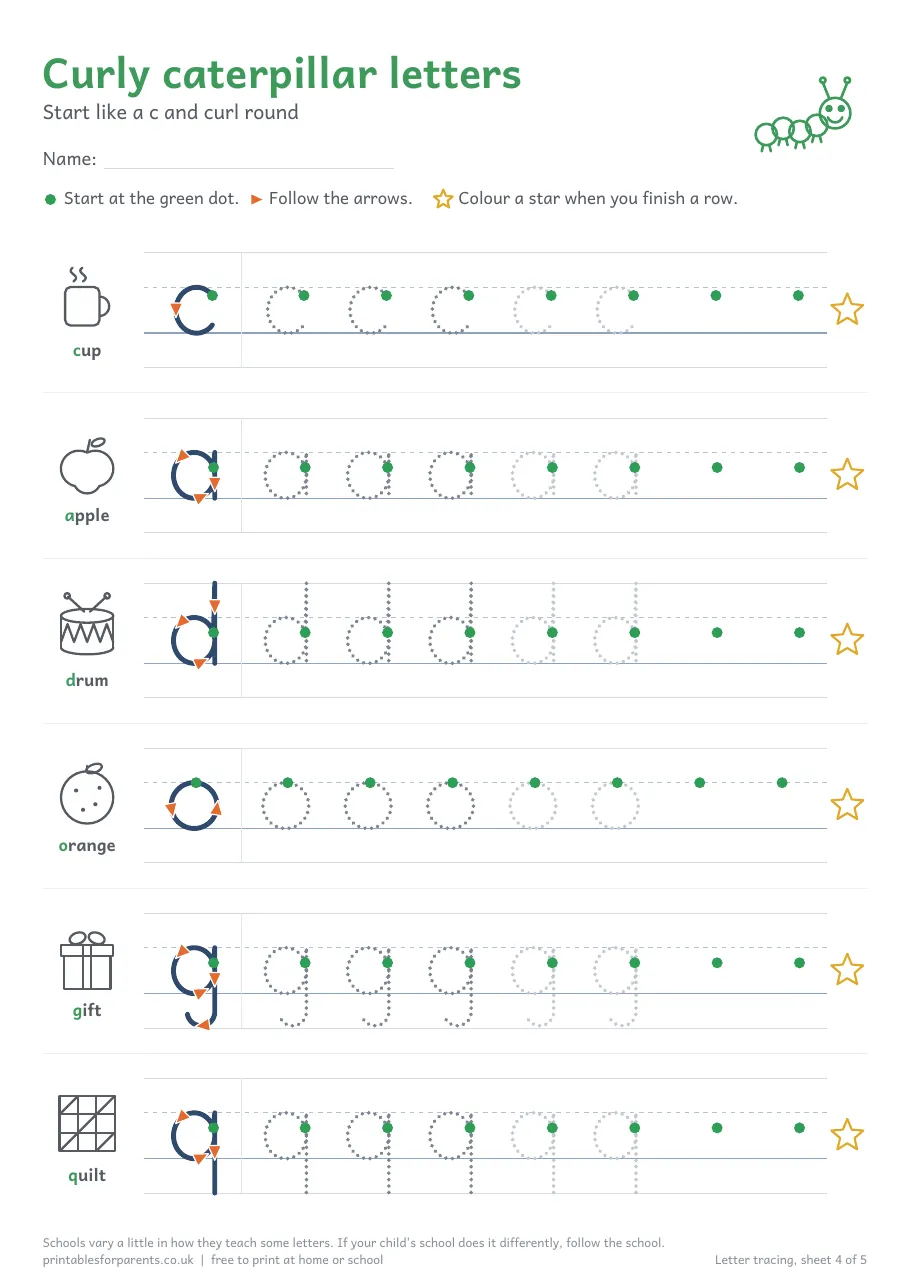
Curly caterpillar letters
Letters c, a, d, o, g and q, which all start like a c and curl round.
Curly and zigzag letters
Letters e, s, f, v, w, x and z. Three more curly letters, then the zigzags.
Printing and using the sheets
- Print on A4 at 100 percent, in portrait, rather than fit to page. Fit to page shrinks the letters, and the size is what makes the dotted starts easy to find.
- Chunky crayon or a thick pencil is best for the first two sheets. Move to a thinner pencil once the lines are steady.
- Slide a sheet into a plastic wallet and use a whiteboard pen. Wipe it clean and it goes again the next day.
- Work through the sheets in order. The first sheet is the warm up, and the letter groups build from there.
Common questions
Which sheet should we start with?
The warm up patterns, every time. Rolling, rain, waves, hills and loops build the hand movements that every letter is made from, so children get a win before the letters start.
Are these for a particular age?
Roughly four to six, though the pattern page suits younger children well, and some children will be happy with it for a while before they're ready for letters. Readiness matters more than the birthday. The handwriting readiness guide covers what is normal at each age.
Why are the letters grouped the way they're?
The sheets are grouped by how the letter is formed. The long ladder letters start at the top and go straight down, the one armed robot letters go down, back up and over, and the curly caterpillar letters start like a c and curl round. The zigzag page brings in the last few letters that change direction in a different way.
My child's school teaches letters differently. What should we do?
Follow the school. Every sheet says this at the bottom, and they know what your child is being taught in class. The sheets are there to practise, and matching the school is more useful than matching this page.
My child grips the pencil very hard. Should I correct it?
Not on these sheets, and not at this age. A tight grip is usually a sign of concentration. Let them use a thick crayon, keep the sessions short, and leave grip correction until they're older and have the control for it.
How long should a session last?
Five minutes is plenty, and it's better to stop while your child still wants to carry on. One row of a sheet is a reasonable target. Nothing needs finishing, and a colour star at the end of each row is enough reward for most children.
Read next
Is my child ready for handwriting and fine motor practice?
The skills that come before letters, what's normal at each age, when to start tracing and writing, and why pressure makes everything slower.
Printables that go with these
 3 sheets
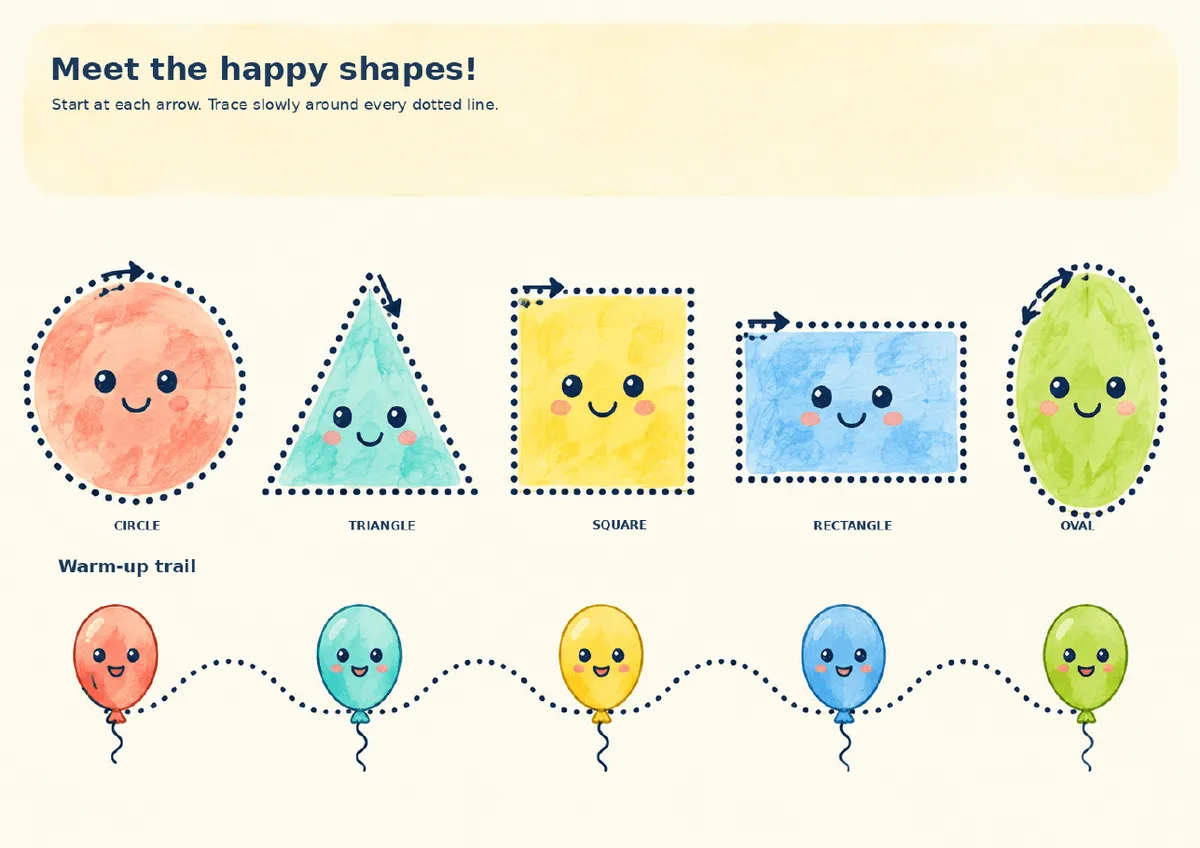
Shape tracing and pre-writing sheets
Three free printable packs for little hands: shape tracing, pre-writing line patterns and a cut out matching set. Twelve pages in total, all A4 landscape.
 12 sheets
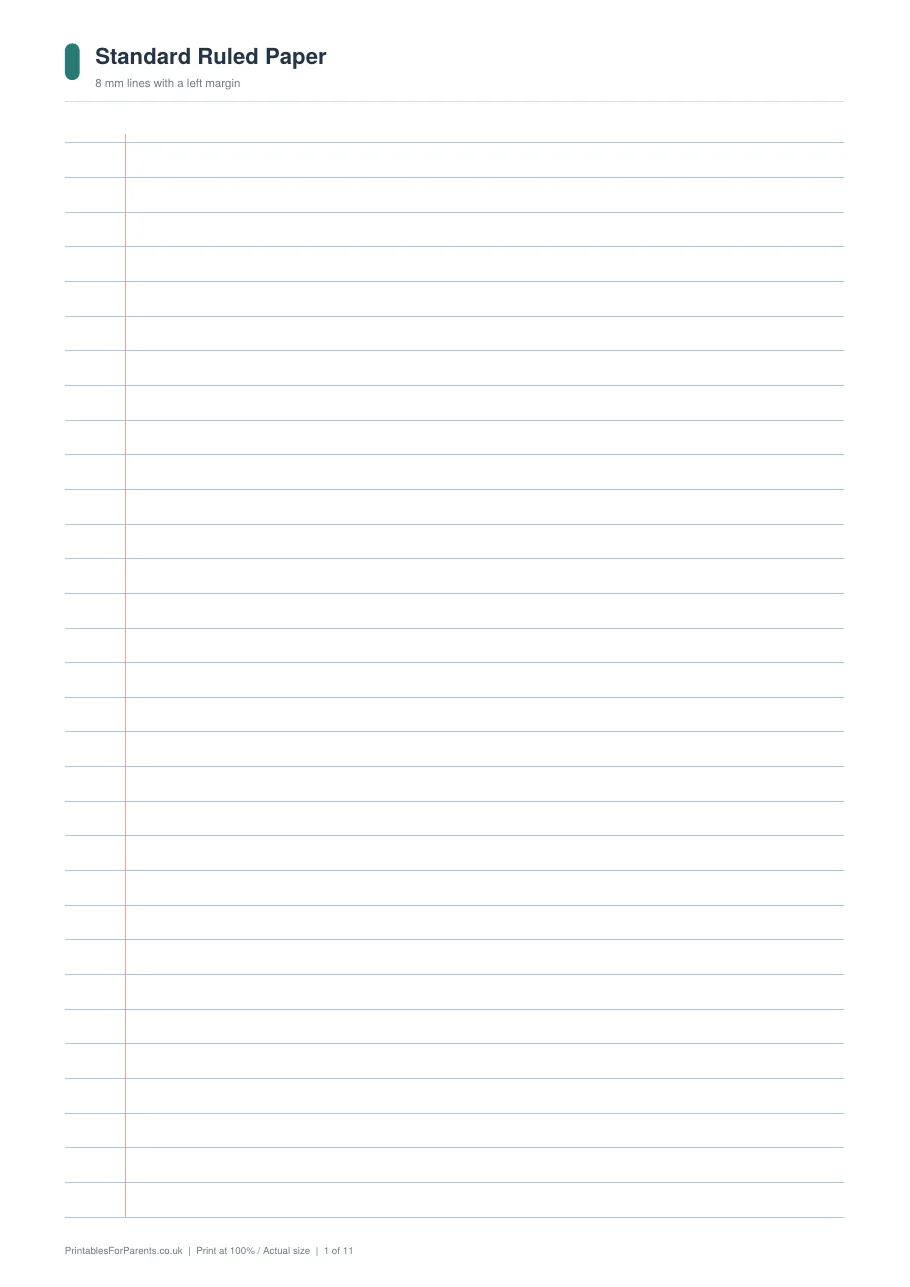
Lined and grid paper
Eleven kinds of A4 paper to print at home: ruled, wide ruled, handwriting lines, squared, graph, dot grid, isometric, draw and write, and Cornell notes. Download one sheet or the whole pack.
 4 sheets
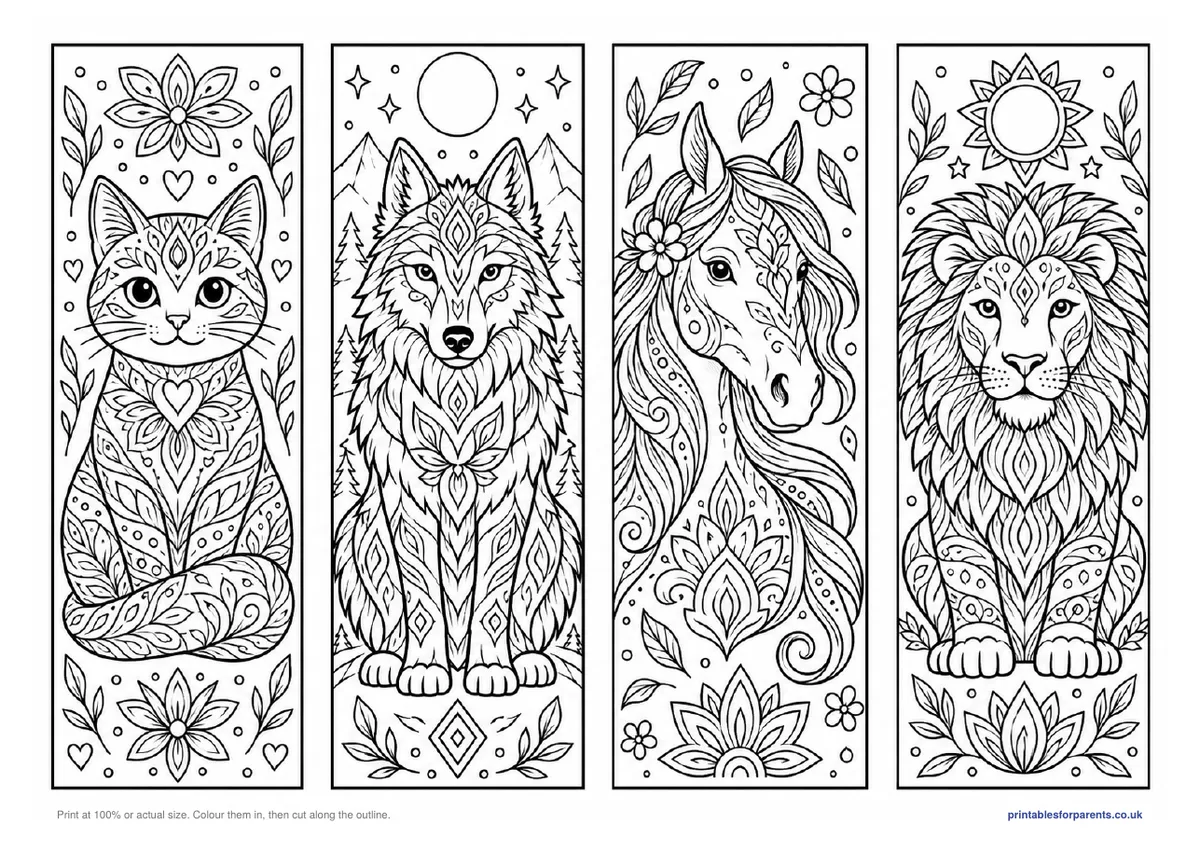
Colouring bookmarks
Four free printable sheets of colouring bookmarks, sixteen in total. Two sheets of simple designs for younger children and two of detailed patterns for older ones. Colour them in, cut them out and use them.
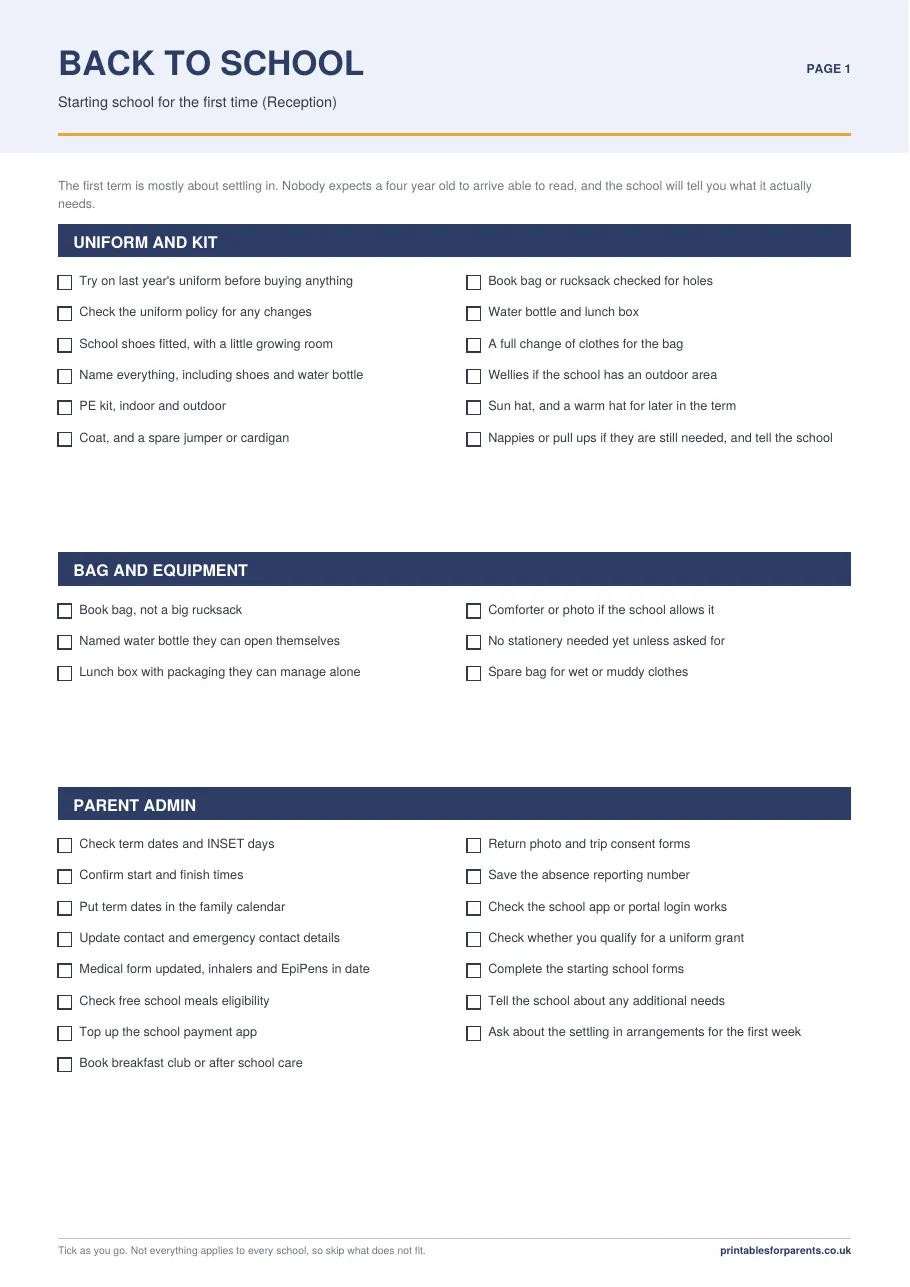 5 sheets
Back to school checklists
Free printable back to school checklists, one for each stage from starting Reception to the first week of secondary. Uniform, equipment, the parent admin, the routine reset and the conversations worth having first.