Shape tracing and pre-writing sheets
Three free printable packs for little hands: shape tracing, pre-writing line patterns and a cut out matching set. Twelve pages in total, all A4 landscape.
- 2 to 5 years
- Toddler
- School
- 5 and under
Also known as: shape worksheets, pre-writing patterns, tracing shapes, toddler tracing, pencil control worksheets.
Start with the lines, not the shapes
Every letter your child will ever write is built from a small set of movements. Down strokes, across strokes, curves, loops. A child who can draw a steady line and a round circle already has most of the raw material for lower case letters.
That’s what the pre-writing pack is quietly doing, and it’s the one I nearly didn’t bother making. It looks like the least interesting of the three and it’s doing the most work, which is often how these things go.
The rough order children manage them is straight lines, then waves, then zigzags, then loops and spirals. The pack is arranged that way on purpose, so working through it in order gives you a gentle ramp rather than a wall.
Keep the pencil out of it at first
For a two-year-old, tracing a line with a finger is a genuine achievement. Then a thick crayon, then a chunky pencil, then eventually something with a point on it.
Going straight to a sharp pencil usually produces a white-knuckle grip that’s a nuisance to unlearn later, and there’s no prize for getting there first.
The cut out pack is worth the faff
You do the cutting, they do the matching. Ten shapes, ten outlines, and a surprising amount of mileage in it.
It also travels well. Put the pieces in a sandwich bag and it becomes a restaurant activity, a waiting room activity, or a grandparent’s house activity, right up until the day the hexagon disappears forever.
Don’t run a lesson
Five minutes, sitting alongside them rather than looming over them, stopping while it’s still fun. Nothing here needs finishing, nothing is being marked, and there’s no standard a three-year-old is falling behind.
If tracing sheets are a fight in your house, do the same job another way. Threading pasta, peeling stickers, playing with dough, cutting up the junk mail that arrives anyway. All of it builds the same hand control, most children will stick with it longer, and none of it costs you any ink.
When a pencil does come into it, the handwriting guides on the lined and grid paper page are the next step up, and starting reception covers what school will actually expect.
A five minute session, step by step
Pick one sheet and look at it together before you start. Point to the green dot and say where to begin. Trace the first shape or line yourself, slowly, saying its name out loud if it has one. Then hand over the pencil and let your child do the next one. When the row is done, or when your child looks away, stop.
Common problems, and what to do
Some children start in the middle of the shape, or go round the wrong way. Point to the dot and say “start here”, rather than correcting the direction. Some children colour over the shape instead of tracing it, which is still practice with the pencil. Others trace one shape brilliantly and then lose interest. That’s the signal to stop, not a sign that the sheet has failed.
Choosing where the sheet goes
Keep the sheets in a folder on a low shelf, where a child can take one out without asking. Clear the table before you start, because a crowded table invites other things to be picked up. A clipboard or a hard book underneath the sheet makes tracing easier on the wrist, and it’s one less thing to worry about.
3 free shape tracing and pre-writing sheets to print
Every sheet is a PDF sized for A4. Tap a design to download it. No sign-up, no watermark.
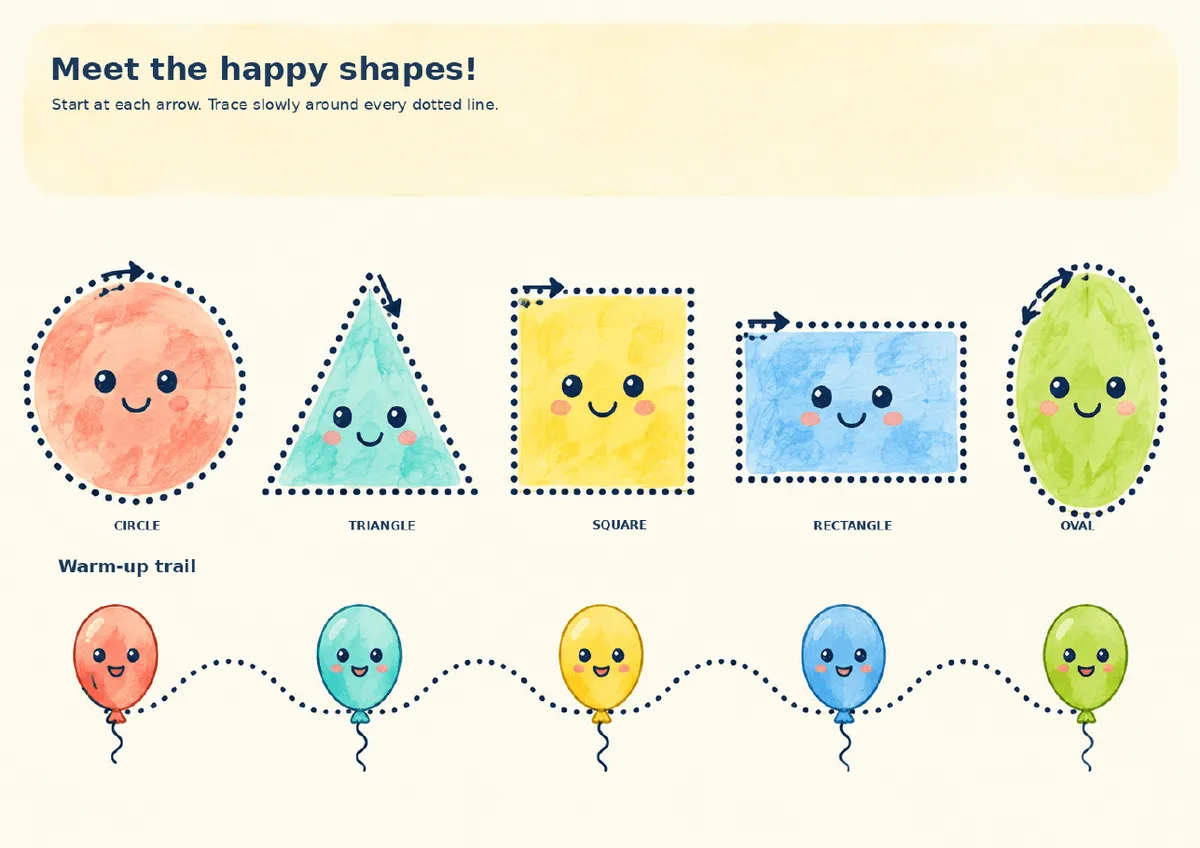
Shape tracing fun pack
Five pages of happy shapes to trace, from a warm-up trail through to a rocket adventure with a counting question at the end.
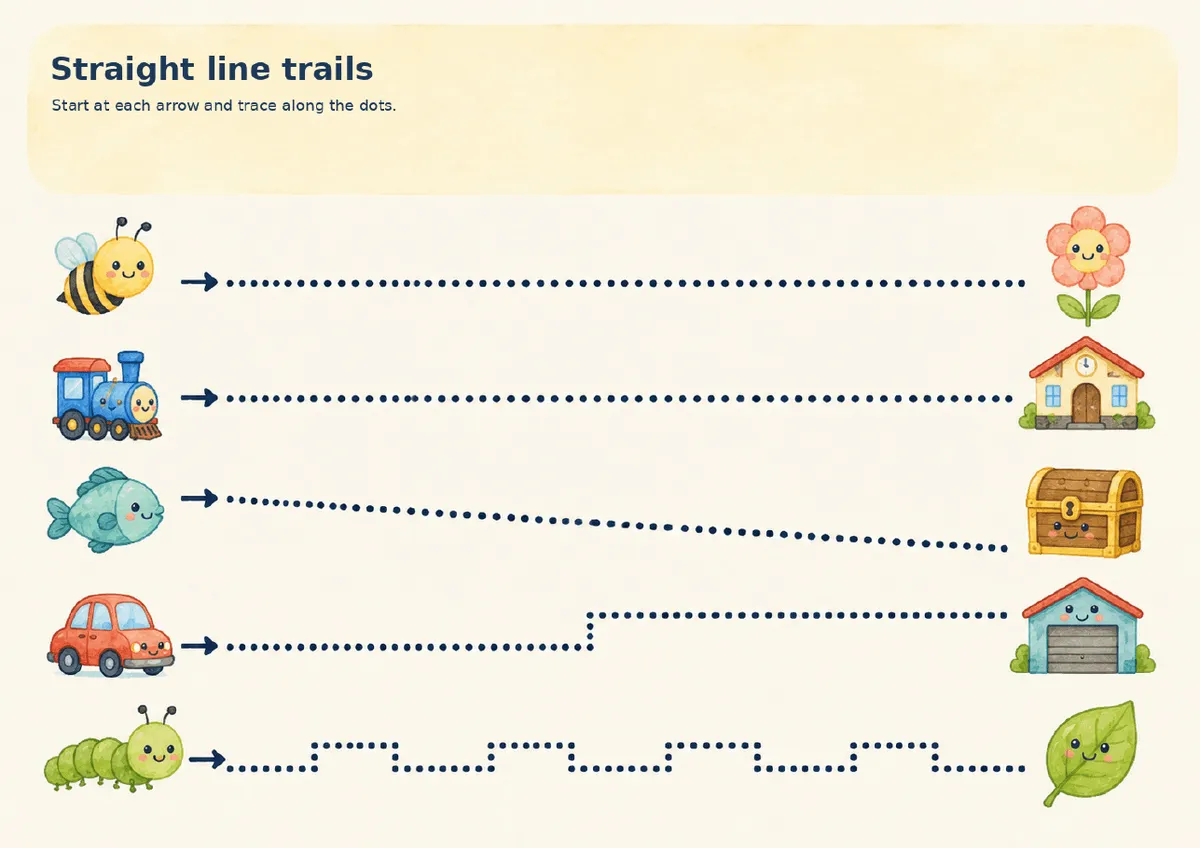
Pre-writing patterns pack
Five pages of dotted trails to follow. Straight lines, waves, zigzags, loops and a mixed page where a bear drives to a picnic.
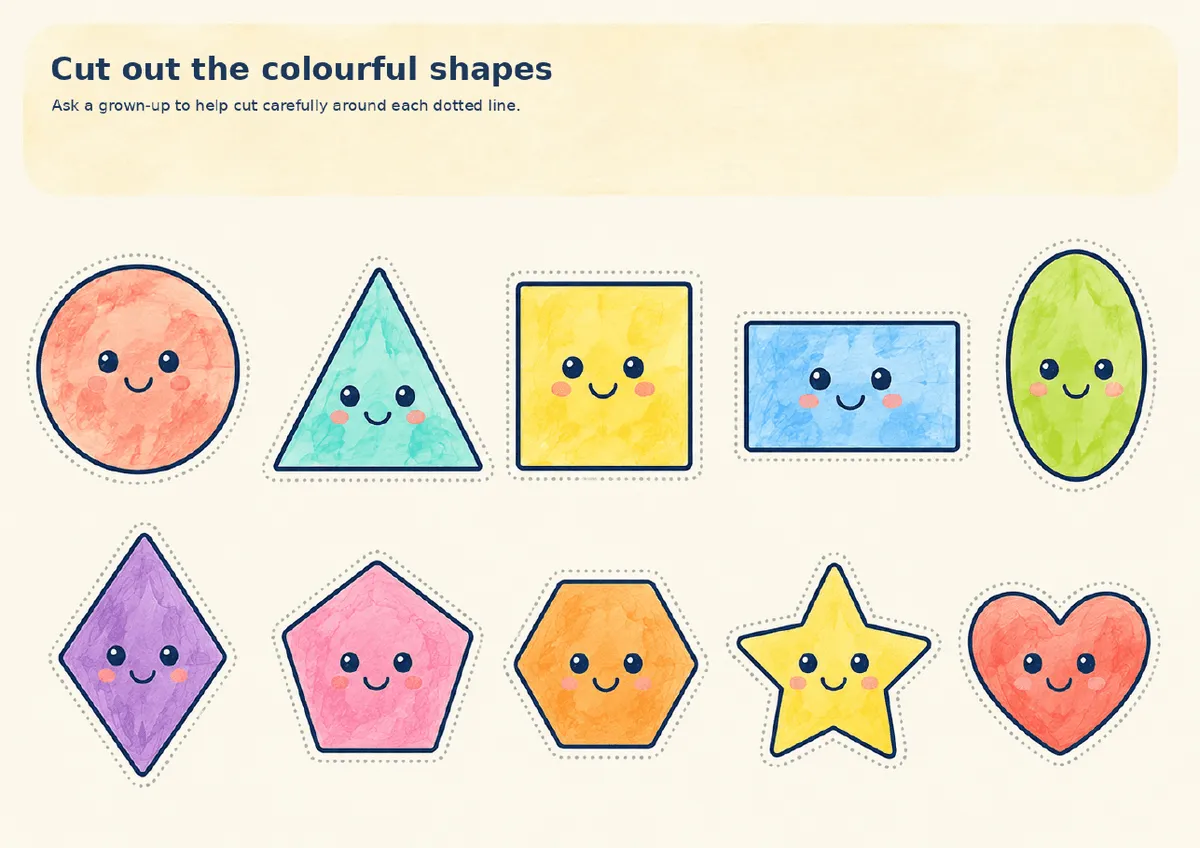
Cut out shape matching
Two pages. Cut the ten coloured shapes from the first, then match them to their outlines on the playground scene.
Getting the size right
- All three packs are landscape. Set your printer to landscape or you'll get a shrunken sheet with a huge margin at the bottom.
- The cut out pack wants the heaviest paper your printer will take, because those shapes get handled a great deal before anybody loses one under the sofa.
- Slide a page into a plastic wallet and use a whiteboard pen. One print, roughly forty goes, and no arguments about wasting paper.
Common questions
Which pack should we start with?
The pre-writing patterns, oddly enough. Lines, waves and zigzags are easier than shapes and they build the exact hand movements that letters need later, so children get a win before anything gets difficult.
What age are these for?
Roughly two to five, though it depends far more on the child than the birthday. A two-year-old will scribble across the whole page and that's a perfectly good use of it. The neat tracing tends to arrive somewhere around four.
My child just scribbles over everything. Is that a problem?
Not in the slightest. Scribbling is the stage before tracing and it's doing real work. Leave the sheets out, do one alongside them, and resist turning it into a task with a right answer.
Do these teach shape names?
They can, if you say the names out loud while you both trace. The sheets label circles, triangles, squares, rectangles and ovals, and there's a find and trace page where the shape has to be picked out from a row.
Read next
Is my child ready for handwriting and fine motor practice?
The skills that come before letters, what's normal at each age, when to start tracing and writing, and why pressure makes everything slower.
Rainy day activities that need almost no preparation
Easy activities for a wet afternoon with children, most needing only paper and a pencil, with ideas for toddlers and older children and printables to hand when you need them.
Starting reception, what actually matters
The year before school comes with a great deal of noise about what a four year old should be able to do. Here's what schools genuinely want, what they don't care about, and what's worth practising over the summer.
Printables that go with these
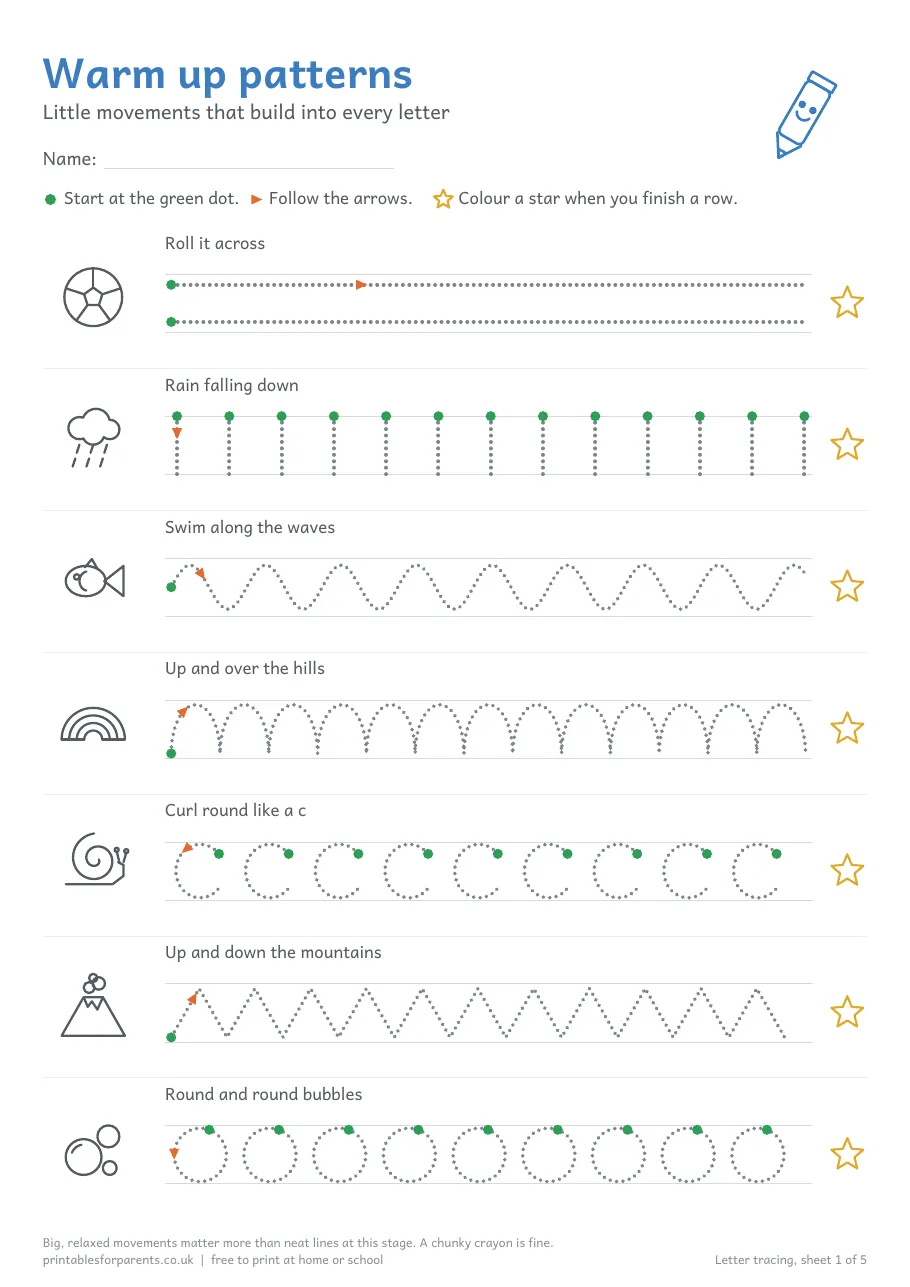 5 sheets
Letter tracing practice sheets
Five free A4 letter tracing sheets, all 26 letters, with a warm up page of lines, waves and loops first. Each letter has a picture word and a dotted start point, so children can see where to begin.
 6 sheets
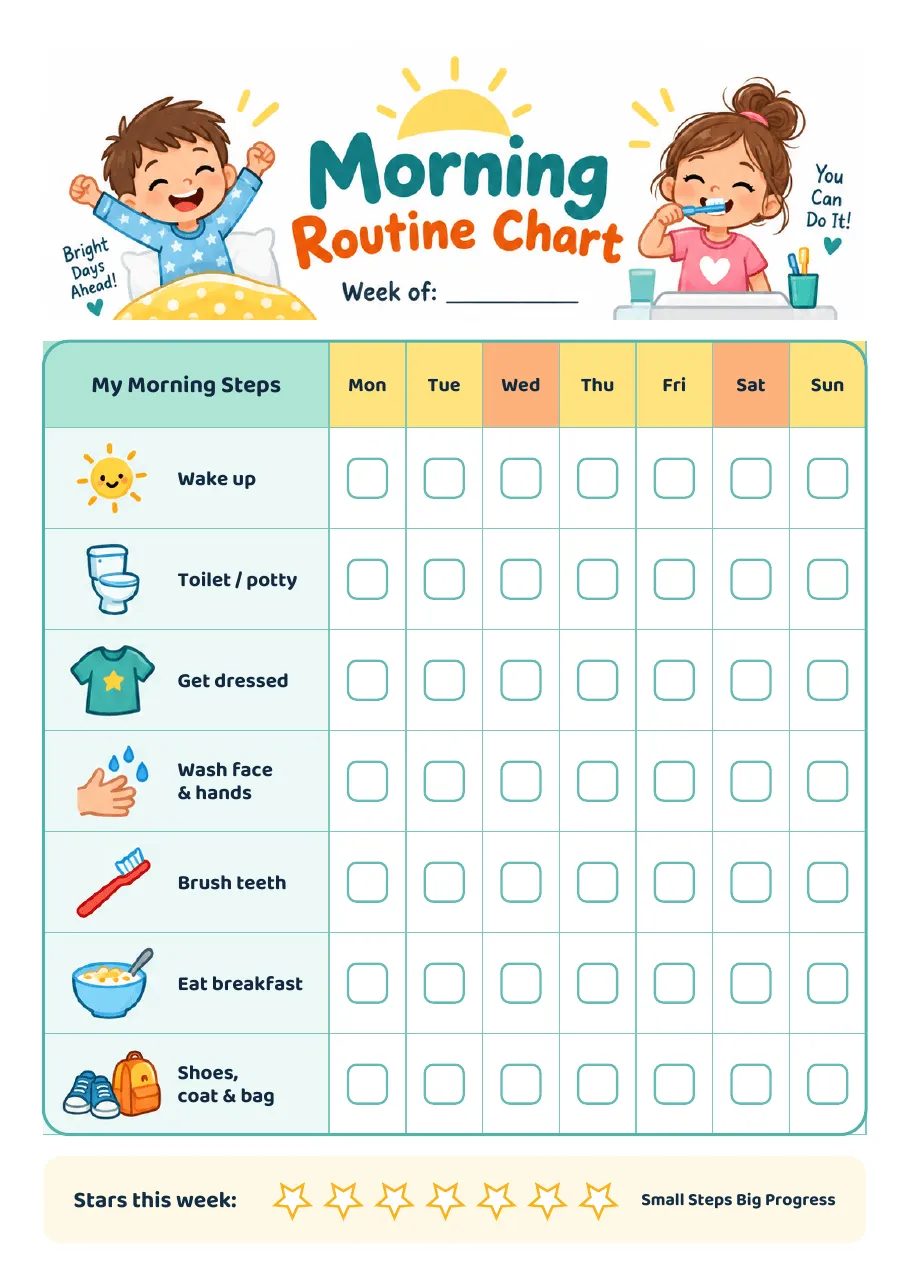
Routine charts
Six free morning and bedtime routine charts to print on A4, in a colourful design and in pink and blue, with picture steps a child can follow before they can read and a full week of boxes to tick.
 4 sheets
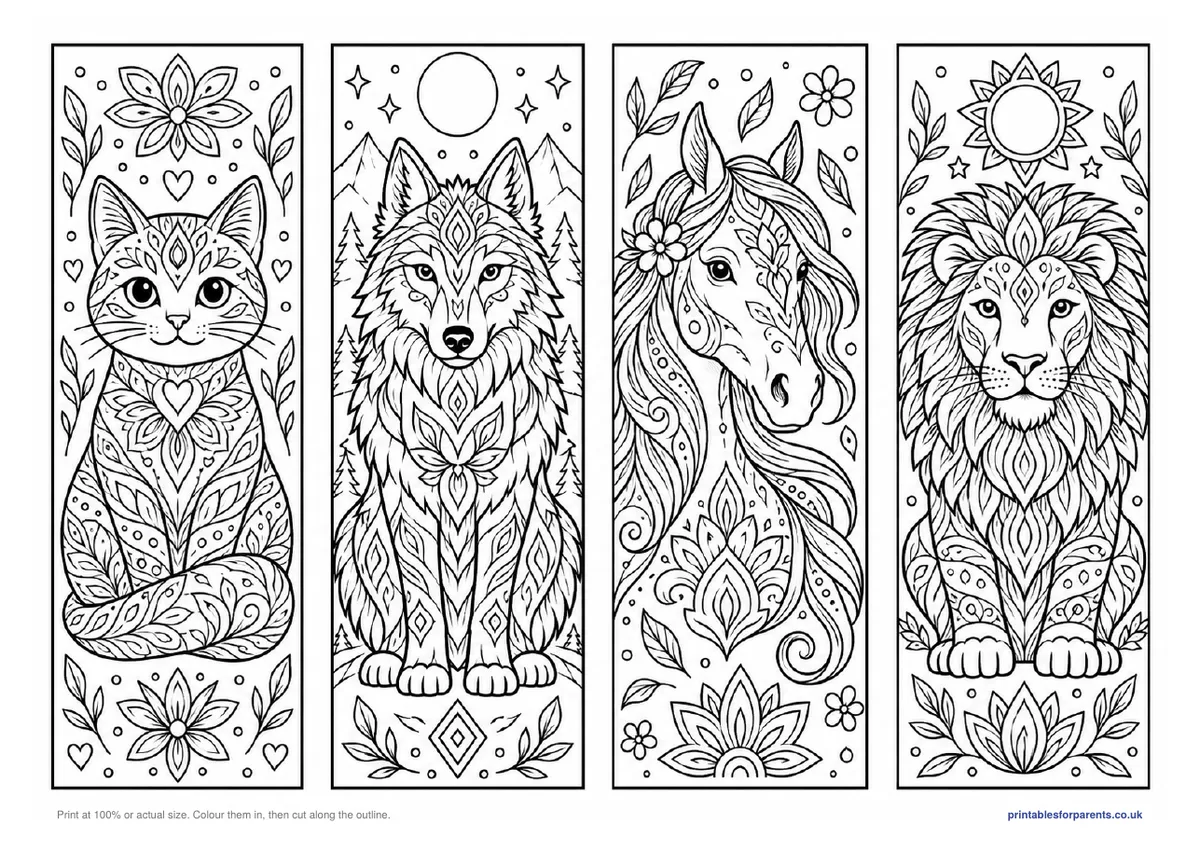
Colouring bookmarks
Four free printable sheets of colouring bookmarks, sixteen in total. Two sheets of simple designs for younger children and two of detailed patterns for older ones. Colour them in, cut them out and use them.
 5 sheets
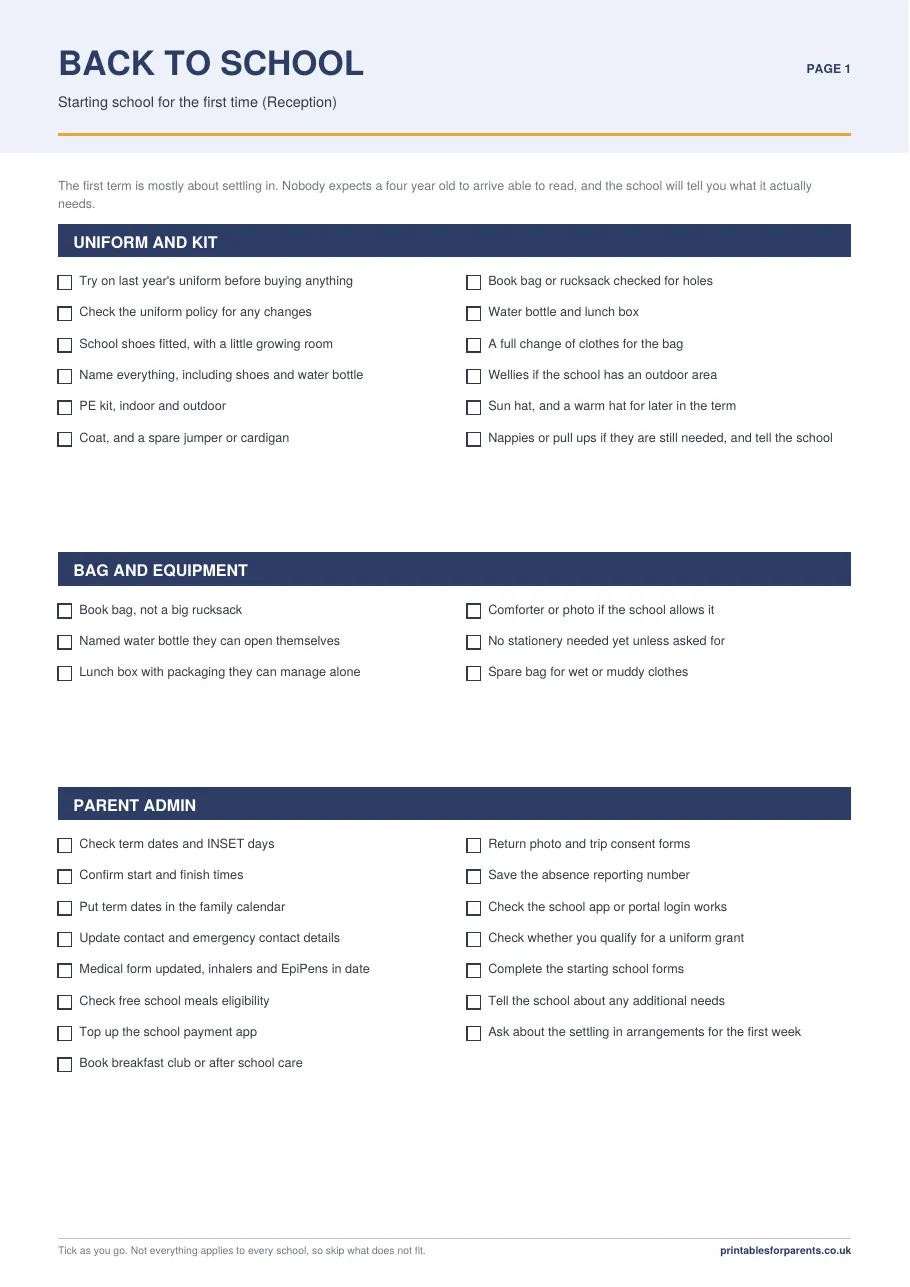
Back to school checklists
Free printable back to school checklists, one for each stage from starting Reception to the first week of secondary. Uniform, equipment, the parent admin, the routine reset and the conversations worth having first.