Guide
Rainy day activities that need almost no preparation
Easy activities for a wet afternoon with children, most needing only paper and a pencil, with ideas for toddlers and older children and printables to hand when you need them.
Rainy afternoons have a way of arriving at the exact moment everyone runs out of ideas. The good news is that the best rainy day activities need very little preparation, and most of them can be done at the kitchen table with paper and a pencil.
This guide has ideas for toddlers and for older children, plus a few printables to keep to hand for when you want a bit more structure.
For toddlers and younger children
Young children often want to do exactly what you’re doing. Give them a sheet of paper and a chunky crayon, and let them scribble while you do something else. It isn’t a waste of time. Mark-making builds the hand control they will need later on, and it’s the sort of activity that holds their attention for longer than you expect.
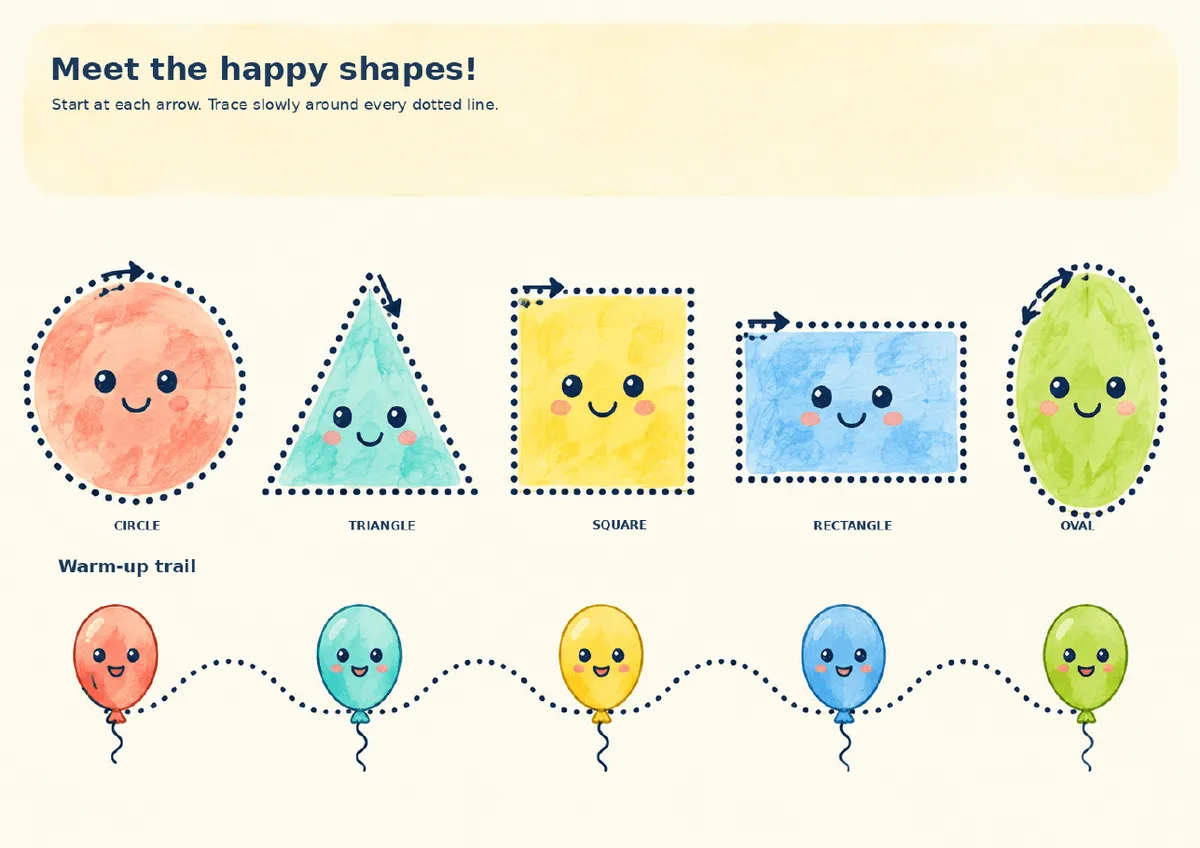
Tracing is a good next step. Lines, waves and simple shapes can be traced with a finger first, then a crayon. The shape tracing packs here are designed for that progression, so you can pull them out when your child shows an interest.
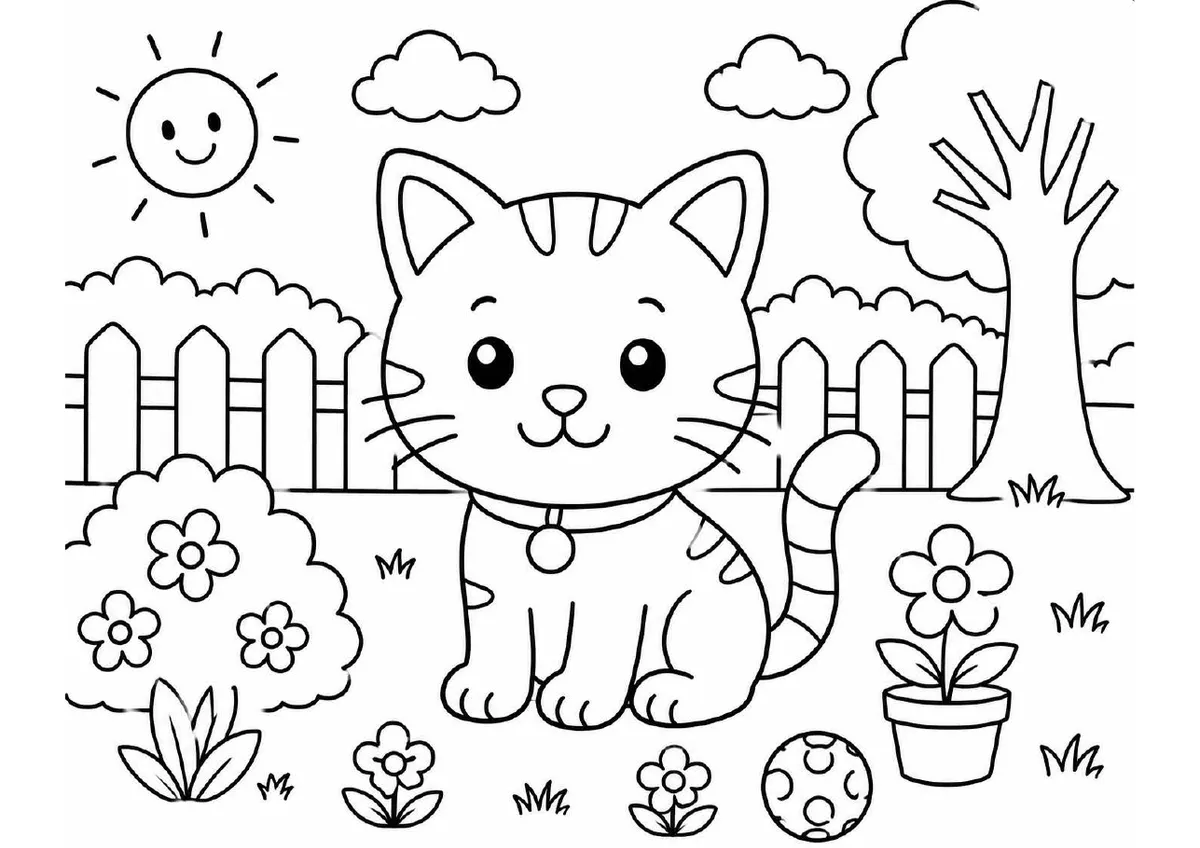
Colouring is the classic for good reason. A simple picture to colour, a box of crayons and a quiet corner can keep a toddler busy for a surprising length of time. The colouring pages here include animals, vehicles and shapes, which suit a range of ages.
Threading pasta, sorting buttons by colour, and pouring water between cups all build the same skills, and need nothing more than what is already in the kitchen.
For older children
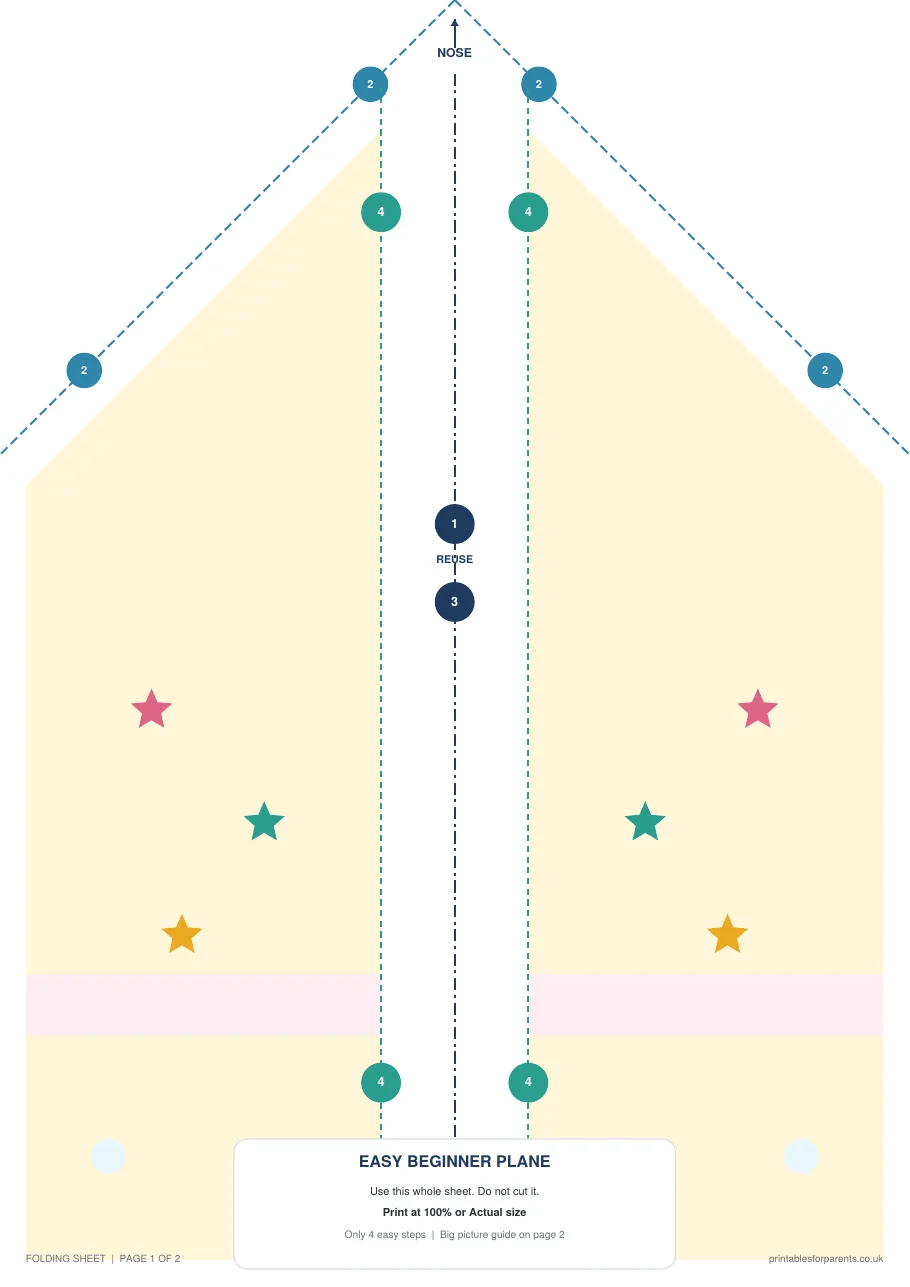
Older children often enjoy making things. Paper aeroplanes are an easy starting point. Fold a few designs, have a competition to see which flies furthest, and let them decorate their own. The paper aeroplane sheets include an easy beginner plane, so you have a design to follow without having to remember the folds.
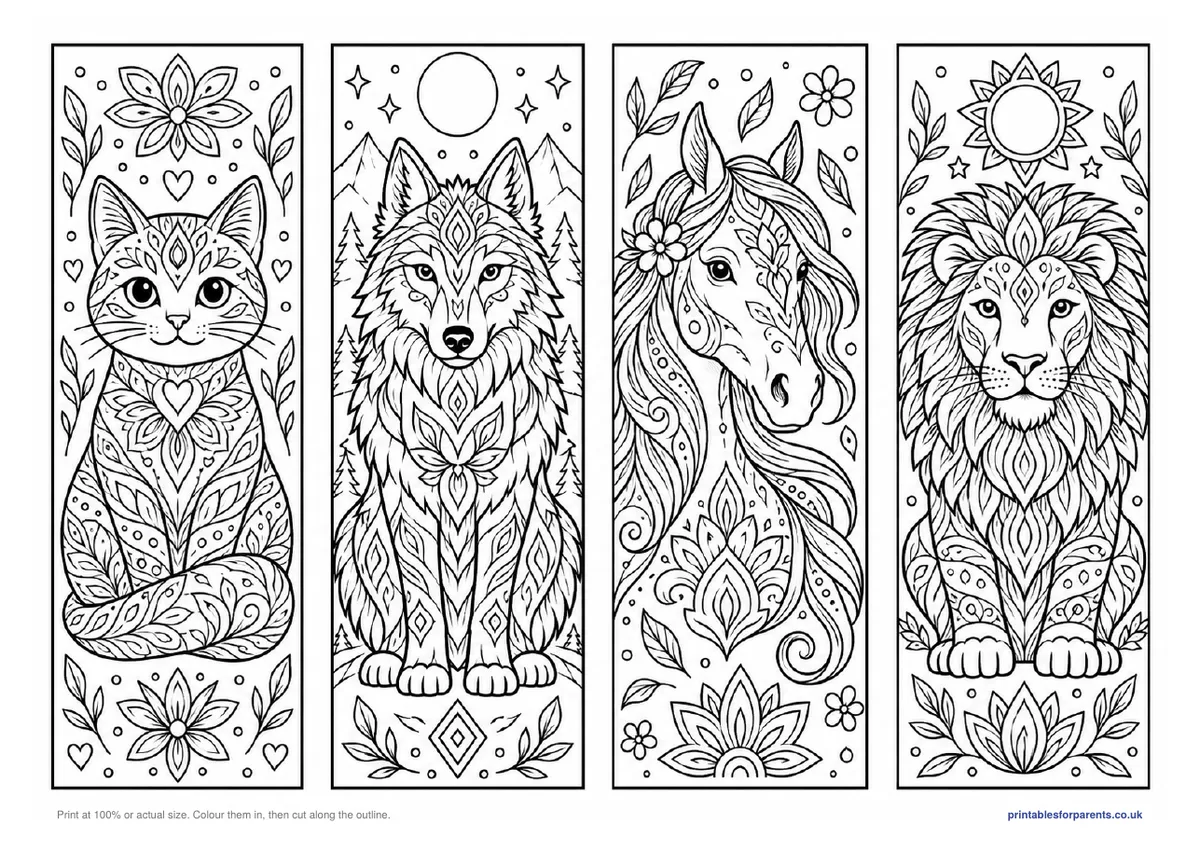
Bookmarks are another good one. Colouring a bookmark gives them something useful to take away, and it’s a gentle way of encouraging a love of reading on a wet afternoon. The colouring bookmarks here are ready to print, and they make a good present too.
Simple challenges work well with older children. Can they make a paper chain as long as the sofa? Can they draw the house from memory? Can they write a list of everything in the room that’s red? None of these need a plan, and all of them keep children talking.
Making it last
Two or three options are usually better than one. Put them on the table, let your child choose, and join in for the first few minutes. Once they’re settled, you can drift off to do something else.
Keep each activity short and stop while it’s still going well. A rainy day can have several small activities in it, and that’s often better than one big one that ends in tears when it goes wrong.
Keeping it simple
You don’t need a box of craft supplies or a Pinterest board of ideas. A few sheets of paper, a pencil, and a willingness to join in will cover most wet afternoons. The printables are there when you want them, but a blank sheet and a bit of imagination do the job just as well.
Common questions
What do I need for rainy day activities?
Usually just paper, a pencil or crayons, and a bit of space. Most of the ideas here use things already in the house, and the printables are there for when you want something more structured.
How long should a rainy day activity last?
As long as your child is interested, which may be five minutes or an hour. The best activities are the ones you can stop at any point without it feeling like a failure.
My child gets bored in five minutes. What should I do?
Offer two or three options rather than one, and let them choose. Keep each one short, and join in for the first few minutes. Boredom is common on wet days, and it often lifts once there's something to get stuck into.
Are paper aeroplanes suitable for young children?
Many children enjoy throwing and decorating simple paper aeroplanes from around four or five, with an adult helping with the folding. Younger children often prefer colouring the paper first, then folding it when they're ready.