Browse by purpose
School and homework
Paper, practice and the sheets that make homework less of a negotiation. Handwriting lines, squared paper, tracing and everything else that gets printed on a Sunday evening.
8 topics · 51 printable sheets
Printables in this section
 5 sheets
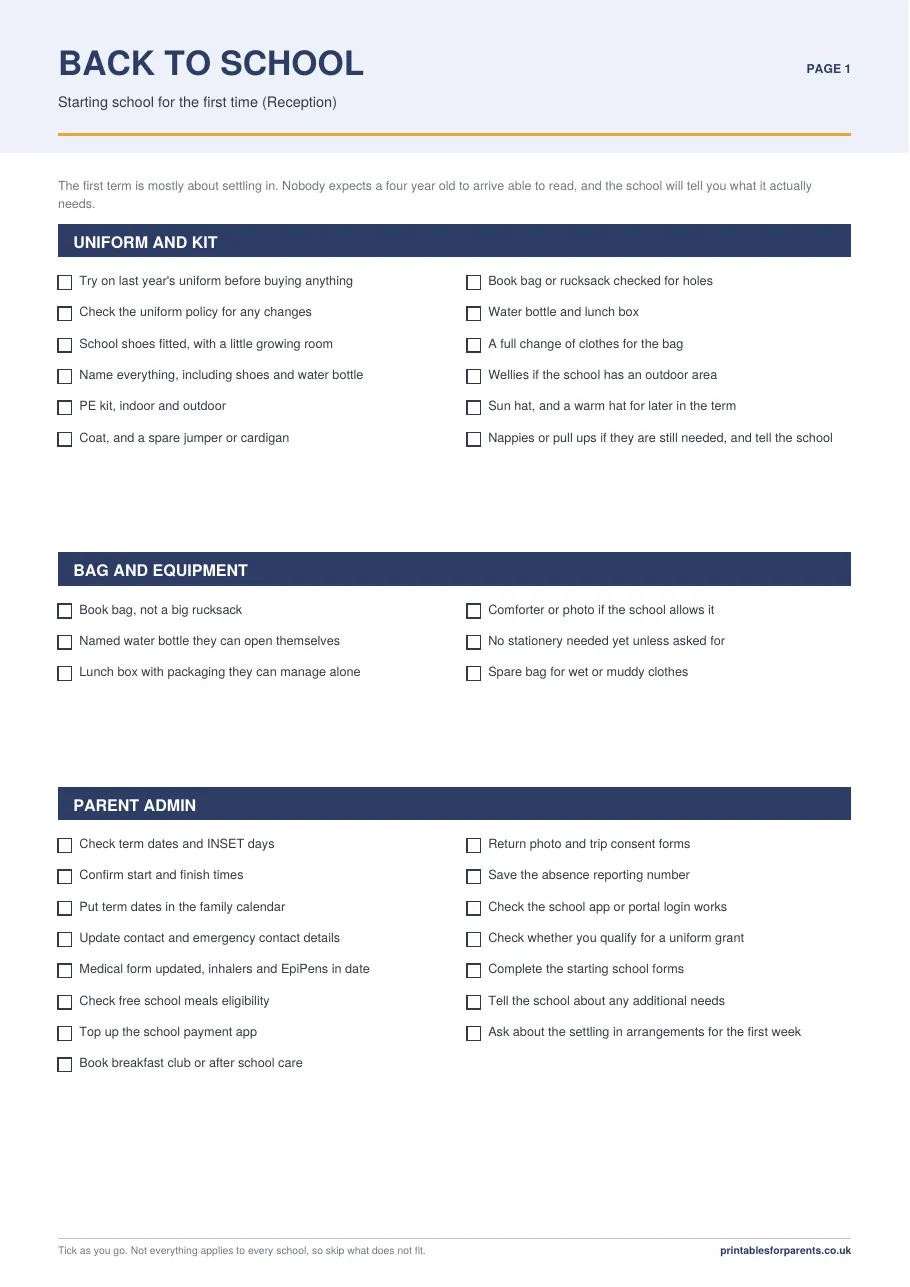
Back to school checklists
Free printable back to school checklists, one for each stage from starting Reception to the first week of secondary. Uniform, equipment, the parent admin, the routine reset and the conversations worth having first.
 12 sheets
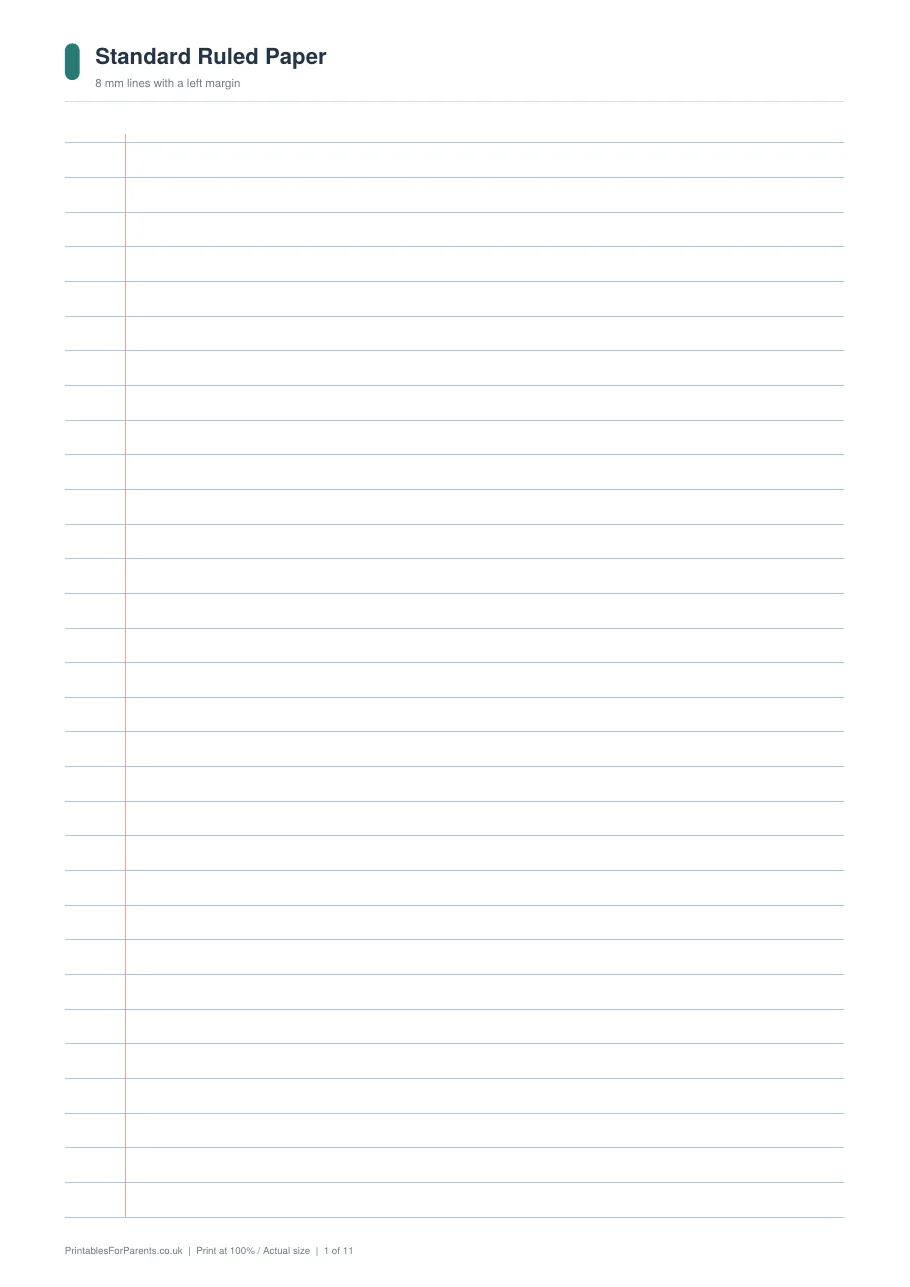
Lined and grid paper
Eleven kinds of A4 paper to print at home: ruled, wide ruled, handwriting lines, squared, graph, dot grid, isometric, draw and write, and Cornell notes. Download one sheet or the whole pack.
 10 sheets
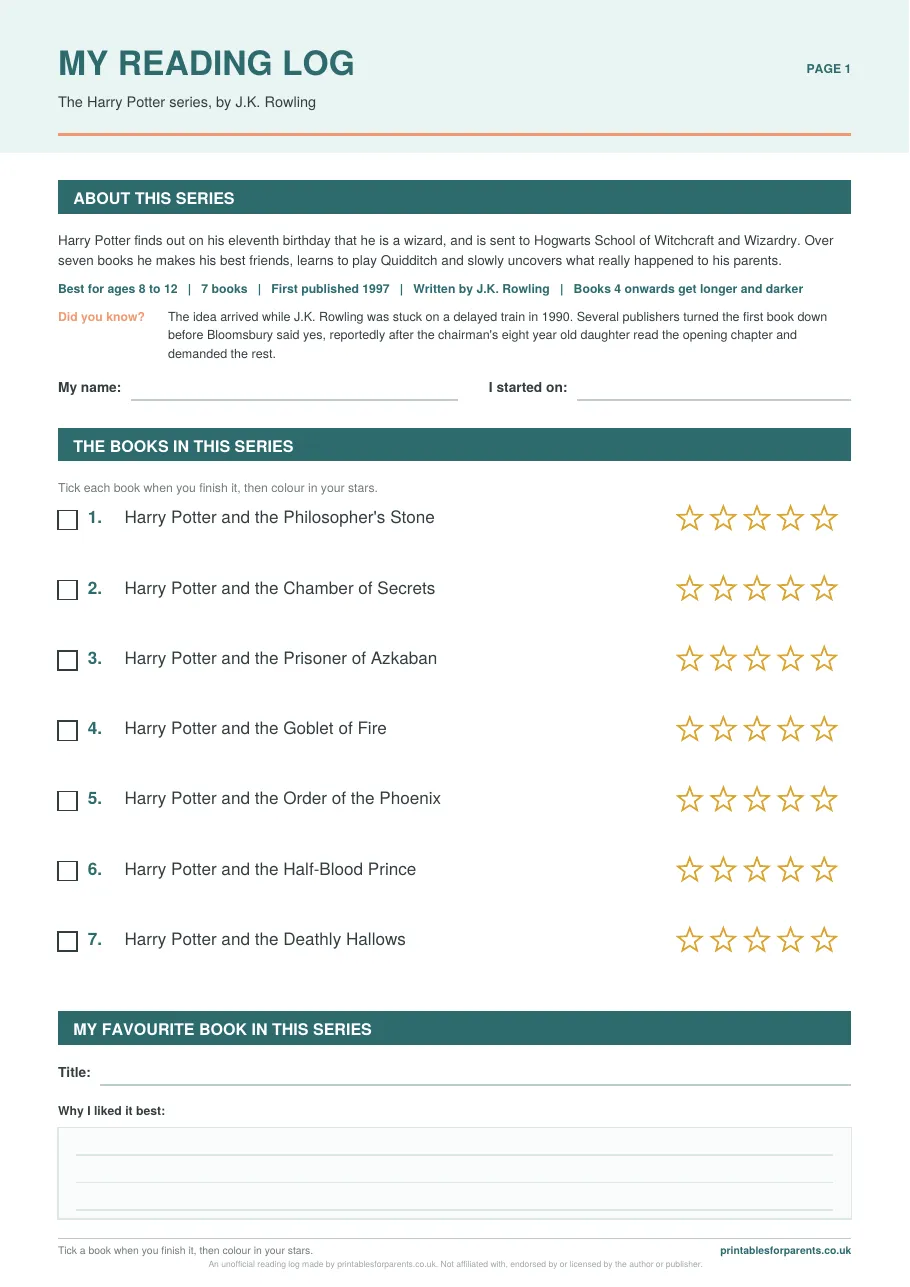
Reading logs
Free printable reading logs built around the series children actually read, with the books already listed so they can tick them off, rate them and write what they thought. Plus a blank one for any series at all.
 6 sheets
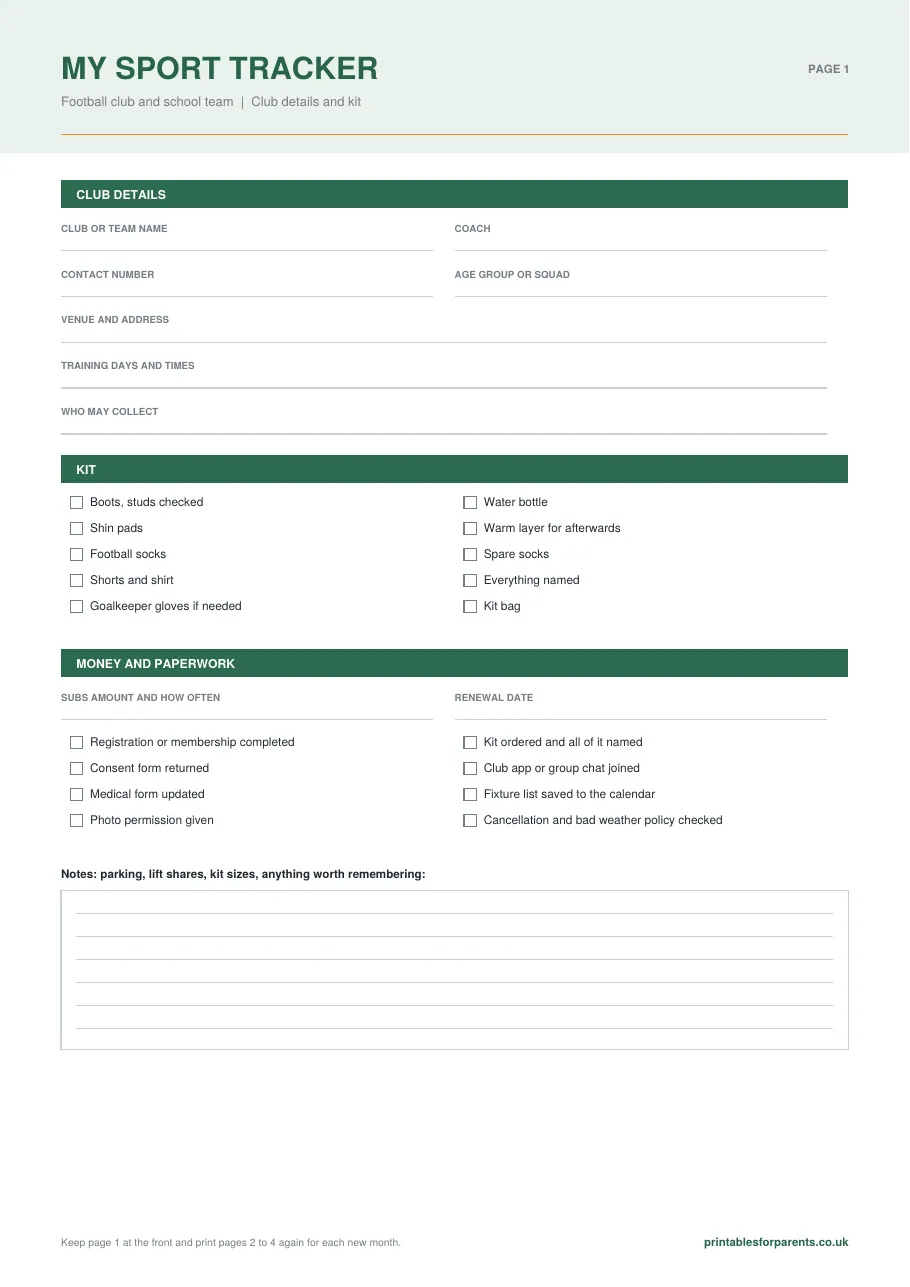
Sport trackers
Free printable trackers for children's sport. One page of club details and kit that you fill in once, then three pages a month for fixtures, effort and progress. Football, netball, rugby, gymnastics, swimming and a blank one.
 6 sheets
Activity and club trackers
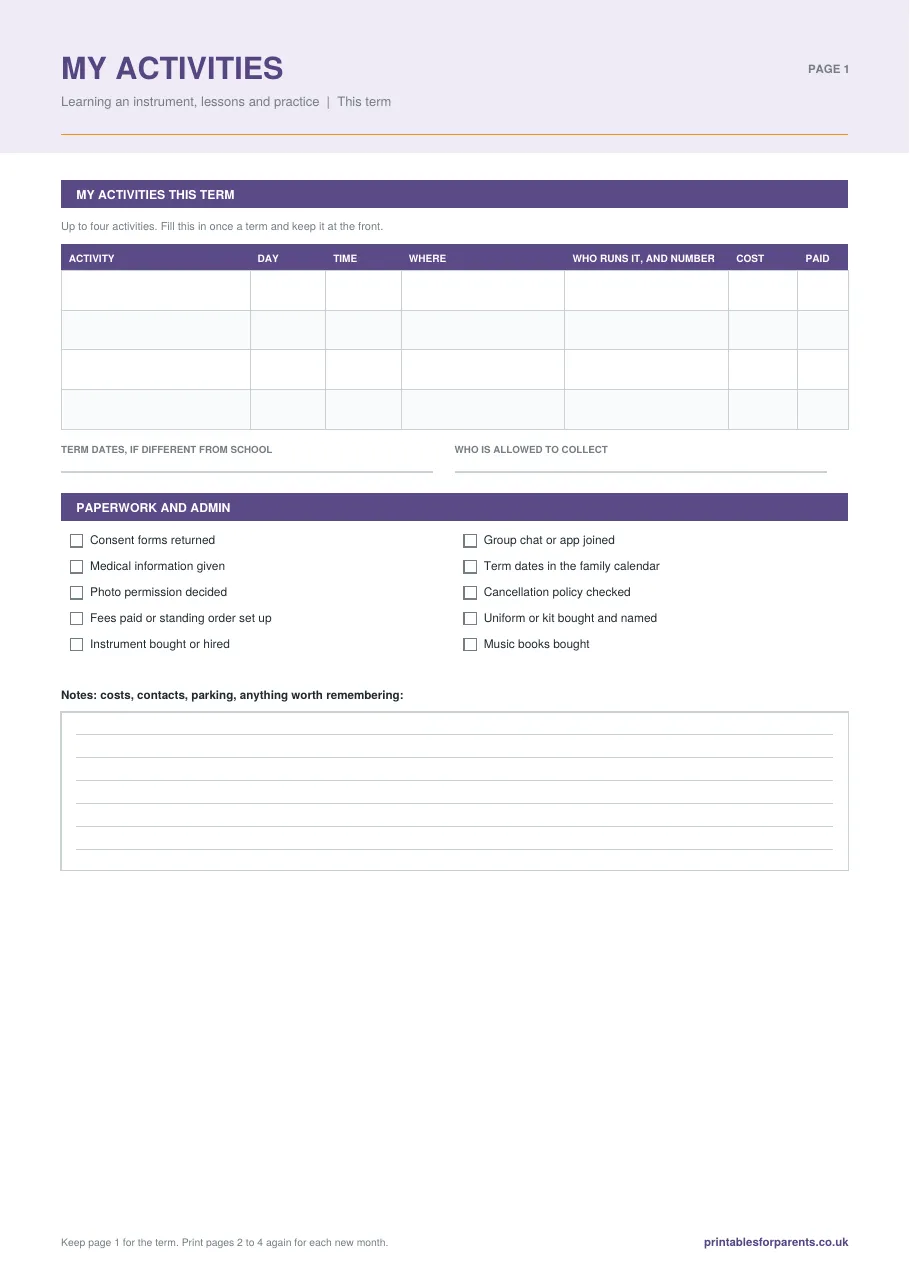
Free printable trackers for after school clubs and activities. One page a term for the timetable, costs and admin, then three pages a month for the week, the effort and the achievements. Music, dance, drama, coding, Scouts and Guides, and a blank one.
 4 sheets
Colouring bookmarks
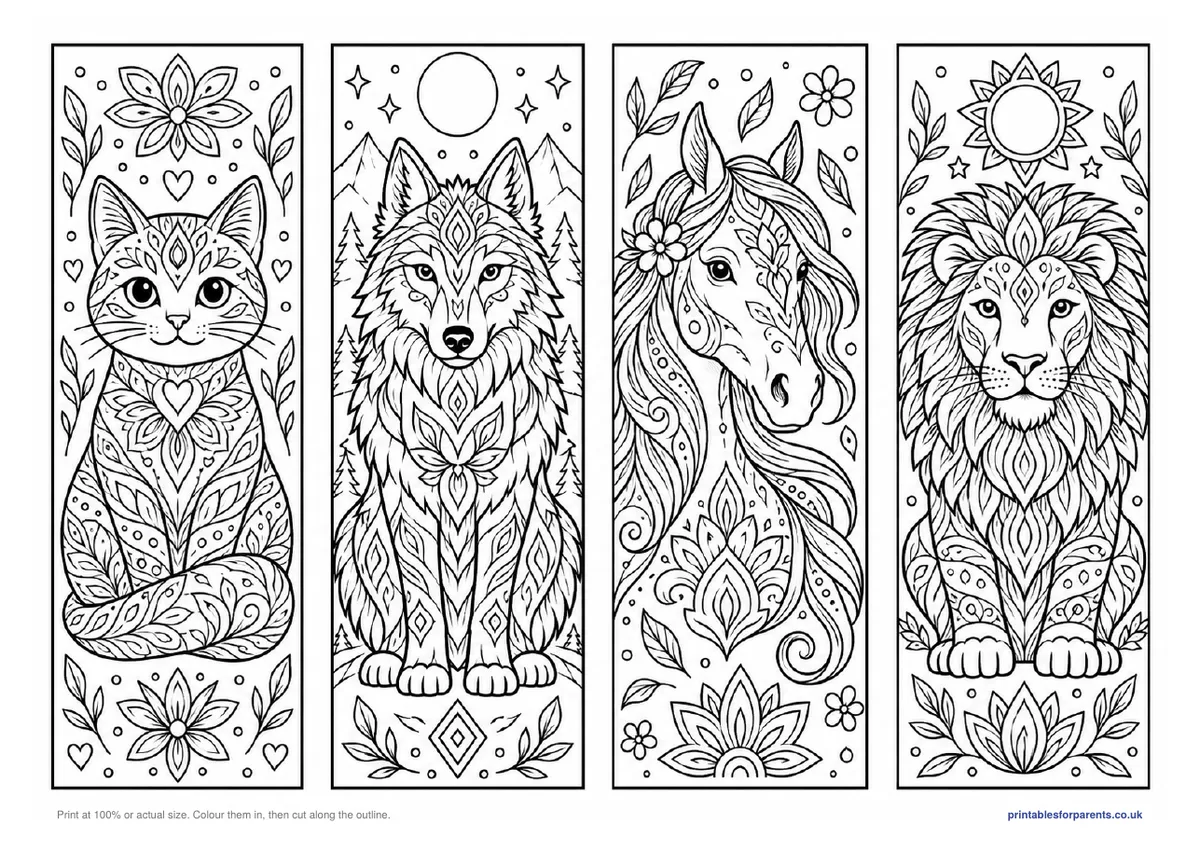
Four free printable sheets of colouring bookmarks, sixteen in total. Two sheets of simple designs for younger children and two of detailed patterns for older ones. Colour them in, cut them out and use them.
 5 sheets
Letter tracing practice sheets
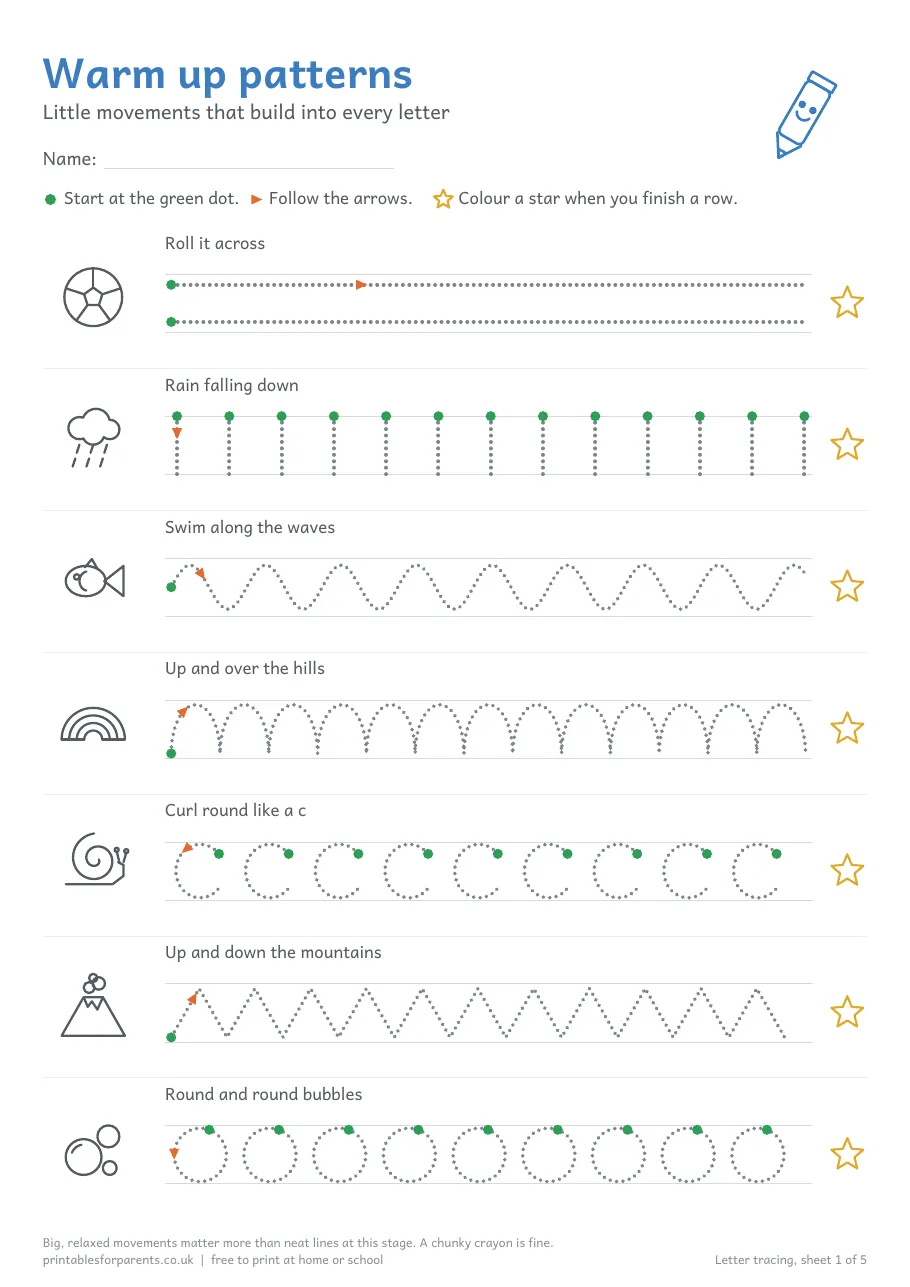
Five free A4 letter tracing sheets, all 26 letters, with a warm up page of lines, waves and loops first. Each letter has a picture word and a dotted start point, so children can see where to begin.
 3 sheets
Shape tracing and pre-writing sheets
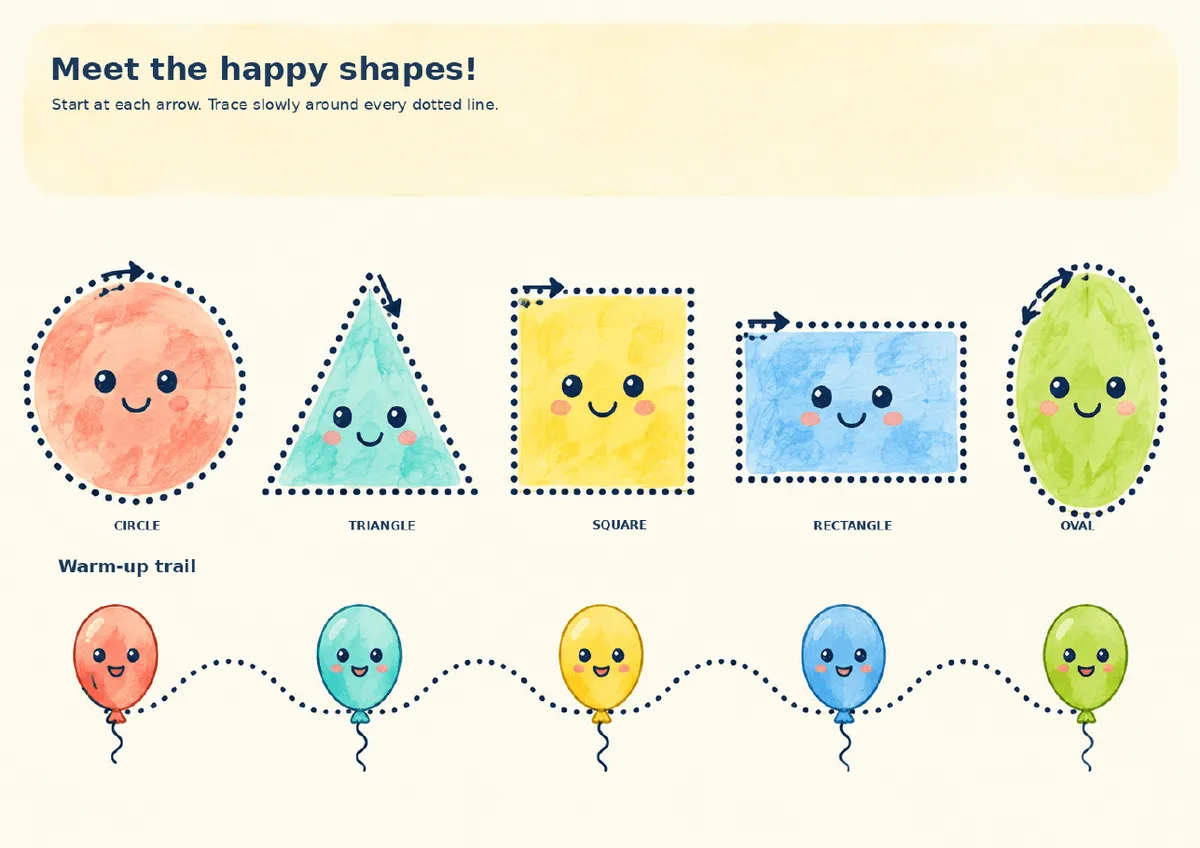
Three free printable packs for little hands: shape tracing, pre-writing line patterns and a cut out matching set. Twelve pages in total, all A4 landscape.
The Sunday evening category
This is where the practical school stuff lives. Handwriting lines for a child who is still working out where letters sit. Squared paper because the maths book is at school and the homework is due tomorrow. Tracing sheets for the year before reception, when everything should still feel like a game.
Print the paper, not the pressure
A stack of the right paper in a drawer solves more homework arguments than any amount of encouragement does. Half the friction on a Sunday evening isn’t the work itself, it’s the ten minutes of hunting for something to do it on.
Ask which handwriting style they teach
Schools differ on handwriting styles and on which line guides they use, and a child taught one system at school and another at home finds both harder than either on its own. It takes a teacher about five seconds to answer and it saves a term of quiet confusion. Most are delighted to be asked.
The same goes for letter formation, number formation, and whether they want cursive yet.
When they can’t do it, write a note instead
Homework a child genuinely cannot do is information their teacher wants. It usually means the work was pitched wrong, or that something was missed on a day they were off, and neither of those improves by keeping a seven year old at the table until eight o’clock.
Twenty minutes is plenty at primary age. After that, stop, write a line saying how far they got and where it came apart, and send it in. No teacher I have met has minded. Two have thanked me for it.
Print at 100 per cent
The one setting that matters in this category. Squared paper, graph paper and handwriting guides are defined by their measurements, and “fit to page” shrinks everything by a few per cent. Five millimetre squares become four point seven millimetre squares, and a scale drawing stops working.
Keep a stack, not a system
The families who find this easiest keep a dozen sheets of the two papers they use most somewhere obvious, and that’s the whole of the system. Being organised has very little to do with it.
Anything more elaborate tends to survive about three weeks.