Guide
Reading with a child who does not want to read
What to do when the reading book comes out and the mood changes. Why the school book isn't the whole job, what counts as reading, and the five minute rule that makes the difference.
You get the book out. The mood in the room changes. Somebody suddenly needs the toilet, or a drink, or to tell you at length about something that happened at lunch.
Ten minutes later you’re both cross, and the reading record says nothing again.
The first thing worth changing
Stop treating the school reading book as the whole of reading.
It’s one part of it, and it’s the part designed to be slightly difficult, because that’s how reading books work. A book pitched exactly at the edge of what your child can manage is doing its job when it feels like effort.
The problem is that if it’s the only reading happening, then every experience your child has of reading is effortful. That’s what builds the flinch.
What counts
More than you’d think. Comics. Joke books. Football annuals. Recipe cards. The instructions for a game they want to play. Subtitles. A menu. The back of a cereal packet. Anything at all that a child chooses to decode.
Reading is decoding plus meaning, and none of that needs to involve a novel. A child who’ll sit with a Pokémon guide for twenty minutes is reading, and they’re practising the same skill as the one grinding through chapter four of something a teacher picked.
I held out for proper books longer than I should have. What shifted it here was a joke book from a charity shop, 40p, about fourteen jokes long, and I have heard every single one of them since.
Five minutes, and stop while it’s going well
The single most useful change most families make.
Read for five or ten minutes of willing engagement rather than to the end of the book. When it’s going fine, stop anyway. Stop early, stop on a good bit, stop before anybody is tired.
What you’re protecting is their willingness to open it again tomorrow, which is a far more fragile thing than a reading target.
Share the load
Read a page each. Read the dialogue while they read the narration, or the other way around. Read the hard word for them without making a thing of it, because stopping to sound out every difficult word wrecks the sense of the sentence and the sense is the point.
If they’re stuck, give them the word after about three seconds. Three seconds feels short to an adult and very long to a child with a room watching them.
Keep reading aloud to them
Long after they can read to themselves. Years longer than most people do.
When you read to a child, they get the story, the vocabulary, the jokes and the pleasure without the mechanical effort. That keeps books enjoyable during exactly the period when reading them independently is hard work, and it’s the strongest thing you can do to stop a struggling reader deciding that books aren’t for them.
It’s also, for what it’s worth, the bit you’ll miss.
Let them see you read
It doesn’t have to be a performance. A book, a paper, a recipe, something on a screen that’s visibly words. Children who never see adults read have to take it on faith that it’s worth doing.
A word on reading records
The one school sends home has to be signed and returned, and it will keep being that. It’s a record for the teacher rather than a motivator for your child.
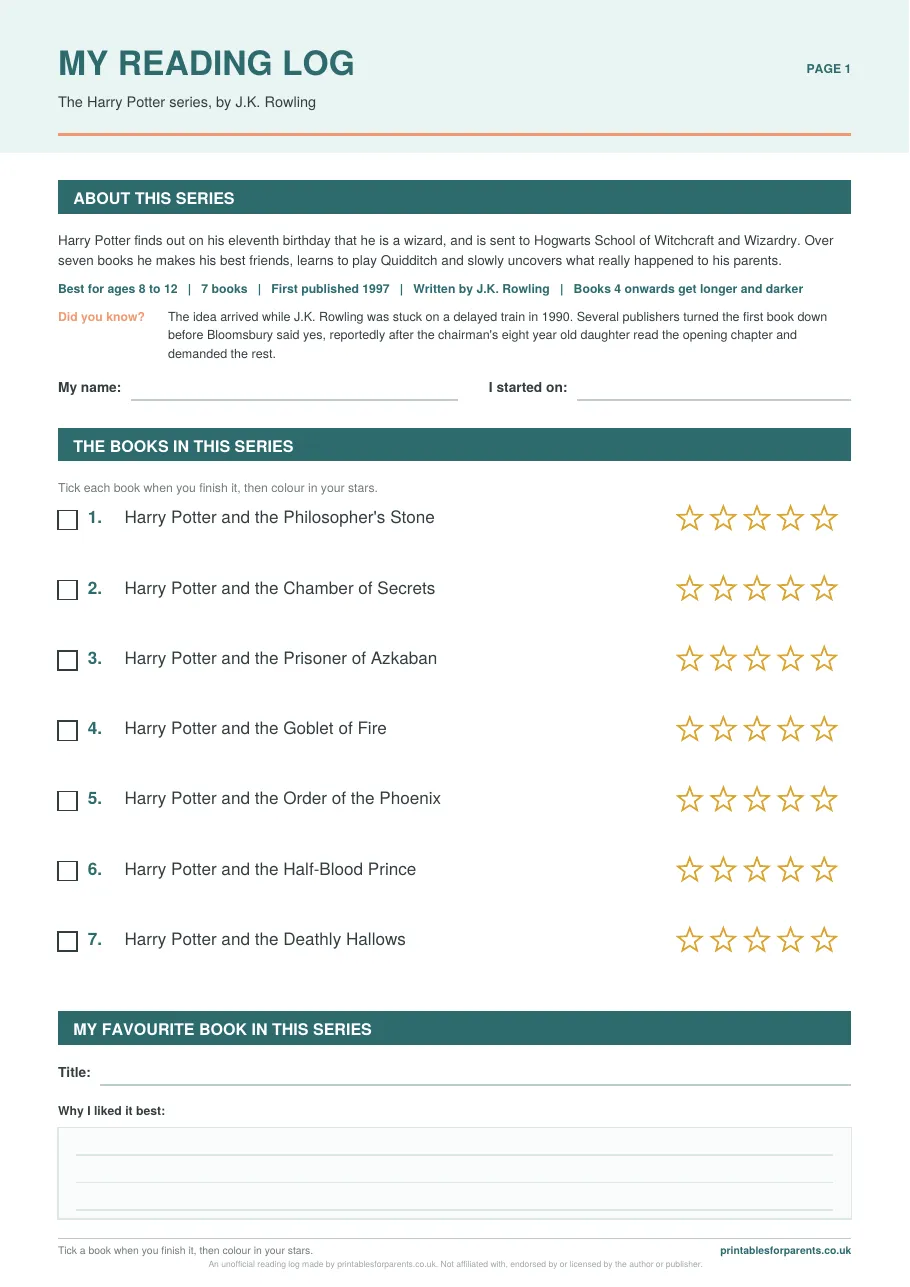
What works better alongside it is something your child owns. Ticking off the books in a series they have chosen is a completely different feeling from filling in a grid for somebody else, and the visible run of finished titles does the work that a signature never will. The reading logs here are built around that: the books are already listed, so a child can see what they’re halfway through rather than facing an empty form.
When to raise it with school
Sooner than you probably will.
Mention it if your child is consistently avoiding reading, finding it noticeably harder than their friends, losing their place on the line, guessing at words from the first letter, complaining of headaches or tired eyes, or has gone backwards after making progress.
None of that means something is wrong. All of it is worth a teacher knowing, because some difficulties are considerably easier to help with when they’re spotted early, and a teacher can’t see what happens at your kitchen table.
The measure that matters
The thing to watch is whether your child will pick a book up without being asked. Levels and book counts belong to school, and school has far more context for them than you do.
Everything above is aimed at that, and everything that gets in the way of it, including a reading record and including your own reasonable anxiety about their level, is worth putting down for a few weeks to find out.
Common questions
How long should we read for?
Five to ten minutes of willing reading beats twenty minutes of negotiation. Stop while they still want to carry on rather than pushing to the end of the book, because the thing you're protecting is their willingness to open it again tomorrow.
Do comics and non-fiction count?
Yes. A child reading a football annual, a joke book, a comic or the back of a cereal packet is reading. Decoding is decoding, and a reluctant reader who has found something they'll actually pick up has solved most of the problem.
Should I still read aloud to them once they can read?
Yes, and for years longer than most people do. Reading to a child keeps books enjoyable while the mechanical work of reading is still hard, and it lets them meet stories well beyond what they can decode themselves.
When should I mention it to school?
If your child is avoiding reading consistently, finding it much harder than their classmates, losing their place, complaining of tired eyes or headaches, or has gone backwards. Teachers would far rather know early, and some difficulties are much easier to help with when they're spotted quickly.