Meal planners and shopping lists
Free printable meal planners, a shopping list built to match them and a meal ideas bank so you stop staring at the fridge on a Sunday. Take one sheet or the whole four page pack.
- All ages
- Planning
- Organisation
- 5 to 10
Also known as: meal planner printable, weekly meal planner, family shopping list, meal plan template, food budget planner, dinner planner.
Plan the food and write the list at the same time
This is the whole trick, and it’s why the shopping list is built to match the planners rather than being a separate sheet that happens to sit nearby.
Write the meals, then build the list straight off them while you can still see what you wrote. I do ours standing up at the worktop on a Sunday and it takes about ten minutes. Doing the two jobs on different evenings is how you end up with everything for Thursday except the one ingredient Thursday depends on.
The ideas bank is the one that changes things
Everything else here is a grid. The ideas bank is the sheet that makes the grids easy to fill in.
Planning a week from nothing is genuinely hard. Planning it from a list of twenty meals your family reliably eats takes ten minutes. So the bank has room for favourites, quick meals with rough timings, batch cooking and freezer meals, packed lunch ideas, and a section for new things to try with a tick box for whether they earned a place in the favourites.
Fill it in slowly. Add a meal whenever one goes well. After a month it’s the most useful piece of paper in the kitchen.
Use first, before anything else
Both planners and the shopping list have a use first box, and it’s deliberately near the top.
Check the fridge, the freezer and the cupboards, write down what needs eating, then plan around it. That single habit does more for a weekly food bill than comparing prices ever will, and it’s the difference between a planner that saves money and one that simply organises the same spending.
Two planners, because two different problems
The dinner planner solves the common one: what’s for tea, who is actually home, and what needs taking out of the freezer tonight. Portrait, uncluttered, and enough for most families.
The full weekly planner adds breakfast, packed lunches and snacks. Worth it if lunches are part of the daily negotiation, or if somebody in the house is eating differently from everyone else. It’s landscape, so check your printer settings.
About the budget line
It’s optional and some people will ignore it, which is fine.
It exists because writing an intended figure at the top of the week, and an estimate before you set off, quietly changes what goes in the trolley. That’s a far smaller intervention than tracking every receipt, and for most households it does more.
Seven realistic dinners beat five impressive ones
Repeat the same handful of meals across weeks. Nobody in the house minds nearly as much as you think they will, and the alternative is two evenings a week where the plan collapses and something gets ordered.
Leave a night blank on purpose. There’s always one.
5 free meal planners and shopping lists to print
Every sheet is a PDF sized for A4. Tap a design to download it. No sign-up, no watermark.
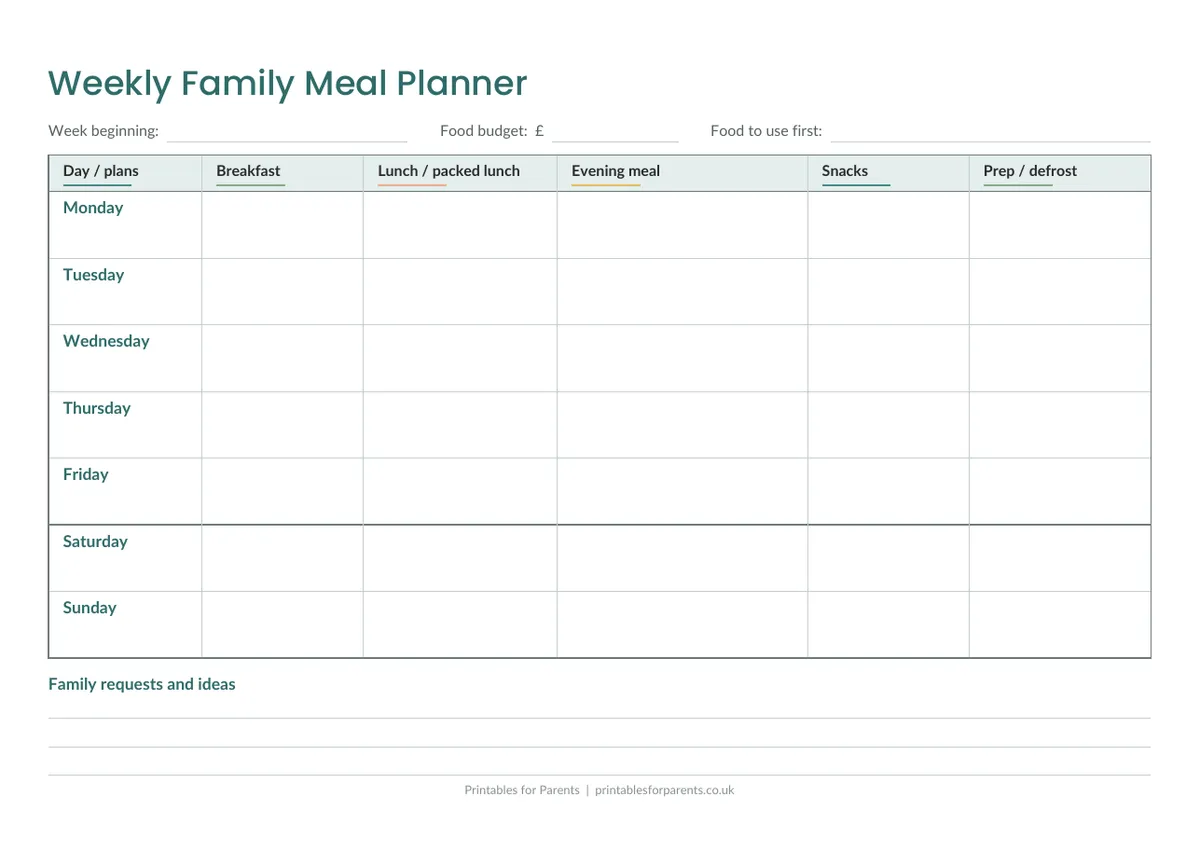
Weekly family meal planner
Landscape A4. Breakfast, lunch, evening meal, snacks and prep for each day, with a food budget and a use first line.
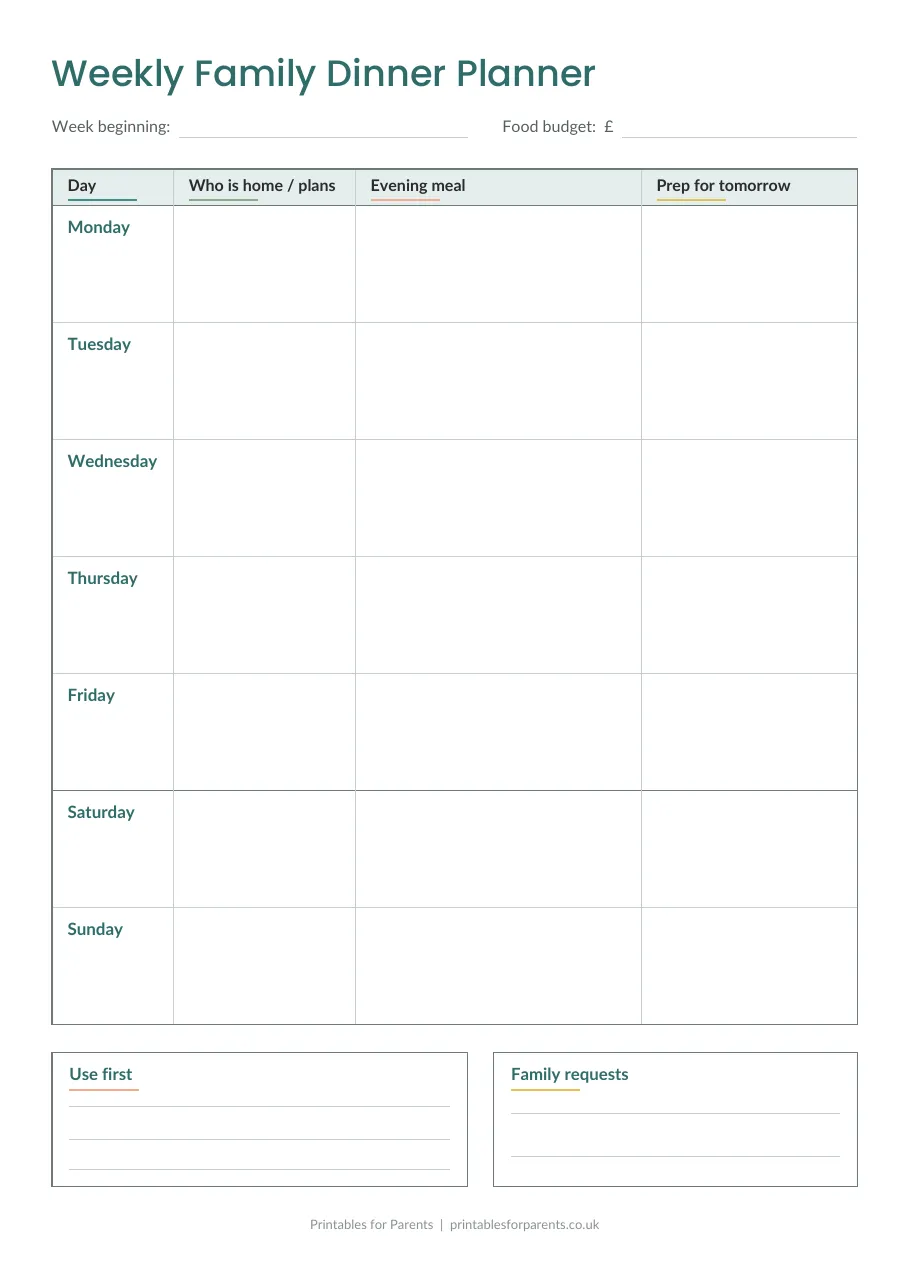
Weekly dinner planner
Portrait, and simpler. Just the evening meal, who is home, and what to prep the night before.
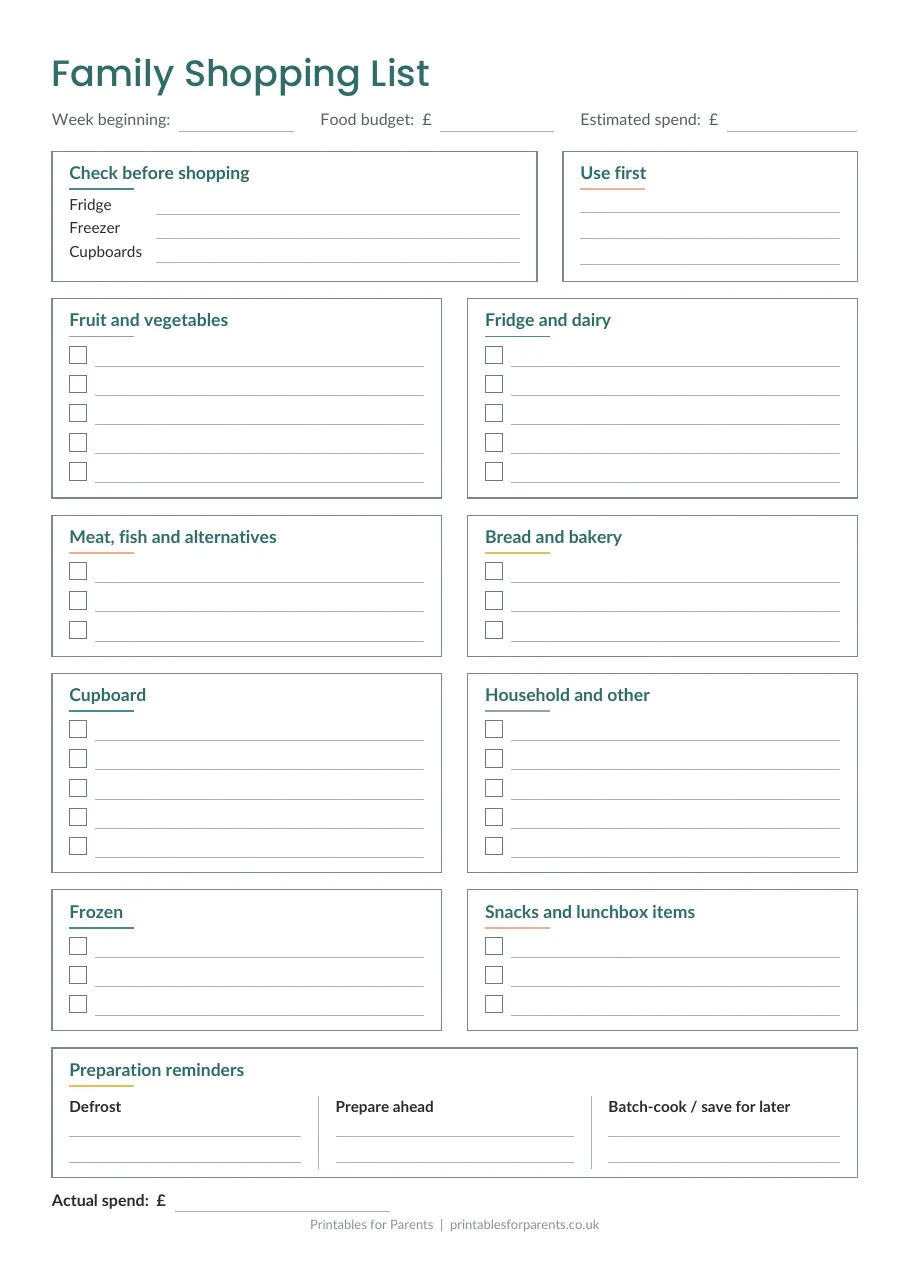
Family shopping list
Grouped the way a supermarket is laid out, with a check before shopping box and space for the budget.
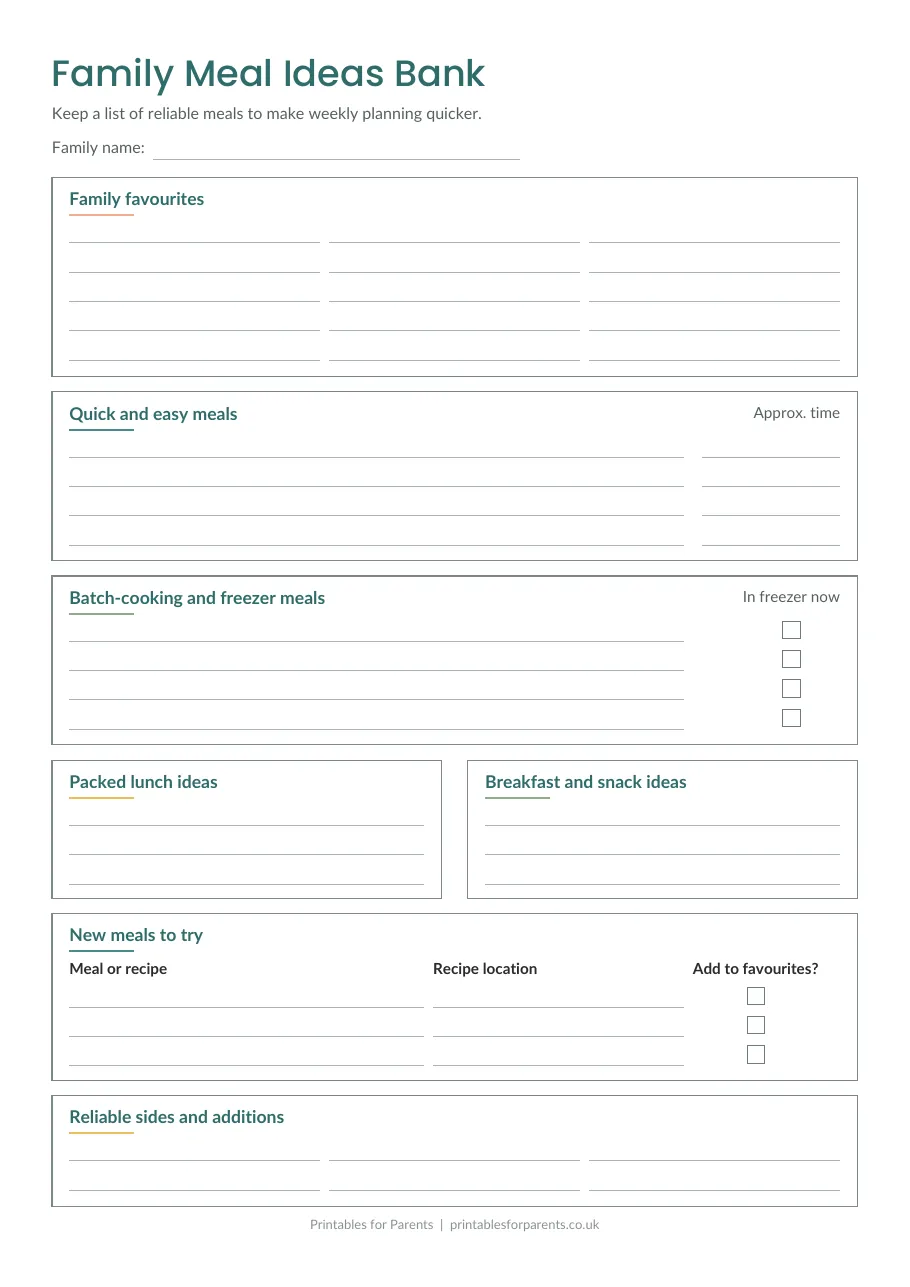
Family meal ideas bank
Favourites, quick meals with timings, freezer meals, packed lunches and new things to try. Fill it in once and stop starting from nothing.
The whole pack
All four sheets in one file, in the order you would actually use them. Page one is landscape, the rest portrait.
Printing and reusing them
- The full weekly planner is A4 landscape. Set your printer to landscape or you'll get a shrunken sheet with a wide margin at the bottom.
- The other three are portrait. The pack has all four, so print only the pages you want.
- Slide the planner into a plastic wallet and use a whiteboard pen. One print, a whole term, no arguments about wasting paper.
Common questions
Which planner should I use?
The dinner planner if evening meals are the only thing you need to solve, which is true for most families. The full weekly planner if packed lunches and breakfasts are also part of the problem, or if somebody in the house eats differently.
What's the meal ideas bank for?
The blank page problem. Planning a week is hard from nothing and easy from a list of twenty meals you already know work. Fill it in once, badly, over a few weeks, and every Sunday after that takes ten minutes instead of forty.
Why is there a use first box?
Because that's where the money is. Checking the fridge, freezer and cupboards before you plan, and writing down what needs eating, does more for a food bill than any amount of shopping around.
Do I have to fill in the budget line?
No, and plenty of people won't want to. It's there because writing an intended figure at the top and an estimate before you leave changes what goes in the trolley, which is a smaller and more useful intervention than a full spending spreadsheet.
Should I take the whole pack?
If you're starting from nothing, yes. The four sheets are designed to work in order: ideas bank for reference, planner for the week, shopping list built off the planner. After a few weeks most people only reprint the planner and the list.
Read next
Cutting a family food bill without it becoming a second job
The handful of changes that actually move a weekly shop, why planning beats price comparison, and what to do about the child who eats four things.
Printables that go with these
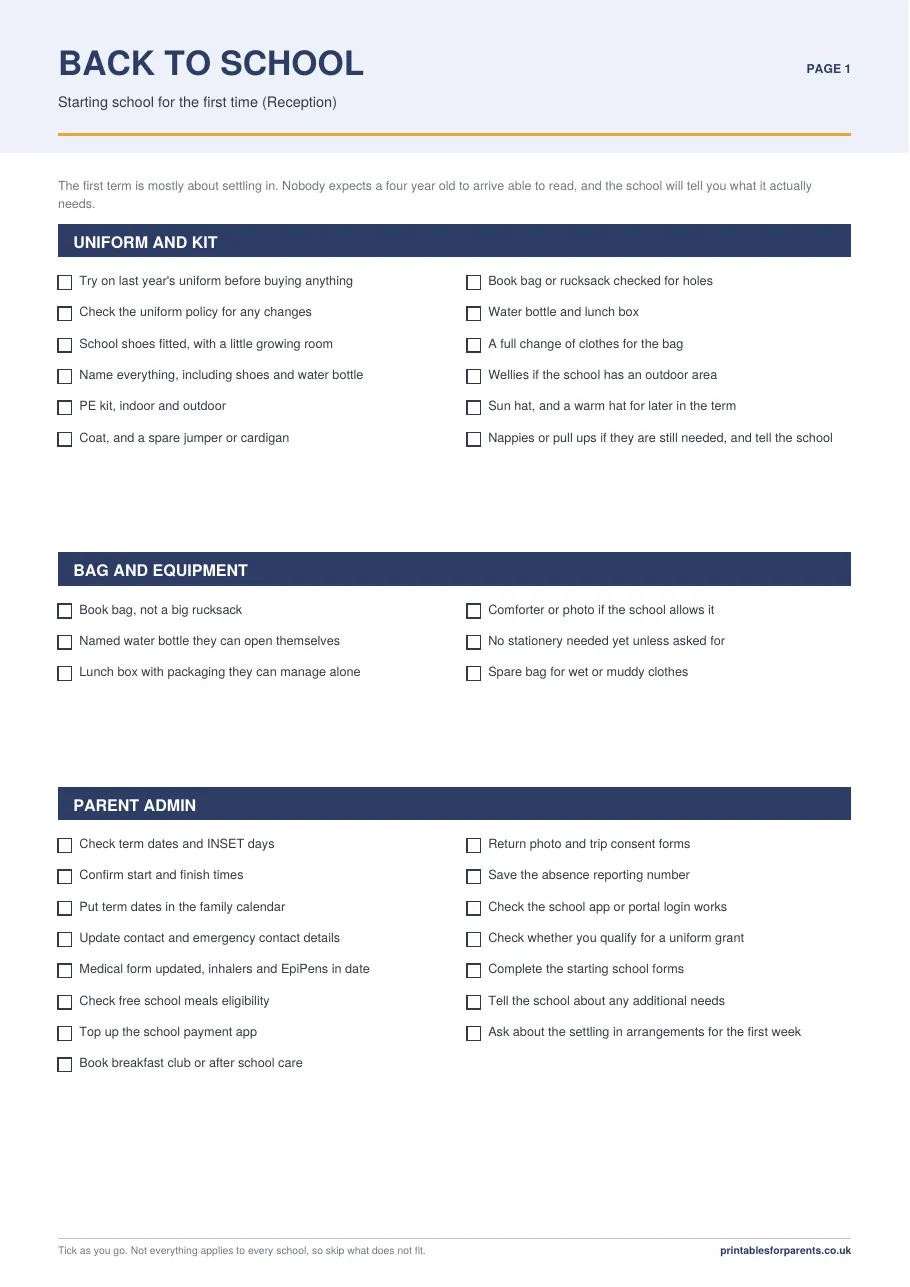 5 sheets
Back to school checklists
Free printable back to school checklists, one for each stage from starting Reception to the first week of secondary. Uniform, equipment, the parent admin, the routine reset and the conversations worth having first.
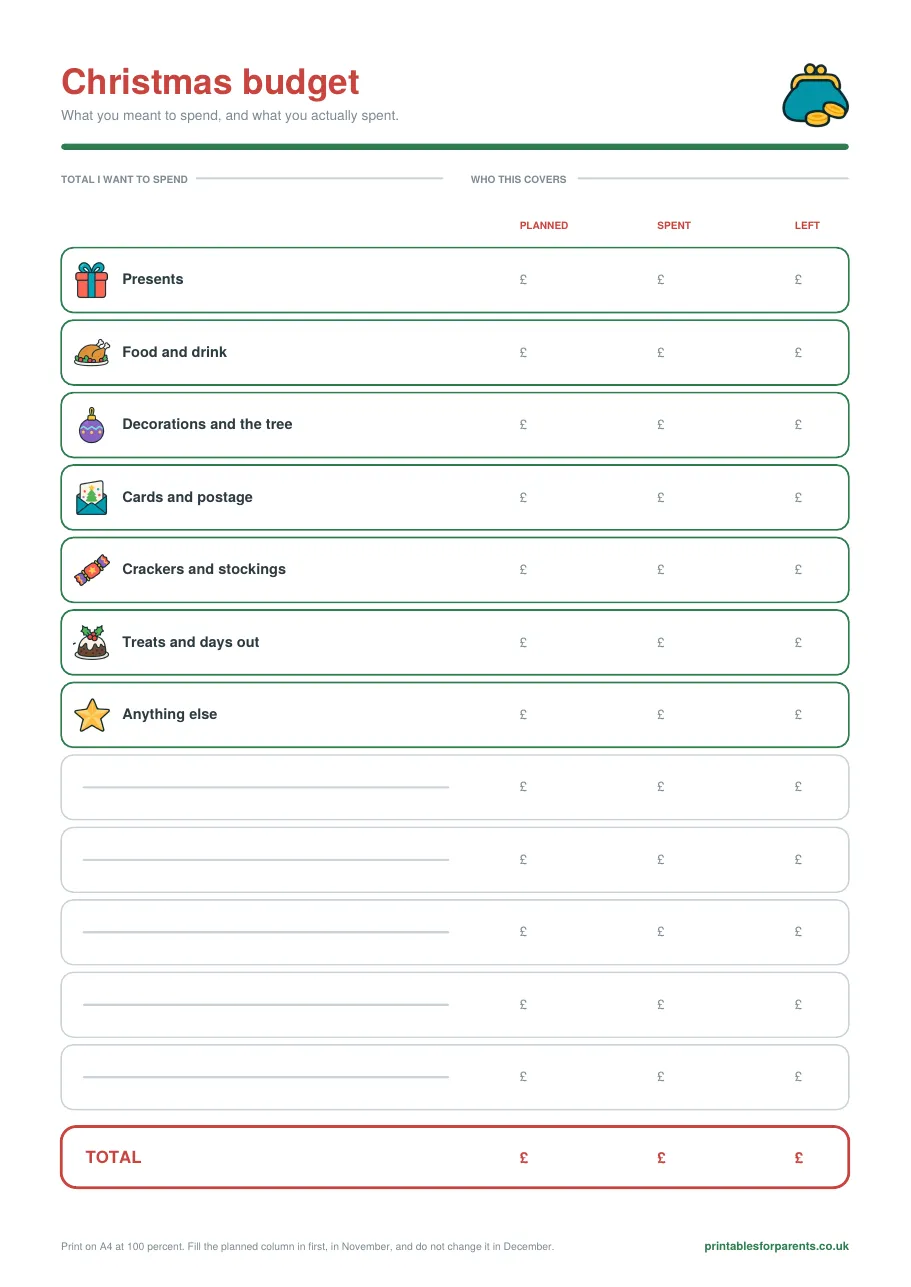 7 sheets
Christmas planning sheets
Seven free printable Christmas planners. A budget, a present tracker, a food plan, two advent calendars, a countdown chart and a letter to Father Christmas, all sized for A4.
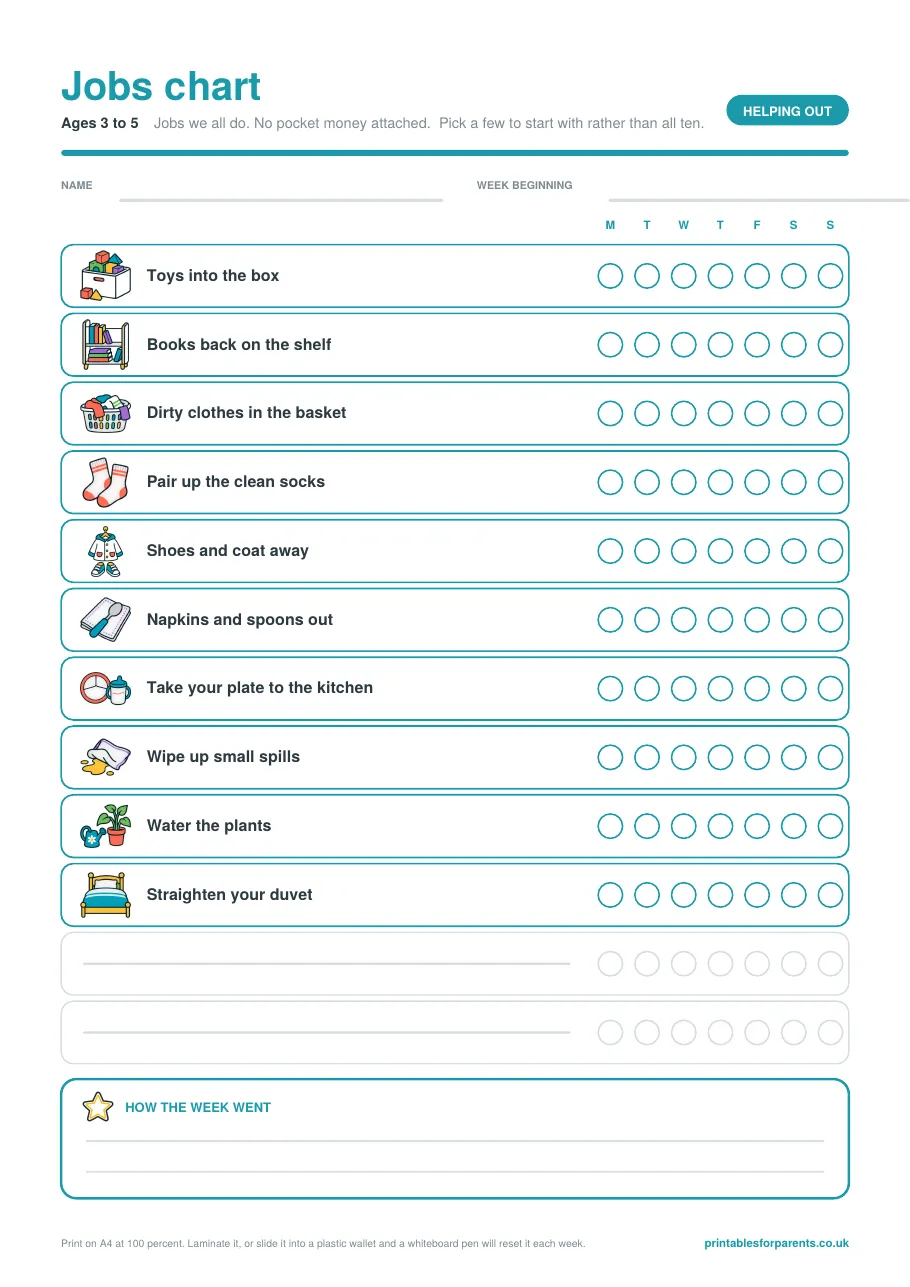 7 sheets
Chore charts and pocket money sheets
Seven free printable jobs charts and a pocket money tracker. Three age bands in two versions, one with pocket money attached and one without, so you can pick the approach that suits your house.
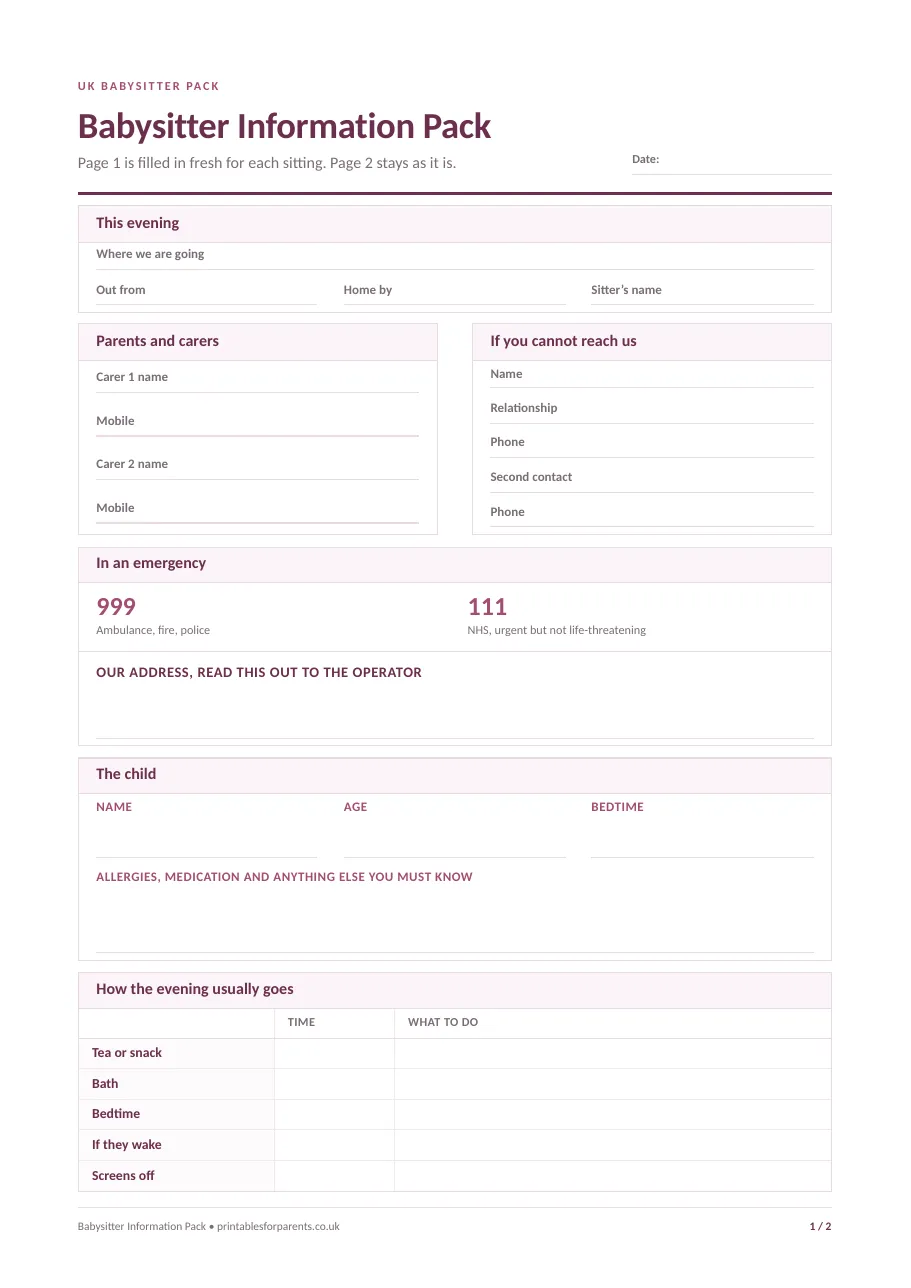 2 sheets
Babysitter and emergency information sheets
Two free printable sheets for the times somebody else is looking after your child: a babysitter pack for the evening, and an emergency contacts and medical information sheet to keep on hand.