Guide
Cutting a family food bill without it becoming a second job
The handful of changes that actually move a weekly shop, why planning beats price comparison, and what to do about the child who eats four things.
Most advice about food bills assumes you have a spare hour, an app, and an appetite for spreadsheets. Very few households have any of the three, and the ones that do usually weren’t the problem.
Here’s what actually shifts a weekly shop, in rough order of how much difference it makes.
Waste is the whole game
Food you bought and then threw away is the most expensive food in your house. You paid full price for it and got nothing.
Everything else on this page is a variation of the same idea. Buy slightly less, use what’s already there, and plan around the half bag of spinach rather than around a recipe you found on a Tuesday.
Check before you plan. Fridge, freezer, cupboard. Write down what needs eating this week. Then build the meals around that, rather than planning a week and discovering afterwards that you have three open jars of the same thing.
That single habit does more than switching supermarket, and it takes four minutes.
Planning beats price comparison
Comparing prices across shops saves a bit. Knowing what you’re eating on Wednesday saves considerably more, because it removes the two expensive failure modes: the unplanned shop on the way home, and the takeaway at seven o’clock when nothing in the fridge adds up to a meal.
Write the meals, then build the shopping list straight off them, in the same sitting, while you can still see what you wrote. Splitting those two jobs across different evenings is how the list ends up missing the one thing Thursday depends on.
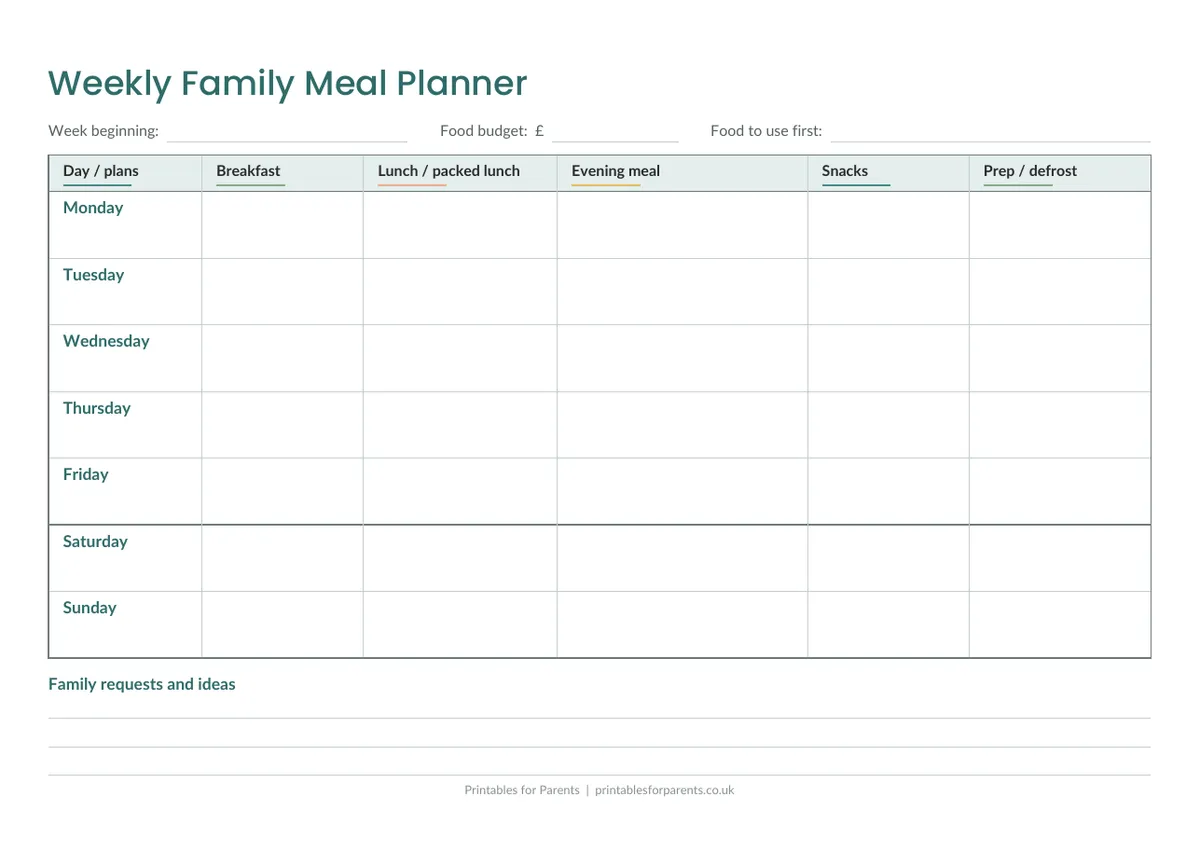
The meal planners and shopping lists here are built to work together for exactly that reason, and the shopping list is grouped the way a supermarket is laid out so you aren’t walking back across the shop.
Repeat yourself more than feels acceptable
Seven realistic dinners beat five impressive ones and two evenings where the plan collapses.
I counted ours once and it came to eleven. Most families land somewhere between eight and fifteen meals they actually make. Writing them down once, in a list you can look at, turns planning from a creative task into a choosing task. Choosing takes ten minutes. Inventing takes forty and often ends in a takeaway.
Nobody in your house minds the repetition nearly as much as you think they will. They haven’t noticed. They’re thinking about something else.
Leave a night empty on purpose
There’s always one. A club overruns, somebody is late, a child falls asleep at five.
If every night is planned, that evening becomes an emergency and emergencies cost money. If Thursday is deliberately blank, or deliberately “whatever needs eating”, it costs nothing at all.
The child who eats four things
Planning helps here more than anywhere, because the alternative is negotiating from scratch every single evening while everyone is tired.
Build the week around what they’ll eat, then add one new component alongside it: an unfamiliar vegetable next to the pasta they like, rather than a whole unfamiliar dinner. Serve it without comment and without requiring anything.
It may take a great many offerings. That’s normal, and a plate that comes back with the new thing untouched has still done its job. We were on about the fifteenth go with sweetcorn before anything happened.
Own brand, one category at a time
Worth doing, worth doing gradually. Switch everything at once and one bad substitution sours the whole idea. Switch tinned tomatoes this month and flour the next, keep what works, go back on what doesn’t.
Storecupboard staples are where this pays and where the difference is least noticeable.
The budget line
Write an intended figure at the top of the week, and a rough estimate before you leave the house.
Just a number, written down where you’ll see it. It changes what goes in the trolley and it takes about eight seconds. Both planners here have a line for it, and you’re perfectly free to ignore it.
What not to bother with
Extreme couponing. Driving to a second shop to save eighty pence. Bulk buying things you haven’t proved you’ll finish, which is waste with extra steps and a full cupboard.
And don’t start with a full month plan. Start with one week, written on a Sunday, and see whether you still do it the following Sunday. The system that survives is the one worth keeping.
Common questions
What makes the biggest difference?
Wasting less. Households throw away a significant share of what they buy, and food you bought and then binned is the most expensive food in the house. Planning around what's already in the fridge does more than comparing prices ever will.
Is own brand really the same?
Often, for storecupboard staples where the ingredients list is nearly identical. It's worth testing one category at a time rather than switching everything at once and having a bad week that puts you off the whole idea.
My child only eats four things. Does planning still work?
Yes, and arguably more. Build the week around the things they'll eat, add one component you're testing rather than a whole new meal, and stop treating each dinner as a fresh negotiation.
Do I need to track spending?
No. Writing an intended figure at the top of the week and a rough estimate before you set off changes what goes in the trolley, and that's a far smaller intervention than logging every receipt.