Babysitter and emergency information sheets
Two free printable sheets for the times somebody else is looking after your child: a babysitter pack for the evening, and an emergency contacts and medical information sheet to keep on hand.
- All ages
- 5 and under
- Organisation
- 5 to 10
Also known as: babysitter information sheet, babysitter notes template, emergency contact form for child, child medical information form, carer information sheet.
Two sheets doing two different jobs
The babysitter pack is for one evening. Where you are, when you’ll be back, what happens at bedtime, and what to do if the child wakes up asking for something you haven’t mentioned.
The emergency sheet is for the whole year. Numbers, allergies, medicines, conditions, and the details somebody would need if the evening stopped being ordinary. It lives in one place and gets handed to whoever is in charge.
Most families need both, and I keep ours on the same hook by the door. They’re deliberately separate because one changes constantly and the other almost never does.
The one thing everybody forgets
Your own address, written down, in a form somebody can read aloud to a 999 operator.
It sounds absurd. It’s the single most common gap. A sitter who has been in your house four times may still not know the postcode, and the moment they need it’s the moment nobody can think clearly. There’s a box for it, in capitals, near the top of page one for exactly this reason.
Don’t write your codes on it
The babysitter sheet says this on the page and it’s worth repeating. No alarm code, no key safe code, no note about which plant pot the spare key lives under.
That sheet spends the evening on a kitchen worktop and afterwards it goes in the recycling. Tell your sitter those things out loud.
Fill in the boring half once
Page two of the babysitter pack is the stopcock, the fuse box, the boiler, the back door, the wifi, the pet. None of it changes from one evening to the next, so fill it in properly once, keep it in a drawer, and only reprint page one.
It takes twenty minutes the first time and about ninety seconds every time afterwards. The stopcock question in particular is one nobody thinks about until water is coming through a ceiling.
The emergency sheet holds real personal data
Full name, date of birth, address, NHS number, medical history. That’s exactly the sort of information you wouldn’t want on a noticeboard where the window cleaner can read it.
Inside a kitchen cupboard door is the usual answer: findable in seconds by somebody who needs it, invisible to somebody who doesn’t. When you update it, shred the old copy rather than binning it whole.
If you photograph it to send to a grandparent, remember that the photograph then lives in a phone gallery and a cloud backup indefinitely. Handing over paper is often the better option.
Keep it current or it’s worse than nothing
An out of date emergency sheet is actively dangerous, because somebody will trust it. A number that rings out, a medicine that changed six months ago, an allergy that was added and never written down.
There’s a “last reviewed” line at the top of both pages. Put a real date in it. If you can’t remember the last time you checked, that’s your answer.
A note on the consent line
The consent section at the bottom of page two is a practical record, not a legal document. In a real emergency, staff will treat a child who needs treatment and will work to reach you regardless of what’s written on a sheet of paper.
What it does do is remove hesitation. A grandparent or a sitter holding a signed note knows where they stand, and hospital staff have your details, your child’s history and your allergy information in front of them straight away rather than piecing it together. That’s worth ten minutes with a pen. If somebody is giving medicine while you’re out, the medication record is the sheet that stops two adults both doing the four o’clock dose.
2 free babysitter and emergency information sheets to print
Every sheet is a PDF sized for A4. Tap a design to download it. No sign-up, no watermark.
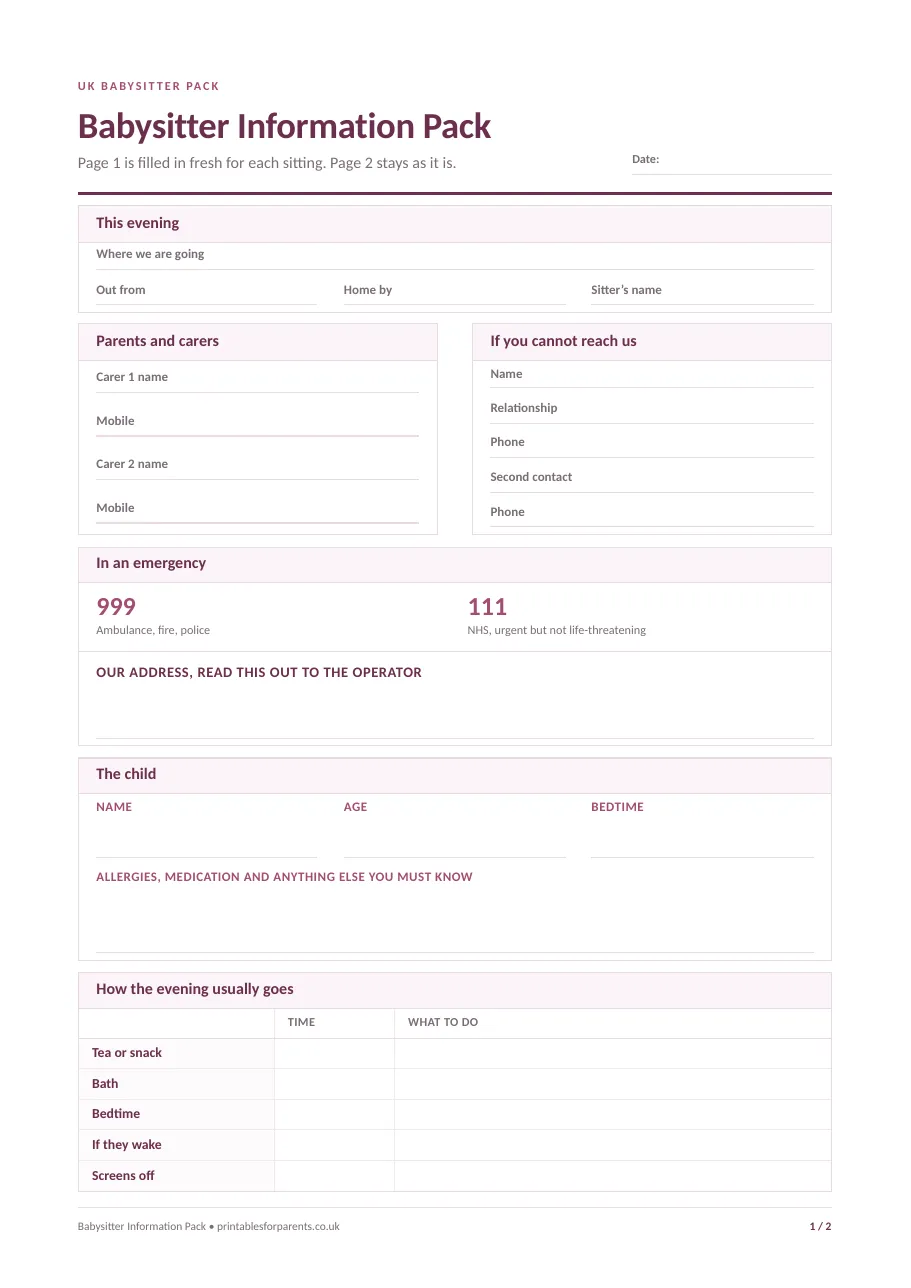
Babysitter information pack
Two pages. Page one is the evening itself, where you are, bedtime and the routine. Page two is the standing information about the house that rarely changes.
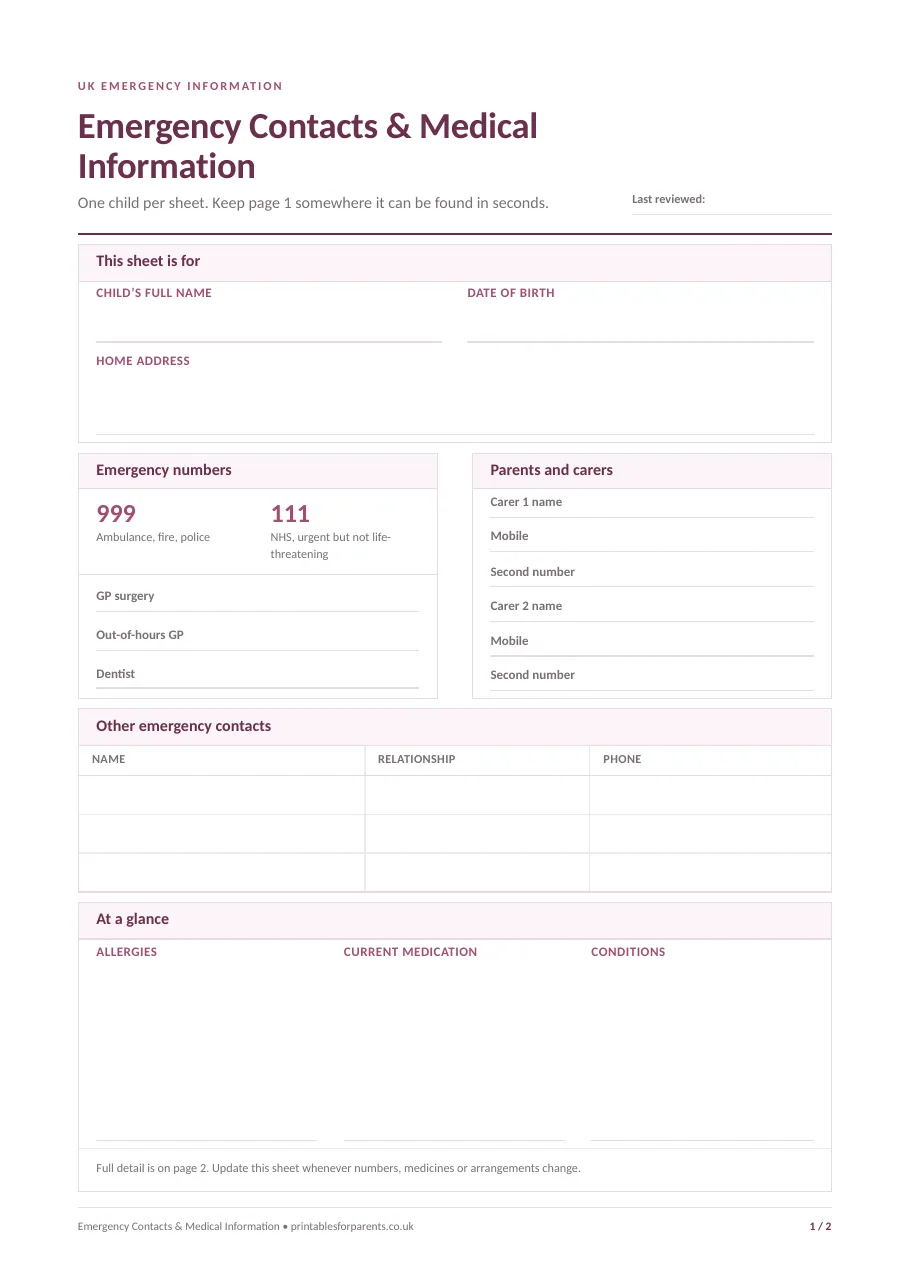
Emergency contacts and medical information
One child per sheet. Page one is the at a glance version for the fridge, page two holds the full medical detail and a consent line.
Printing and where to keep it
- A4 portrait, two pages each. Print them single sided so a sitter can put page one on the side and read it without turning anything over.
- The babysitter pack is designed so only page one changes. Print a stack of page one and keep page two as it's until something in the house changes.
- One emergency sheet per child. Don't try to fit two children on one form.
Common questions
What should I not write on the babysitter sheet?
Alarm codes, key safe codes and where a spare key is hidden. The sheet says so on the page. Tell your sitter those things in person, because a sheet left on the kitchen side isn't a secure place for them.
Does the consent line on the emergency sheet actually mean anything?
It's a practical record rather than a legal instrument. In a genuine emergency, hospital staff treat a child who needs treating and will try to reach you regardless. What the written authorisation does is save time and awkwardness, and it makes clear to a grandparent or a sitter that you have thought about it and they have your backing.
How often should I update it?
Whenever a number, a medicine or an arrangement changes, and otherwise once or twice a year. There's a last reviewed date at the top precisely so you can see at a glance whether it has gone stale.
Where should I keep the emergency sheet?
Somewhere it can be found in seconds by somebody who doesn't live in your house, but not on display to anybody who walks in. Inside a kitchen cupboard door is the usual compromise. It holds your child's medical details, so treat it accordingly.
Can I give a copy to nursery or a childminder?
Yes, though most settings have their own forms they're required to use. A copy is still worth handing over, particularly the allergy and medication table, because it puts the detail in one place in your own handwriting.
Printables that go with these
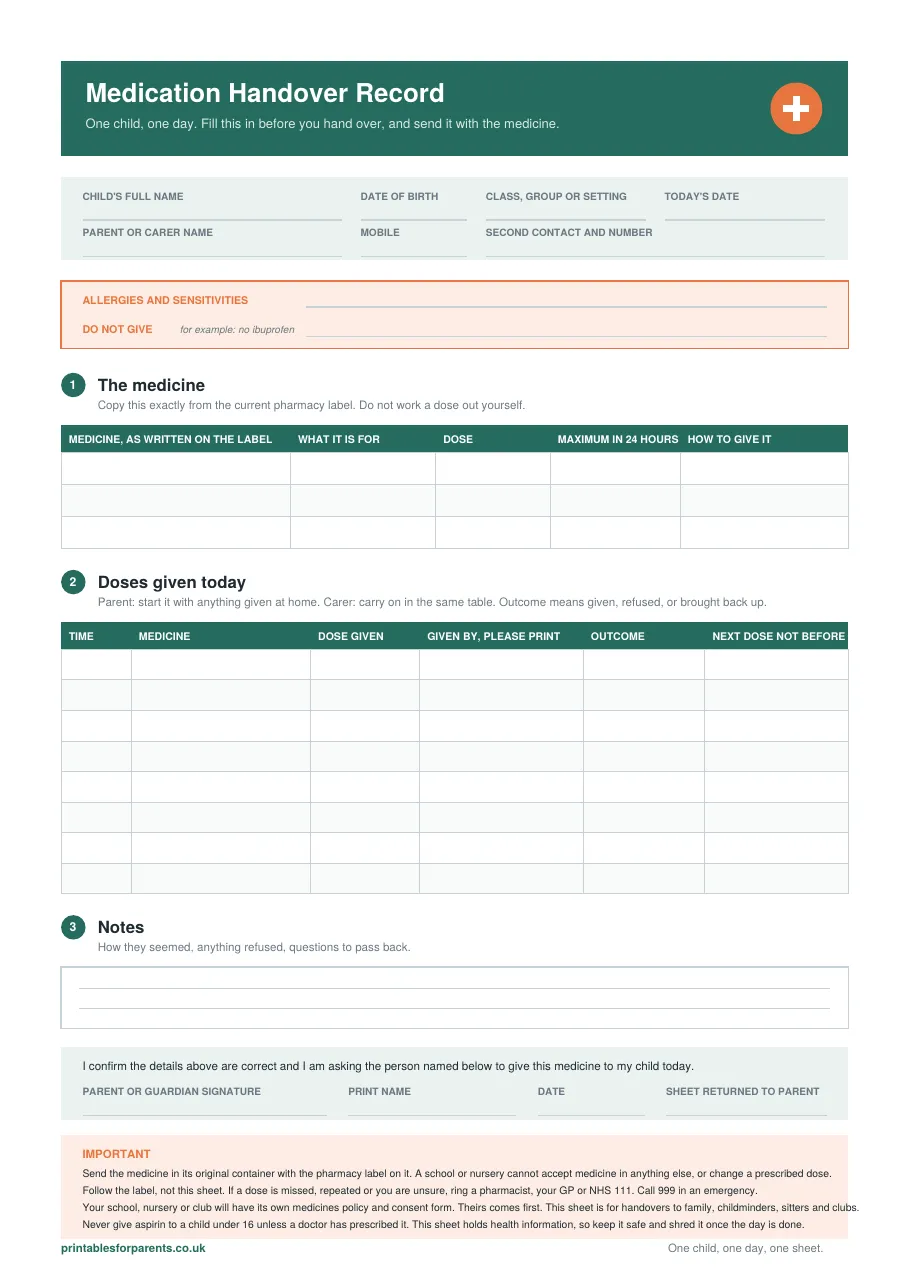 1 sheet
Medication handover record
A free printable one day medication record for handing your child's medicine to somebody else: a grandparent, a childminder, a sitter or a holiday club. One child, one day, one sheet.
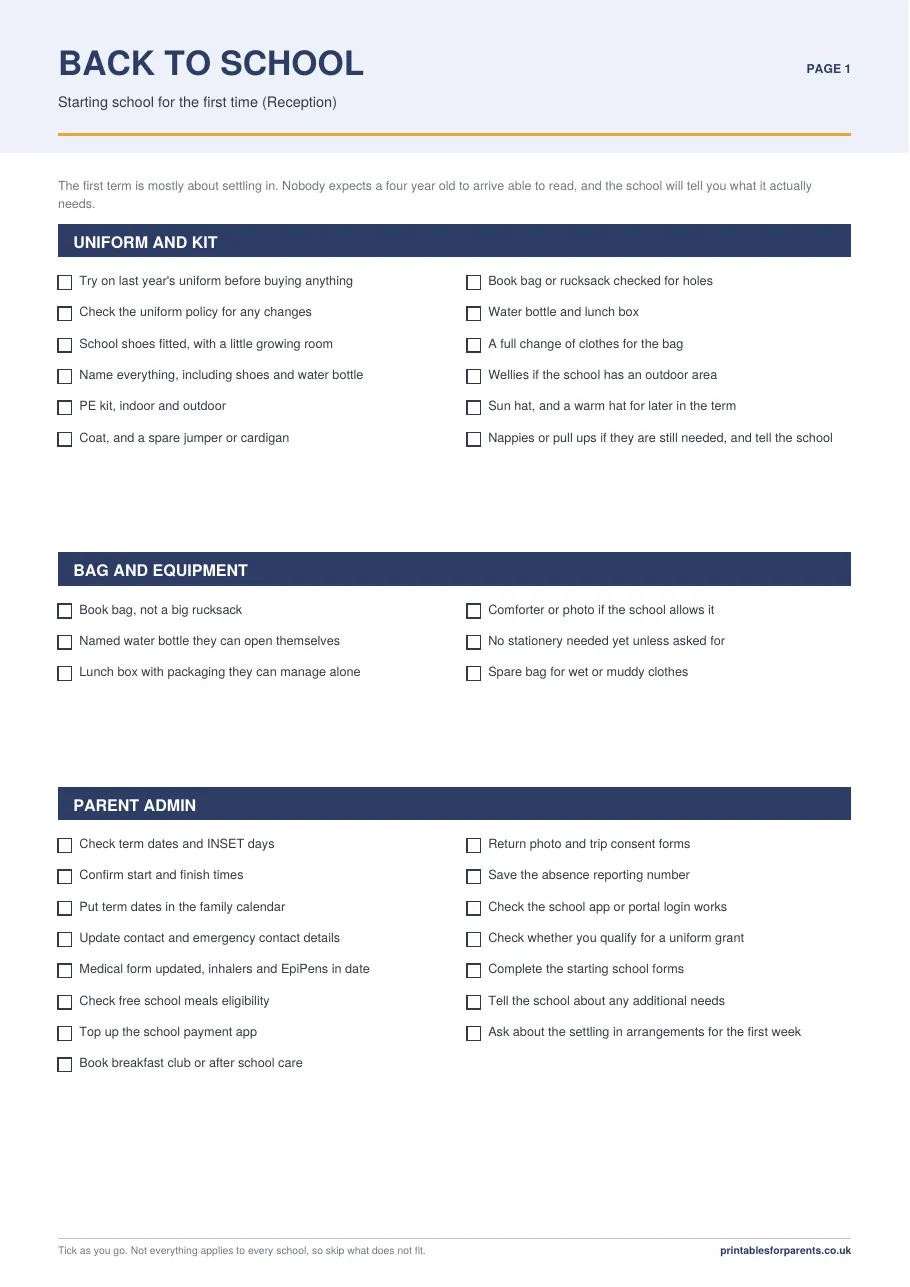 5 sheets
Back to school checklists
Free printable back to school checklists, one for each stage from starting Reception to the first week of secondary. Uniform, equipment, the parent admin, the routine reset and the conversations worth having first.
 7 sheets
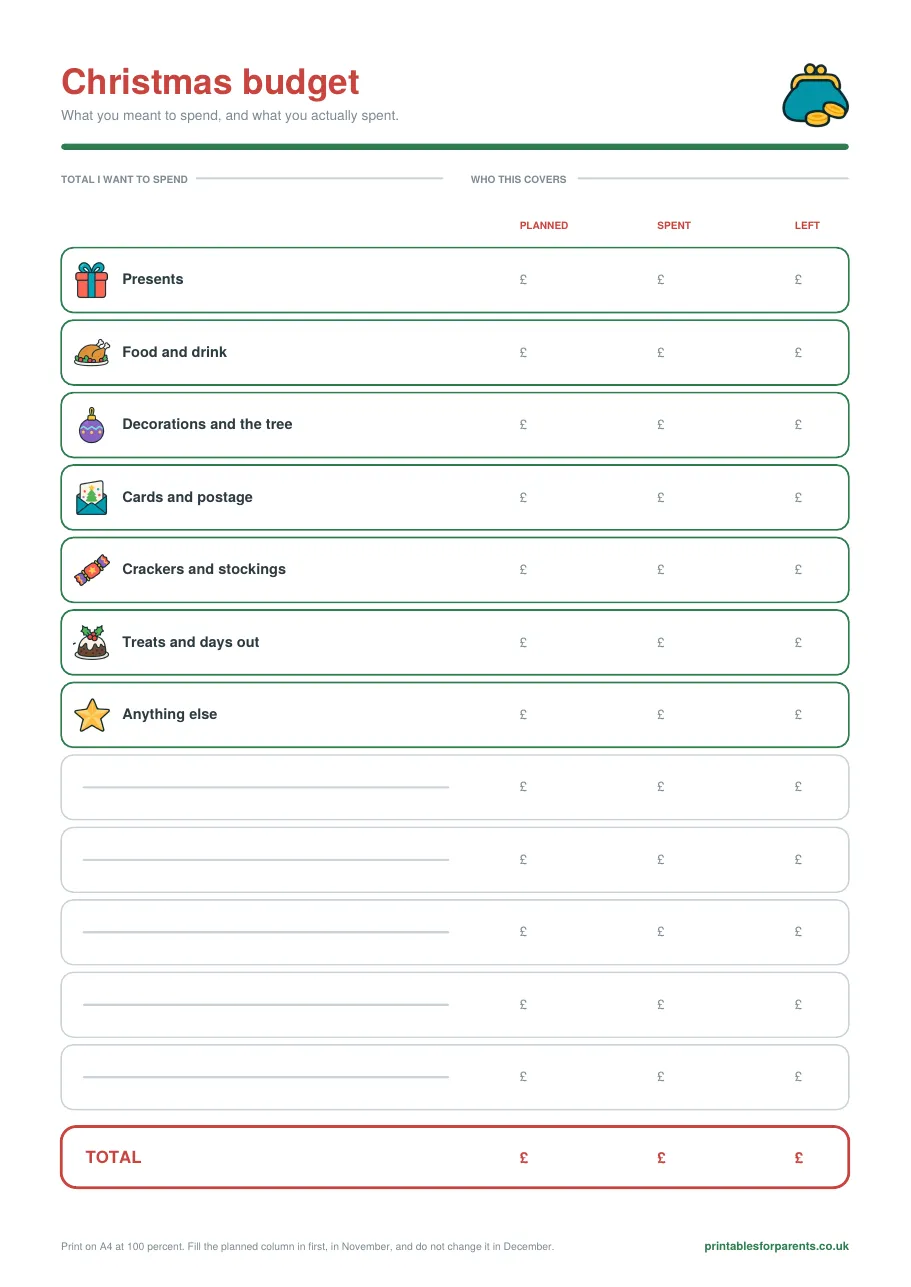
Christmas planning sheets
Seven free printable Christmas planners. A budget, a present tracker, a food plan, two advent calendars, a countdown chart and a letter to Father Christmas, all sized for A4.
 7 sheets
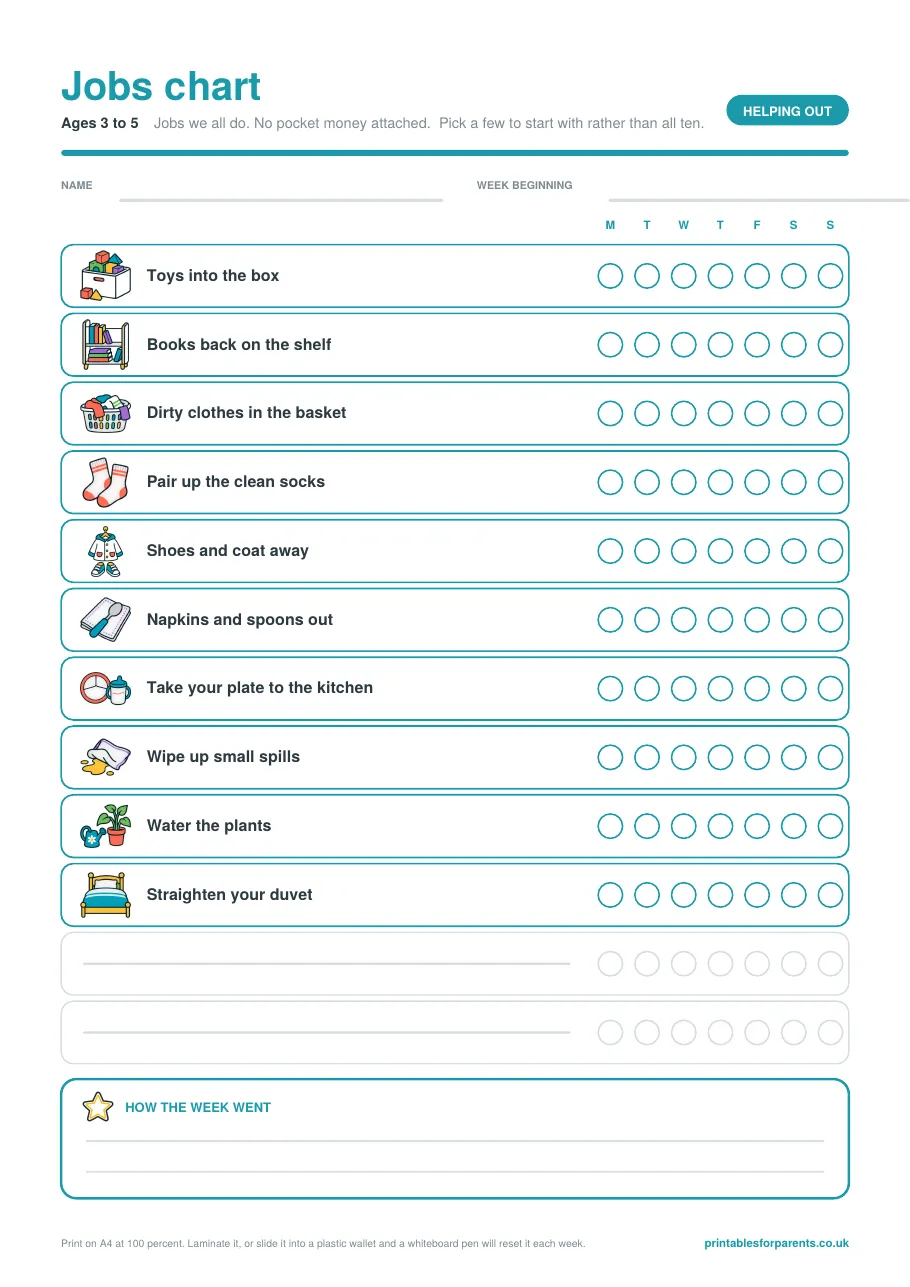
Chore charts and pocket money sheets
Seven free printable jobs charts and a pocket money tracker. Three age bands in two versions, one with pocket money attached and one without, so you can pick the approach that suits your house.