Guide
Reward charts that actually work
Most reward charts fail for the same handful of reasons. What to put on a chart, what to reward, how long to run it, and when to take it down.
Reward charts have a poor reputation, largely because most of them are set up in a way that couldn’t work. The chart is rarely the problem.
One target, described in the positive
The commonest mistake is six targets on one sheet. It reads as thorough and it’s unmanageable. A young child can’t hold six things in mind, and a half-filled chart feels like failure regardless of how you present it.
I began with six targets and a laminator, which tells you most of what you need to know about how that went. Pick one. Write it as something to do rather than something to stop: “shoes on before the timer goes” rather than “stop dawdling”. A target passes the test if a stranger watching for five minutes could tell you whether it happened.
Pay out immediately
The sticker goes on there and then. For anyone under about five a delay of a few hours breaks the connection completely, so bedtime is already too late and Friday may as well be next year.
If there’s an end reward, keep it small and social: choosing dinner, picking the film, a trip to the park, staying up twenty minutes. Expensive rewards escalate, and once they have escalated there’s no way back down.
Never take a sticker away
It’s tempting on a bad day and it wrecks the chart. A sticker that can be removed turns the chart into something to lose, and loss is a far stronger feeling than gain. The chart stops motivating and starts frightening.
Bad days simply don’t earn a sticker, and that’s enough.
One chart per child
Shared charts become competitions, and the child who is behind stops trying. If two children are working on the same thing, run two identical charts side by side.
Take it down
A chart is scaffolding for a new habit. Once the habit holds for a fortnight without prompting, retire it. Leaving it up converts something your child can now do into something they expect to be paid for.
When a chart is the wrong tool
Some children do worse with a public tally of their own performance on the wall, particularly children who are anxious or who find transitions hard. If a chart is producing daily conflict or distress, that’s a clear signal to stop.
A chart also can’t fix something a child isn’t yet developmentally able to do. If the target is beyond them, no amount of stickers will help, and the chart becomes a weekly record of falling short. If you’re unsure which of those you’re looking at, their teacher, nursery or health visitor will have seen it many times before.
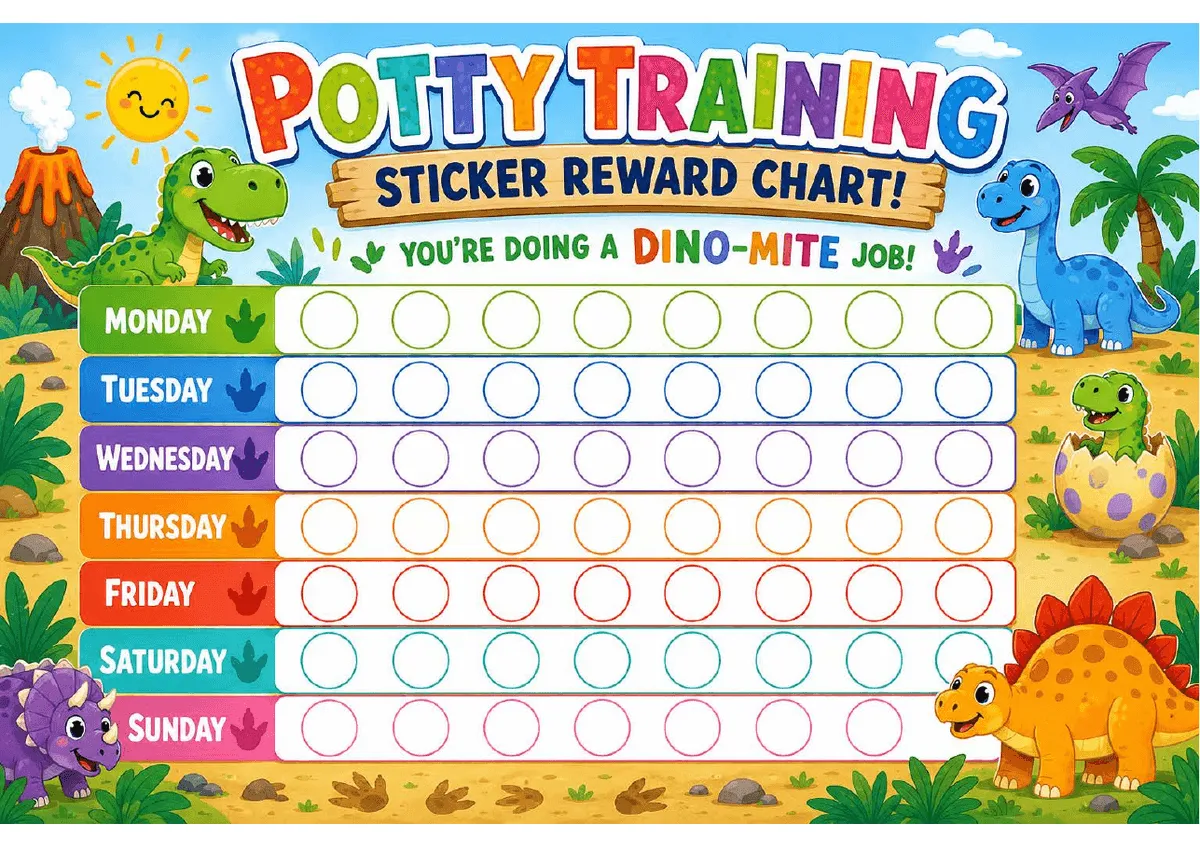
If potty training is where you’re using one, the potty training charts are free to print and there are twelve designs to choose from.
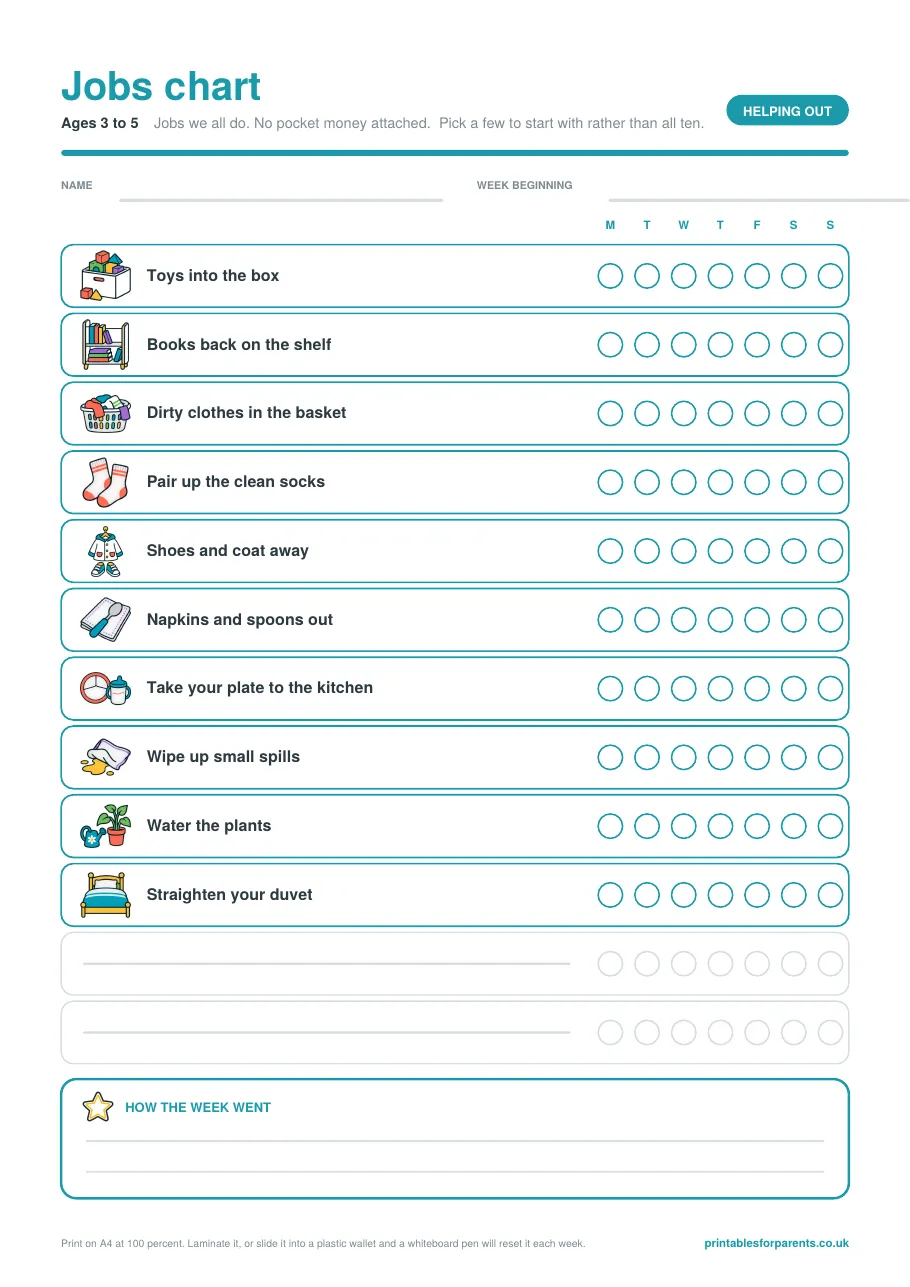
If it’s jobs around the house, everything above still applies, and what chores at what age covers how many to put on a chart and whether to attach money to them.
Common questions
Are reward charts bribery?
Bribery is offered to stop something already happening. A reward chart sets out an expectation in advance and pays out when it's met, which is closer to how most of adult life works. The distinction matters mainly in timing.
How long before I should expect a change?
Give it two weeks. If nothing has shifted, the target is probably too vague, too large, or about something the child can't yet do.