Guide
When potty training stalls
Two weeks in, going backwards, and everyone is fed up. What causes a stall, what to do about it, when to stop entirely, and why pausing is usually faster than pushing on.
The first week went well. There were stickers, there was pointing, there was a phone call to a grandparent. Then somewhere around day nine it stopped, and now you’re washing three pairs of trousers a day and quietly wondering whether you imagined the good bit.
We hit ours on about day eleven. This is so common that it’s almost part of the process. It’s also the point where most advice becomes unhelpful, because it assumes you have done something wrong.
First, work out which kind of stall this is
They aren’t the same thing and they don’t want the same response.
Never really started. A week or two in, no successes, no interest, no sign of noticing. This usually means not ready yet, whatever the calendar says.
Started well, then stopped. Success for a few days, then a run of accidents. Something has usually changed, and it’s rarely the potty.
Dry for weeks, then accidents returned. A genuine regression after the habit was established. Worth paying more attention to, and the most likely of the three to be worth a conversation with somebody.
What’s usually behind it
Something else changed. A new baby. Starting nursery. A house move. A parent away. A bad cold. Children put a great deal of energy into change, and a skill they only half own is the first thing to go.
Constipation. The single most under-recognised cause, and the one parents almost never suspect. If it hurts to poo, a child will hold on. Holding on makes it worse. Eventually they’re withholding, uncomfortable and having accidents, and none of it looks like a toilet problem from the outside. If poos are hard, infrequent, very large or painful, that’s worth a GP appointment rather than another fortnight of charts.
It became a battle. Once there’s a daily argument about sitting down, the potty stops being a piece of furniture and becomes the thing you fight about. At that point no reward will fix it, because the reward is now part of the fight.
Too much attention. Some children go off the whole business precisely because it has become the most interesting thing in the house.
Four things that actually help
Say less. Stop asking. Offer at the natural moments, after waking, before going out, after a meal, and otherwise leave it alone. Constant asking makes a child feel watched, and being watched makes this harder rather than easier.
Take the pressure off the chart. If you’re using one, stop docking, stop counting and stop mentioning it. If the chart has become a scoreboard everyone is losing, take it down. You can put it back up in a month.
Make the practical bit easy. Clothes they can get down alone. A step so their feet are supported, which matters more than people expect, because nobody can push properly with their legs dangling. The potty in the room you’re actually in.
Be extremely boring about accidents. Change them calmly, say almost nothing, move on. Any reaction, including a sympathetic one, is still a reaction.
Pausing isn’t giving up
This is the part most people need permission for, so here it is.
If it has been a fortnight of accidents and everyone is miserable, put nappies back on. Do it without ceremony, without explaining that they have failed, and without a speech about trying again when they’re bigger.
Then leave it about six weeks.
Children who get that break very often come back and manage the whole thing in days rather than weeks, because the gap gives their body time to catch up and gives everybody time to stop dreading it. Pushing through a stall usually costs more time than pausing does, which is unintuitive right up until you have done it once.
When to speak to somebody
Ring your GP or health visitor if there’s pain when they wee or poo, any blood, poos that are hard, very large or infrequent, a child who is clearly holding on, or a child who was reliably dry and has been wetting for several weeks.
Also ring if you’re worried and can’t say exactly why. Health visitors spend a great deal of their time on this and nobody will think you’re wasting theirs.
The thing nobody says out loud
Almost every child manages this eventually, and almost nobody can tell you afterwards which week it happened. The timeline feels enormous while you’re in it and disappears entirely once you’re out.
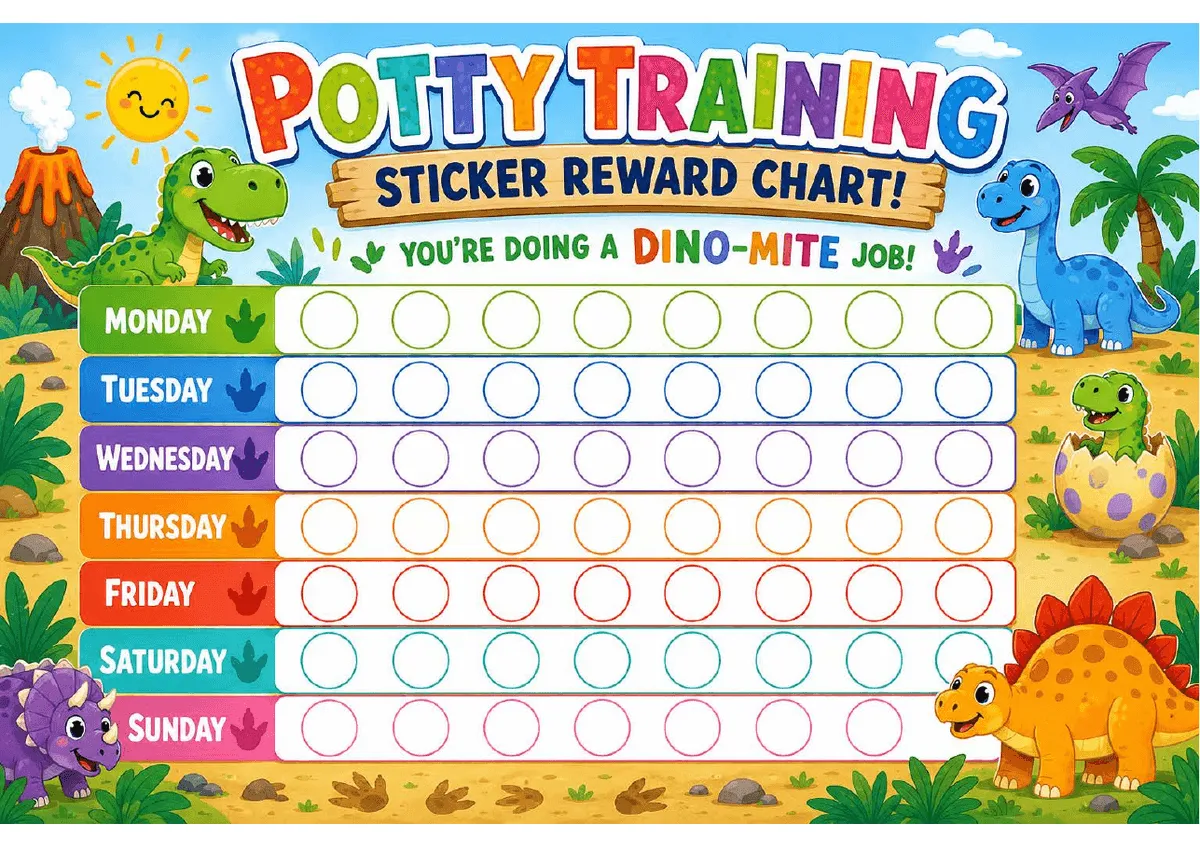
If you want to start again when the time comes, the potty training charts are free, and there are twelve designs so your child can pick a different one. Sometimes a fresh design is enough to make it feel new rather than like the thing that went wrong last time.
Common questions
Is regression normal?
Very. It's one of the most common things parents ring a health visitor about, and it usually follows a change somewhere else: a new baby, a house move, starting nursery, an illness, or a stretch of constipation.
Should I go back to nappies?
If it has been a fortnight of accidents and distress, yes. Put them back without making it a defeat and try again in about six weeks. Children given that break almost always come back and get it quickly, which is why pausing often turns out to be the faster route.
When should I speak to somebody?
If there's pain when they wee or poo, blood, long-standing constipation, or a child who was reliably dry and has been having accidents for several weeks. Those are worth a GP or health visitor appointment, and none of them is a discipline problem.