Guide
What a newborn can see, and what to do with it
What babies can see in the first months, how far away they focus, when eye wandering should settle, and the warning signs to raise with a health professional.
Newborns can’t see very much, and what they can see is quite different from what we see. That’s a relief to many parents, because it means a great deal of what looks like a baby ignoring you is simply a baby whose eyes are still developing.
This guide covers what your baby can see, what is normal, and when to check.
What they can see at the start
A newborn can see light, shapes, faces and movement. Their focus is blurry at a distance, and they see best at close range. The American Academy of Pediatrics describes the sweet spot as about 20 to 30cm, which is roughly the distance between your face and your baby’s face while you’re feeding them.
That’s why the face you see when you’re holding your baby is the one they’re most interested in. It’s in exactly the right place for them.
Eye wandering
Many newborns have eyes that wander, cross or move in a way that looks random. This happens because the two eyes are still learning to work together. It’s common, and it usually settles by two to three months.
If it continues past that point, or if you notice one eye consistently turning in or out, don’t wait. Mention it to your health visitor or GP at the next contact, because early checks matter.
Colour and pattern
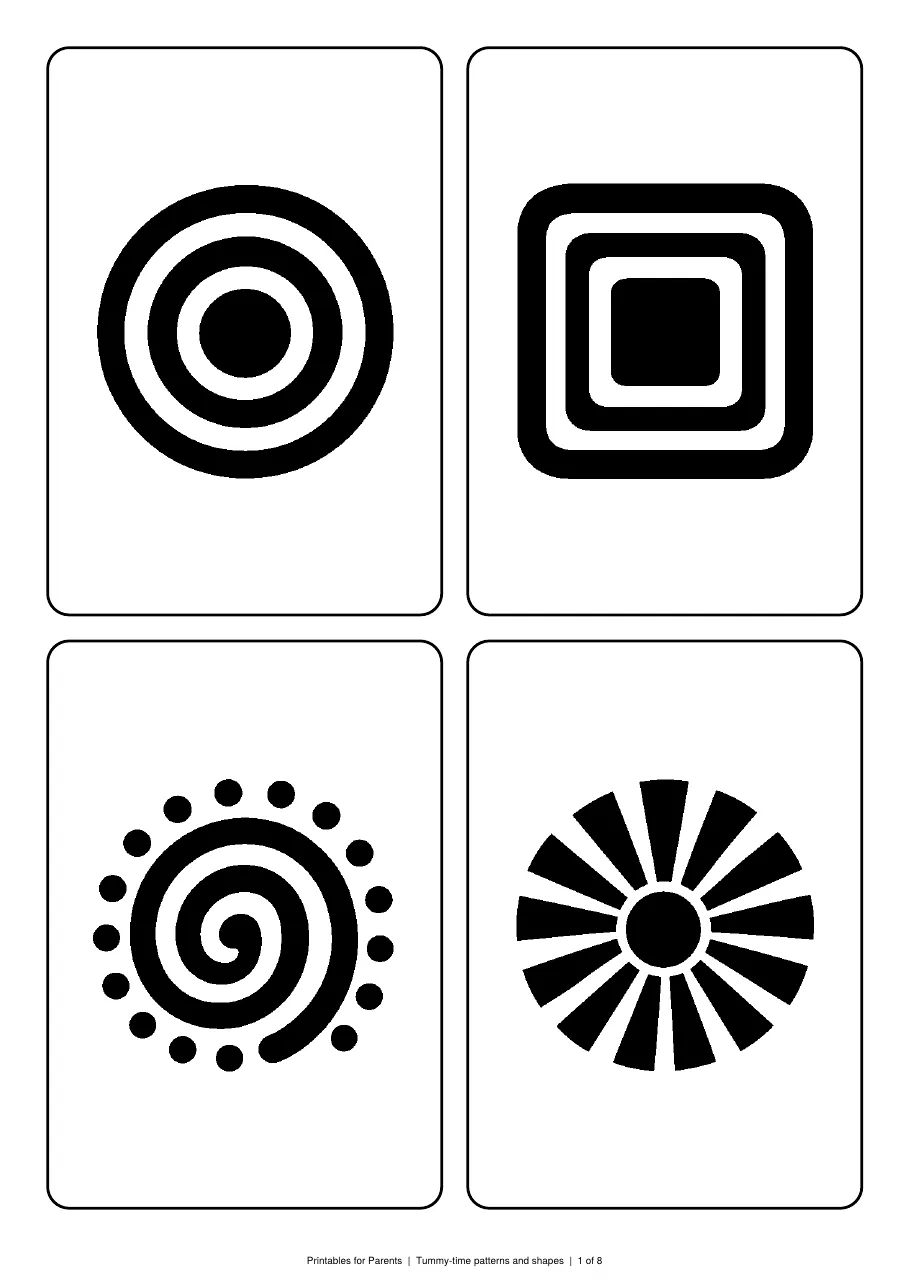
By about four months, most babies are better at seeing colours and shades, and they start to show a particular interest in circular patterns such as bull’s-eyes and spirals. Faces still win, and most babies would rather look at a face than any card you could make.
Black and white patterns are a useful way to hold their attention at close range in the first months, when colour vision is still developing. The high contrast baby cards here are designed for that stage. Hold them at the distance your baby can focus on, keep sessions short, and stop when your baby looks away.
Depth and the months that follow
Depth perception starts to develop around four months. By about 12 months, your baby’s sight should be much closer to an adult’s. Interest in patterns and cards usually tails off during the first year, as babies become more interested in grabbing, moving and exploring.
When to check
Before your baby leaves hospital, a doctor, midwife, nurse or health visitor checks the appearance and movement of their eyes. That check can’t tell you how well your baby can see, so it’s worth keeping an eye on the signs as they grow.
The Association of Optometrists lists these as signs to raise with your health visitor or GP:
- Tearing or watery eyes
- Redness in the eye or eyelid
- Frequent blinking
- Difficulty recognising familiar objects, or slow responses to things they should see
- Discomfort with bright lights or sunlight
- Trouble making eye contact
Many of these have simple explanations, and many babies have them for a short time. The point is that a health professional should look at them rather than you having to work it out alone.
Where this comes from
The warning signs above are taken from the Association of Optometrists guidance on your baby’s vision. The focusing distances and the ages for eye wandering come from the American Academy of Pediatrics guidance on infant vision development, which is written for the United States, so treat those figures as a general guide rather than a UK standard.
This is general information rather than advice about your baby. Your health visitor or GP knows them and this website doesn’t.
Common questions
Can my newborn see me?
Yes, though not from across the room. Newborns focus best on things about 20 to 30cm away, which is roughly the distance between your face and theirs during a feed. Faces are one of the things they look at most.
Do babies see in colour?
Not at first. Newborns can see shapes, faces and bright colours, and their colour vision develops over the first few months. By about four months babies are much better at telling colours and shades apart.
My baby's eyes wander or cross sometimes. Is that a problem?
In the early weeks it's common, because babies are still learning to use both eyes together. It should settle by two to three months. If it continues beyond that, or your baby has any other concerns, speak to your health visitor or GP.
What should I look out for?
The Association of Optometrists lists tearing or watery eyes, redness in the eye or eyelid, frequent blinking, difficulty recognising familiar things, discomfort in bright light, and trouble making eye contact. If you notice any of these, ask your health visitor or GP for advice.